

Blog
What to Wear with Lederhosen? Complete Style Guide
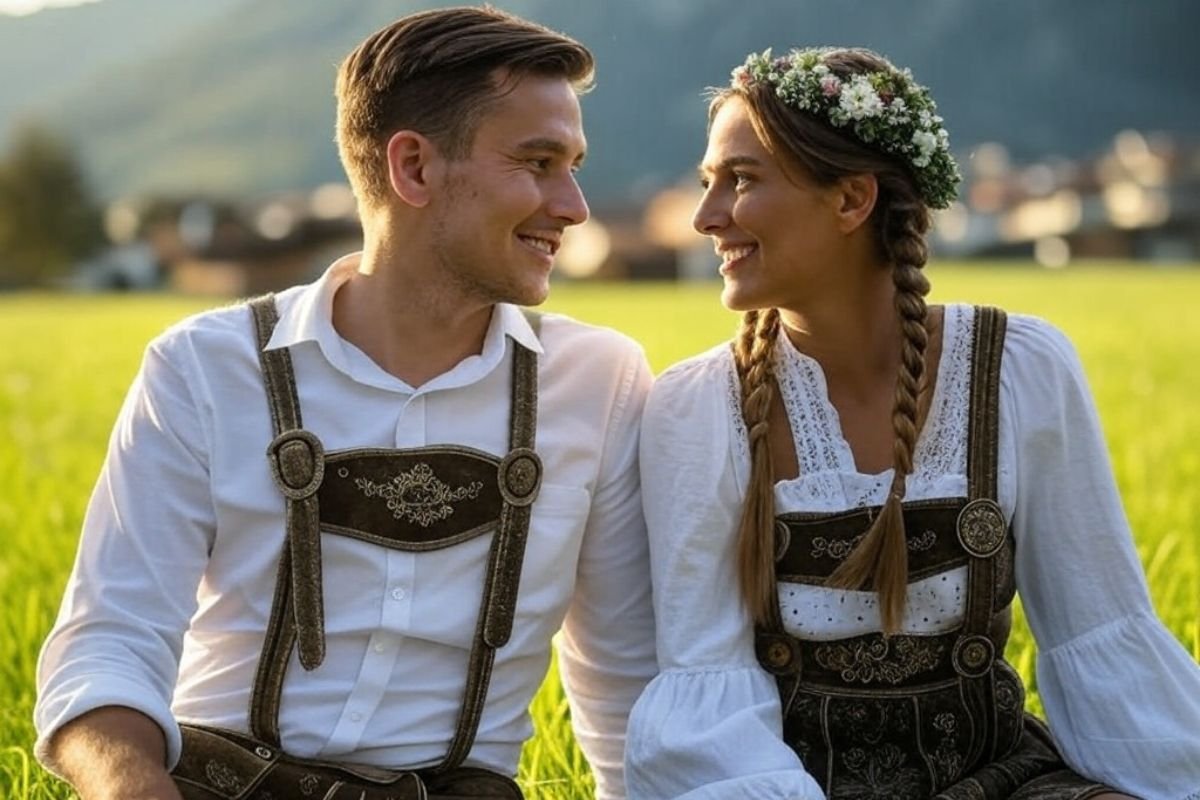
What to Wear with Lederhosen — The Complete Bavarian Outfit Guide
Most men buying Lederhosen for the first time focus entirely on getting the right pair of leather breeches. That is understandable — they are the centrepiece. But walk into any Oktoberfest tent and you will immediately notice the difference between someone who put together a complete authentic Trachten outfit and someone who threw on a checked shirt and hoped for the best.
The difference is almost never the Lederhosen themselves. It is everything around them.
A proper Lederhosen outfit has a logic to it. Each piece — the Trachtenhemd, the Haferlschuhe, the Loferl socks, the Charivari, the hat — was developed over generations to work together as a coherent whole. Once you understand how the pieces relate to each other, putting together an authentic look becomes straightforward. This guide covers every component from the ground up, with specific recommendations for different occasions and leather colours.
Before we get into individual pieces, it is worth knowing how Lederhosen should fit properly — because even the best outfit falls apart if the Lederhosen themselves do not sit correctly on the body.
Start Here: Understand What You Are Building
A complete traditional Lederhosen outfit — the full Trachten look — consists of seven components. Most people know three or four of them. Getting all seven right is what separates an authentic Bavarian look from a tourist approximation.
The seven components are:
- The Trachtenhemd (Bavarian shirt)
- The Lederhosen themselves with suspenders or belt
- The Loferl or knee-high socks
- The Haferlschuhe (traditional shoes)
- The Janker or vest (for layering)
- The accessories — Charivari, hat, handkerchief
- Colour coordination across all pieces
We will cover each one properly. But first — occasion matters significantly. The same Lederhosen require a different ensemble at an Oktoberfest beer tent, a Bavarian wedding, and a themed event. We will come back to occasion-specific guidance after covering the individual components.
The Trachtenhemd: The Most Important Piece After the Lederhosen
The traditional Lederhosen outfit has always been somewhat formal attire. You should choose a button-down long-sleeve shirt — the worst thing you can do is wear a casual T-shirt under leather breeches. A plain round-neck T-shirt makes even the finest Lederhosen look like fancy dress. The shirt must always be a proper Trachtenhemd — a Bavarian-style button-down.
There are four main Trachtenhemd options, each suited to different situations.
White Trachtenhemd The white button-down is the most versatile and the safest choice. It works for every occasion — Oktoberfest beer tent, Bavarian wedding, cultural event, or themed party. Clean white against the earthy tones of brown or black leather creates a sharp contrast that looks intentional and polished. For formal occasions, this is the correct choice. For the Wiesn, roll the sleeves to just below the elbow for a relaxed beer garden feel.
Checkered Trachtenhemd (Karohemd) The blue-white and red-white check patterns are the most recognisable Bavarian shirt options and the most commonly worn at Oktoberfest. Blue-white and red-white check patterns are the most traditional and widely worn at Oktoberfest beer tents. The check must be genuine Trachten styling — a proper Karohemd with a specific cut and collar — not a standard flannel or casual check shirt from a clothing shop. The difference in appearance is immediately obvious.
Colour matching for checkered shirts:
- Brown Lederhosen: blue-white or green-white check
- Black Lederhosen: red-white, grey-white, or blue-white check
- Grey Lederhosen: green-white or navy-white check
- Tan or honey Lederhosen: blue-white or red-white check
Linen Trachtenhemd For summer Volksfest events, outdoor celebrations, or Oktoberfest in the warmer early weeks of September, a linen Trachtenhemd in white, cream, or light blue offers breathability without sacrificing authenticity. Linen’s natural texture sits well against leather and does not look out of place in traditional company. Stick to pale or neutral tones — linen in bright or saturated colours crosses into casual territory.
Embroidered Trachtenhemd The most decorative option, typically featuring Edelweiss flowers, oak leaf motifs, or Alpine patterns on the collar and chest placket. This is genuinely festive and appropriate for Oktoberfest and cultural celebrations. It requires careful coordination — the embroidery colour should echo one of the colours in the Lederhosen embroidery or Charivari, not compete with it. This is an expert-level coordination choice; for first-time buyers, the white or check shirt is the safer starting point.
One rule that applies to all shirts: Always tuck your Trachtenhemd fully into the Lederhosen. An untucked shirt with Lederhosen looks immediately wrong. The clean line where the shirt meets the waistband and suspenders is a fundamental part of the silhouette.
Suspenders vs Belt: Understanding the Difference
Most Lederhosen come with suspenders — the H-shaped or Y-shaped leather braces with a decorative chest piece that connect front and back. Suspenders are the traditional choice and the more common one at Oktoberfest. They sit flat over the shoulders of the tucked shirt, and the chest piece — often embroidered — sits centred on the chest.
The modern buckle belt replaces conventional leather braces for those who prefer a cleaner silhouette. The belt size must cover all the belt loops with a silver or bronze buckle at the front — typically embossed with classic Bavarian motifs such as a deer, Bavarian stag, or the lozenge pattern of the Bavarian lion.
A few practical points: suspenders are the correct traditional choice for short Lederhosen and Kniebundhosen worn at Oktoberfest. Belts are more common with longer Bundhosen styles. You can also browse our men’s Lederhosen belts collection for buckle options with authentic Bavarian detailing.
Never wear both suspenders and a belt simultaneously. Choose one. Suspenders for authentic traditional events; belt for a slightly more contemporary presentation.
Socks: Loferl vs Knee-High — and Why It Matters
Socks are one of the most visible parts of the Lederhosen outfit and one of the most commonly misunderstood. There are two distinct traditional sock styles, and they are not interchangeable depending on what Lederhosen you are wearing.
Loferl (calf socks)
Loferl are short, thick calf-length socks that leave the shin exposed between the top of the sock and the bottom of the Lederhosen. Two-piece Wadlstrumpf — the combination of a thin knee sock beneath a decorative calf topper — is conventionally preferred with short Lederhosen, while full knee-highs look better with Bundhosen. Loferl come in traditional patterns: grey and white stripes, green with white detail, or plain off-white. They are the correct choice for short Lederhosen worn at Oktoberfest.
Knee-high Wadlstrümpfe
Full knee-high socks in wool, worn pulled up to just below the knee, are correct for knee-length Kniebundhosen or longer Bundhosen styles. They are thicker than standard socks, and the traditional colours are off-white, grey, and natural wool tones — not bright white, which looks modern rather than traditional.
Both types should always be wool or a heavy wool-blend. Thin cotton socks are immediately noticeable and wrong. Never wear ankle socks with Lederhosen.
Check our Lederhosen socks collection for both Loferl and knee-high options in traditional Bavarian patterns.
Haferlschuhe: The Only Correct Traditional Footwear
Haferlschuhe are the traditional Bavarian shoes worn at Oktoberfest. Franz Schratt from Oberstdorf invented them in 1803, and Allgäu people began wearing them with Lederhosen outfits in the early 19th century. Bavarians called them Bundschuh while Austrians called them Schützenschuh.
What makes Haferlschuhe distinctive: the lacing runs down the side of the shoe rather than the front, the heel counter is slightly raised — typically one to two centimetres — and there is a dust flap that protects the foot from moisture. The sole is sturdy and non-slip, originally designed for Alpine terrain. In practice, they are exceptionally comfortable for the long hours of standing and dancing that Oktoberfest involves.
Colour guidance: dark brown Haferlschuhe work with almost every Lederhosen colour. Black Haferlschuhe are correct with black or very dark grey Lederhosen. Tan or lighter brown shoes can work with honey or tan-coloured Lederhosen but require careful coordination overall.
You can find traditional Haferlschuhe in our men’s Lederhosen shoes collection.
For non-Oktoberfest occasions: Leather loafers in brown or tan are an acceptable alternative for themed parties or less formal events. Ankle boots with minimal decoration work for outdoor festival settings. Sneakers are never appropriate with traditional Lederhosen — not at Oktoberfest, not at themed events, not in any traditional context. The visual clash between athletic footwear and genuine leather Trachten undermines the entire outfit.
The Janker: The Piece Most First-Time Buyers Forget
The Janker — a traditional Bavarian jacket in wool or Loden cloth — is what separates a complete outfit from an incomplete one for evening events and cooler weather. Munich in late September can drop to 10°C after dark, and a Trachtenhemd alone is not enough.
For Oktoberfest, wool or Loden jackets in earthy tones — brown, green, grey — with horn buttons are perfect for cool Munich evenings. For weddings, a finely tailored wool or velvet jacket with embroidery or piping details in dark grey, navy, or black creates a polished formal appearance.
The Janker sits over the Trachtenhemd with the suspenders showing beneath it — the jacket is left open, never buttoned closed over the chest piece. Horn buttons are the traditional fastening for authentic Janker; plastic or metal buttons signal a non-traditional piece.
For warmer settings where a full jacket is too much, a traditional Trachten vest achieves a similar layered effect. For Oktoberfest, choose vests in bold colours like deep green, red, or royal blue with decorative embroidery. For weddings, opt for elegant shades like charcoal, navy, or black with subtle embroidery. A vest buttons fully for formal events and can be left with the top button open for a relaxed festival look.
Explore the full range in our men’s Lederhosen vest collection.
Accessories: The Details That Complete the Look
The difference between a good Lederhosen outfit and an exceptional one is almost always in the accessories. These are the pieces that signal genuine familiarity with Trachten tradition.
The Charivari
The Charivari is a decorative silver chain or pendant worn looped across the front of the Lederhosen, typically attached to a button or belt loop. It traditionally features charms representing Bavarian motifs — chamois teeth, coins, badges, and Alpine symbols. It is not a modern fashion addition — Charivari have been part of Bavarian men’s dress for centuries and are a clear signal that the wearer understands traditional Trachten culture. For first-time buyers, a simple silver chain Charivari is the correct starting point.
The Tirolerhut (Tyrolean Hat)
The traditional Alpine hat is always completed with feathers or a Gamsbart — a brush made from chamois hair — which is a mark of authentic Bavarian headwear. The Tirolerhut has a distinctive upturned brim and a cord band around the crown. Colour should echo the Lederhosen — green felt hats for green-toned outfits, grey or brown felt for darker leather. A small feather on the side is the minimum; a full Gamsbart is the mark of a truly committed Trachten wearer.
For casual events, a flat-brimmed Alpine cap works as an alternative. Novelty hats, chicken hats, or oversized foam hats are tourist items — they have no place in an authentic outfit.
The Trachten handkerchief
A small decorative handkerchief tucked into the back pocket or the chest band of the suspenders adds a traditional finishing touch. The colour should complement the shirt — white with a white shirt, blue with a blue-check shirt.
Hat pins and Wiesn badges
Pewter pins on the hat band are a traditional Bavarian way to mark attendance at specific events. Many Oktoberfest regulars collect these over years. They add personal character without disrupting the overall look.
Colour Coordination: Matching the Full Outfit
This is the practical question most guides avoid answering directly. Here is a complete coordination reference:
| Lederhosen Colour | Shirt | Socks | Shoes | Vest/Janker |
| Brown (medium) | White or blue-white check | Grey-white Loferl | Dark brown Haferlschuhe | Forest green or grey |
| Dark brown / cognac | White or green-white check | Natural wool or grey | Dark brown Haferlschuhe | Dark green or rust brown |
| Black | White or red-white check | Grey or black Loferl | Black Haferlschuhe | Navy, charcoal, or dark red |
| Grey | White or blue-white check | Off-white Loferl | Dark brown or tan shoes | Grey or dark green |
| Tan / honey | Blue-white or red-white check | Natural or cream Loferl | Tan or light brown shoes | Green or warm brown |
The overriding rule: earthy, muted tones throughout. Bright colours, neon shades, or anything that competes visually with the Lederhosen embroidery will make the outfit look uncoordinated.
Outfit by Occasion
Oktoberfest Beer Tent (Wiesn)
The most festive setting — this is where the full traditional look is expected and rewarded. Blue-white check Trachtenhemd, brown Lederhosen with embroidered suspenders, grey-white Loferl, dark brown Haferlschuhe, a Charivari on the front, and a Tirolerhut with a feather. If the evenings are cool, a green Janker over the shirt. Sleeves rolled to just below the elbow for the beer tent.
Bavarian Wedding
A formal Trachten occasion demands a more refined approach. White Trachtenhemd fully buttoned, finest quality Lederhosen in dark brown or black, full knee-high socks, Haferlschuhe polished, a fitted Janker or velvet vest in charcoal or navy, and a clean Tirolerhut. The Charivari stays — it is appropriate for all formal occasions. Embroidery should be subtle and the overall palette dark and sophisticated.
Themed Events and Oktoberfest Abroad
More latitude exists here, but the core should still be authentic — a proper Trachtenhemd, traditional socks, and real leather shoes. The mistake most people make at themed events is assuming anything goes. Even at a themed event, the outfit looks better when the foundational pieces are correct.
Outdoor Volksfest or Alpine Celebration
Function matters here alongside appearance. A linen Trachtenhemd for breathability, sturdy Haferlschuhe for terrain, Loferl, and a wool cardigan rather than a formal Janker. The Charivari and hat remain appropriate.
What Not to Wear with Lederhosen
Some of these seem obvious, but they are worth stating clearly because they are still common mistakes:
Plain T-shirt under Lederhosen:
Immediately signals unfamiliarity with Trachten culture. The neckline of a round-neck T-shirt visible above Lederhosen looks wrong in any context. Always a proper Trachtenhemd.
Sneakers or athletic shoes:
The visual gap between trainers and leather breeches is too large to bridge. Even clean, minimal sneakers look out of place. This is the most common tourist mistake at Oktoberfest.
Thin socks or ankle socks:
Visible thin socks between the shoe and the bottom of short Lederhosen destroy the cohesion of the outfit immediately. Traditional thick wool Loferl or knee-highs only.
Bright or clashing shirt colours:
Neon, electric blue, hot pink, or any saturated bright colour against the earthy tones of Lederhosen creates a visual conflict. Muted, traditional tones always.
Novelty accessories:
Oversized foam hats, plastic Charivari, cheap costume suspenders. These signal that the wearer sees Lederhosen as a joke rather than traditional dress. Even if the intention is fun, the outfit looks better with at least the core authentic pieces in place.
Synthetic Lederhosen:
This belongs with what to wear with Lederhosen because the outfit only works as a complete authentic whole. Synthetic leather breeches paired with a genuine Trachtenhemd and real Haferlschuhe still looks wrong. If you are building an authentic outfit, start with authentic German Oktoberfest Lederhosen made from real leather.
Frequently Asked Questions
What colour shirt goes with brown Lederhosen?
Blue-white or green-white check Trachtenhemd are the most traditional matches for brown Lederhosen. White shirts also work with brown leather for a cleaner, more formal look. Avoid warm brown or orange-toned shirts — they compete with the leather rather than complement it.
Do you need suspenders with Lederhosen?
Most short Lederhosen and Kniebundhosen are designed to be worn with suspenders — they have buttons at the front and back for exactly this purpose. A traditional leather belt is an alternative for longer Bundhosen styles. Never wear both at once.
What do you wear under Lederhosen?
Standard cotton underwear — boxers or briefs — is perfectly appropriate. The old tradition of Lederhosenunterwäsche (loincloth-style leather underwear) is genuinely rare in practice today. Comfort and practicality are the priority.
Can you wear Lederhosen to a Bavarian wedding?
Yes — Lederhosen are entirely appropriate for Bavarian weddings and are commonly worn by male guests and sometimes the groom himself. For a wedding, choose the finest leather, a white Trachtenhemd, a tailored Janker or velvet vest, and polished Haferlschuhe. The formality of the occasion calls for the most refined version of the traditional outfit.
What is the difference between Loferl and knee-high socks?
Loferl are short calf-length socks correct for short Lederhosen. Full knee-high Wadlstrümpfe are correct for knee-length Kniebundhosen and longer Bundhosen. The choice depends entirely on the Lederhosen length, not personal preference.
What hat do you wear with Lederhosen?
The Tirolerhut — a felt Alpine hat with upturned brim, a cord band, and either a feather or Gamsbart (chamois hair brush) — is the traditional choice. Colour should coordinate with the overall outfit: green or grey felt for most brown and dark leather combinations. A flat Alpine cap works as a more casual alternative.
Can women wear Lederhosen?
Yes — women’s Lederhosen have become increasingly popular as an alternative to the Dirndl. The styling principles for women’s Lederhosen differ slightly from the men’s outfit covered here. Browse our women’s Lederhosen collection and women’s Oktoberfest shirts for complete women’s Trachten outfit options.
Pulling It All Together
Building an authentic Lederhosen outfit is not complicated once you understand the structure. Start with well-fitting Lederhosen in genuine leather. Add a proper Trachtenhemd — white or check, always tucked. Get the right socks for your Lederhosen length — Loferl for short, knee-highs for Bundhosen. Wear Haferlschuhe. Add a Charivari. Consider a Janker or vest for layering. Coordinate colours across all pieces in earthy, muted tones.
Every piece of the traditional Bavarian Trachten outfit was developed to work together. When you wear them as a complete look, the result is immediately recognisable as authentic — and the difference between that and a tourist approximation is visible from across the beer tent.
German Attire has helped Oktoberfest visitors and Trachten enthusiasts across the US, UK, and Australia build complete authentic Bavarian outfits. Browse our full men’s Lederhosen collection to find the right leather, length, and style as the foundation of your outfit.

Anna Bauer is a seasoned Bavarian fashion expert, cultural consultant, and heritage stylist with over a decade of hands-on experience in traditional German clothing. Born in Munich, the heart of Bavaria, Anna grew up surrounded by the rich traditions of Trachten fashion. Her passion for cultural attire led her to pursue a degree in Fashion and Textile Design at the prestigious University of the Arts Berlin, where she specialized in European folkwear.
Over the past 12+ years, Anna has collaborated with renowned Trachten designers, styled outfits for Oktoberfest events across Germany, and contributed articles to top fashion and culture magazines across Europe. Her work focuses on preserving the authenticity of Lederhosen and Dirndl wear while helping modern audiences style them with confidence and flair.
As the lead content contributor for German Attire, Anna combines her academic background, professional styling experience, and deep cultural roots to provide readers with valuable insights into traditional German fashion. Her blog posts cover everything from historical origins and styling guides to care tips and festival outfit planning—making her a trusted voice for anyone looking to embrace Bavarian heritage in a stylish, modern way.