

Blog
How to Wash Lederhosen? Expert Leather Care & Clean Tips
How to Wash Lederhosen Without Ruining the Leather
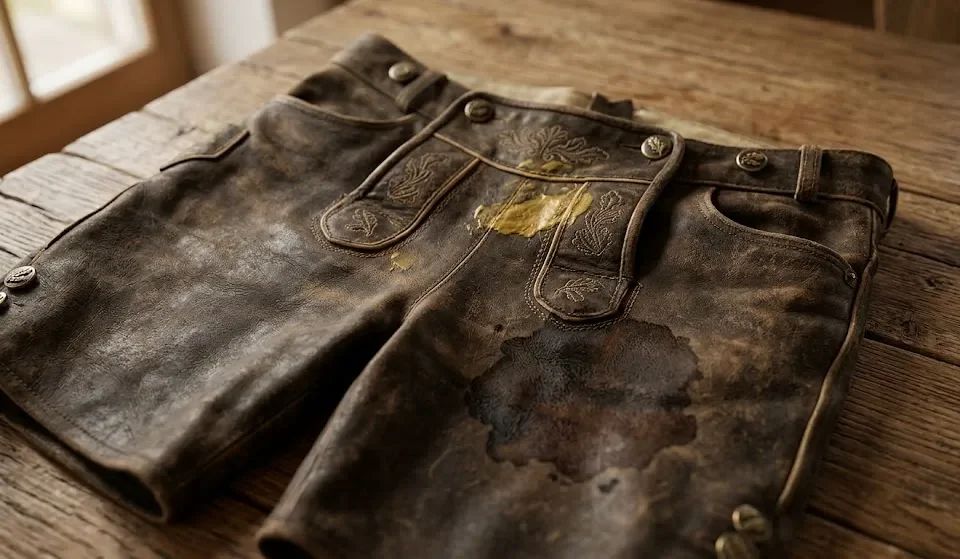
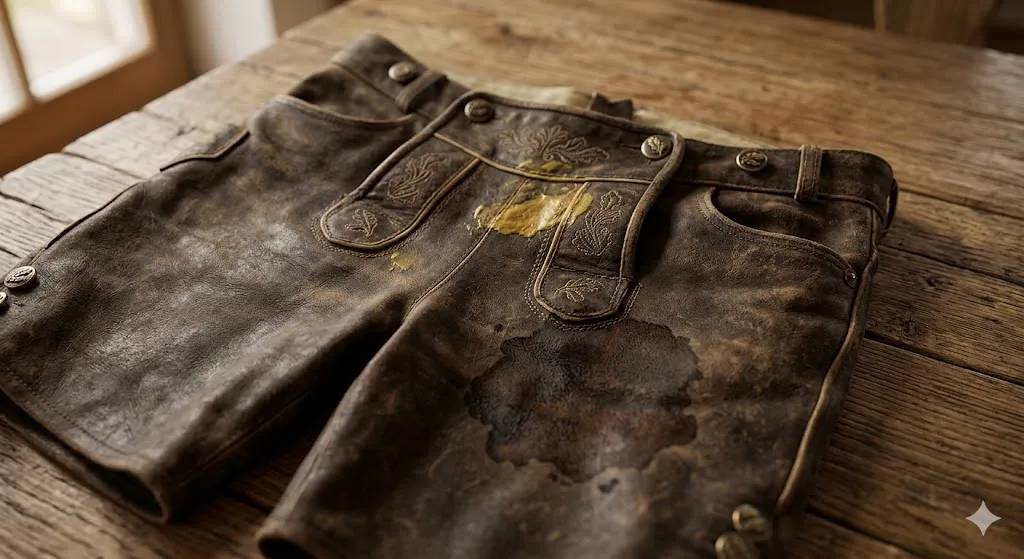
You just got home from Oktoberfest. There is a mustard streak across the bib, beer soaked into the thigh, and something unidentifiable from the Hendl stand on the knee. Your Lederhosen cost good money. The last thing you want to do is ruin them trying to clean them.
Here is the honest answer most guides skip: the best thing you can do right now is hang them up and walk away for 48 hours. More on that in a moment.
Lederhosen made from genuine deer leather, goatskin, or cowhide are not like any other piece of clothing you own. They do not respond well to the instinct to wash and scrub. Every wash — even a careful one — removes something that took years to build. Understanding what that is, and why it matters, changes how you approach cleaning entirely.
This guide covers the complete care process in the correct order, with specific instructions depending on what leather type you own, common stains, drying, conditioning, and long-term storage. If you are not yet sure which leather your pair is made from, our guide on what Lederhosen are made from explains each type in detail before you start.
The Bavarian Rule: You Don’t Wash Lederhosen
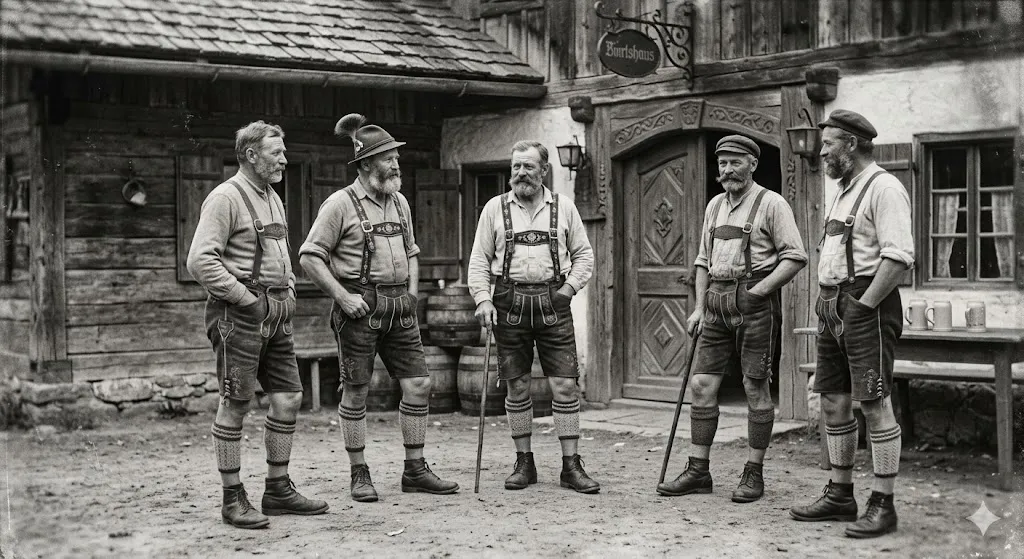
For generations, the rule passed down among Bavarian families has been simple — you do not wash Lederhosen. This is not a joke or an exaggeration. Most Bavarian men who wear Trachten regularly go years between washes, and some never wash a pair at all in the traditional sense.
The reason comes down to patina. Over time, genuine leather develops a natural fat layer from the oils in your skin, the grease from festival food, and the environment it is worn in. This layer — called patina — gives authentic Lederhosen their characteristic sheen, deepens the colour, and shapes the leather to the body of the wearer. A well-worn pair with deep patina is more valuable, more comfortable, and more authentic than a clean pair that looks like it just came out of a box.
Every time you wash Lederhosen, you strip some of that patina away. You are not just removing dirt — you are removing character. This is why the Bavarian instinct is to air and brush first, and only consider wet cleaning when there is genuinely no other option.
With that established, here is the correct order to follow every time.
Step 1: Air Them Out First — Resolves Most Problems
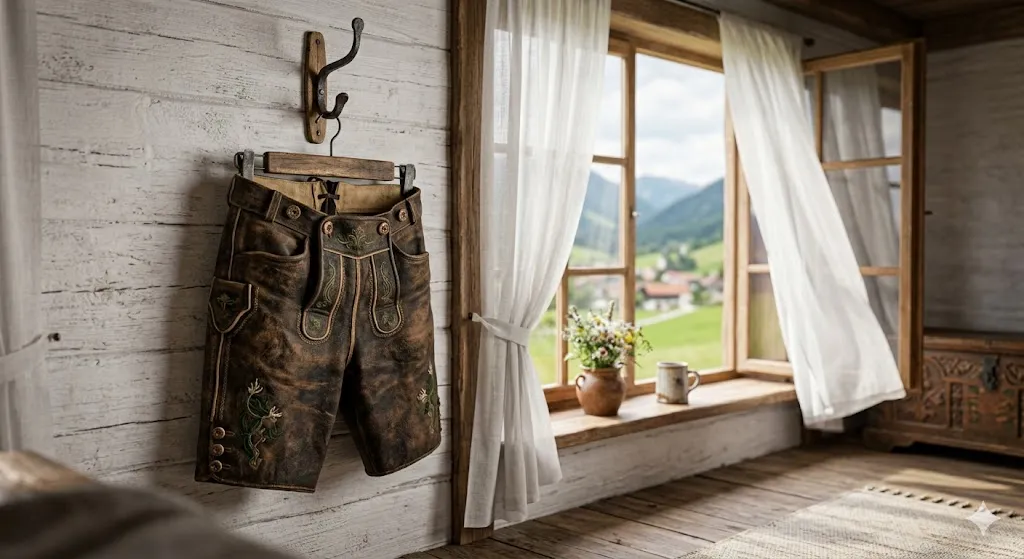
Before reaching for water, soap, or any cleaning product, hang your Lederhosen in fresh air for 24 to 48 hours. A shaded spot outdoors, a well-ventilated room, or even an open window is enough.
This single step eliminates the vast majority of post-festival problems. Beer tent smoke, body sweat, grilled meat fumes, and general festival odour — almost all of it disappears with proper airing alone. The leather breathes, the smell dissipates, and in most cases the Lederhosen come out looking and smelling perfectly acceptable without any cleaning at all.
Protect them from rain while airing. Untreated leather and direct moisture do not mix well — a few drops of rain on a well-oiled pair is usually fine, but sustained exposure to wet weather can cause the leather to stiffen as it dries.
If there is visible lint or thread pickup on the fabric sections or embroidery from a night in the Bierzelt, a lint roller handles it quickly without touching the leather itself.
After airing, look at your Lederhosen honestly. If they look and smell acceptable — and they often will — your job is done. No cleaning required.
Step 2: Use a Leather Brush or Leather Eraser Before Any Water
If airing is not enough and there are visible surface marks, dried mud, or light staining, your next tool is a leather brush or leather eraser — not water.
A leather brush with rubber bristles (never wire bristles — wire will scratch and damage the surface) lifts dried dirt, surface dust, and light marks without any moisture at all. Work in the direction of the leather grain with gentle pressure. Test on a small hidden area first if your Lederhosen are a deep or dark colour, as some brushes can slightly affect the shade.
A leather eraser — which looks and works similarly to a standard pencil eraser — works well on dry scuff marks, light surface stains, and areas where the grain has been slightly compressed. It requires no moisture and carries no risk to the leather.
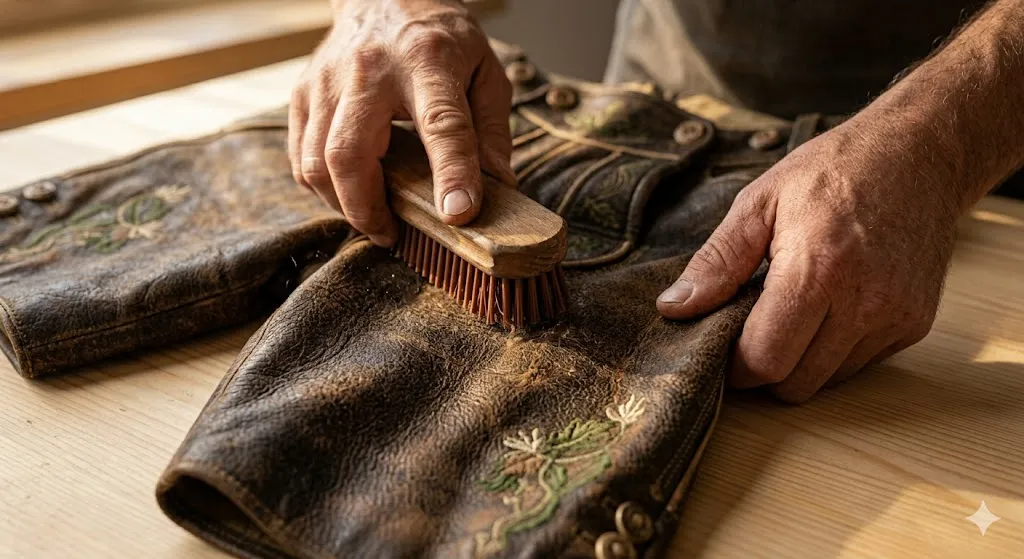
This combination of brush and eraser solves a significant number of staining problems that people assume need wet cleaning. Try both thoroughly before considering any water-based method.
Step 3: Spot Clean Specific Stains
When brushing and airing have not resolved the problem and you have a specific, visible stain — mustard, beer, grease, or mud — spot cleaning targets that area without wetting the whole garment.
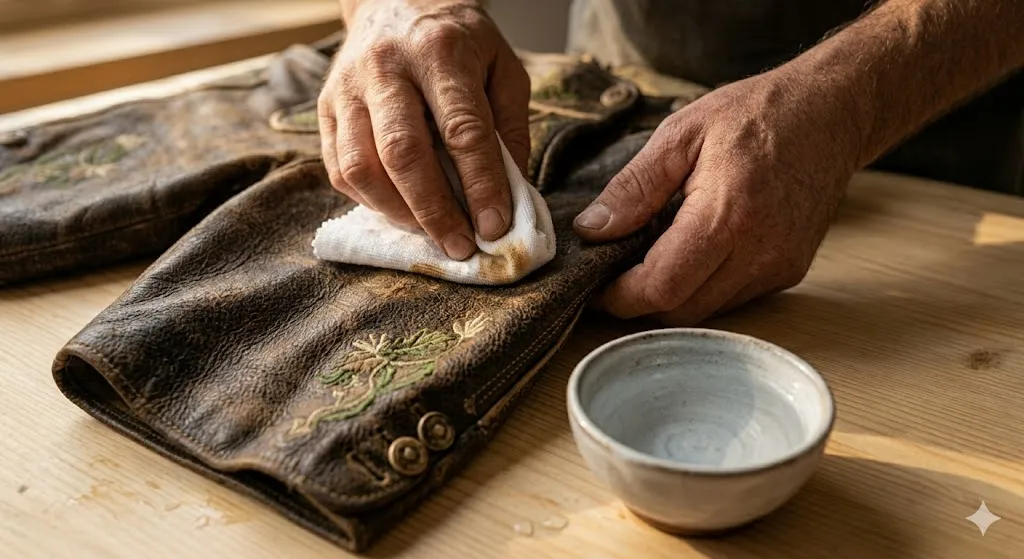
The key principle is to use as little moisture as possible and to work from the outside of the stain inward so you do not spread it.
What you need:
- Soft lint-free microfiber cloth
- Cold water — not lukewarm, not warm. Cold.
- Saddle soap, curd soap, or pH-neutral leather cleaner
How to spot clean:
- Dampen the cloth lightly — it should feel barely moist, not wet
- Blot the stain gently — do not rub, as rubbing pushes the stain deeper into the leather pores and can spread it outward
- If the stain is not lifting, apply a small amount of curd soap or saddle soap directly to the cloth — not to the leather — and work in very small, slow circular motions over the stain
- Wipe any soap residue away with a separate clean damp cloth
- Pat the area dry immediately with a dry towel — do not leave moisture sitting on the leather
For grease and oil stains from food: Skip the water entirely. Cornstarch or talcum powder absorbs oil-based stains better than any soap. Sprinkle generously over the affected area, press it lightly into the stain, and leave it overnight. Brush it off gently the next morning. Repeat if needed. This method works on chicken fat, currywurst grease, and butter stains without adding any moisture to the leather.
For beer stains: Blot immediately with a dry cloth to absorb as much liquid as possible before it sets. Once dry, treat with a lightly damp cloth if residue remains. Beer that has fully dried and set into the leather may require hand washing if spot cleaning does not remove it completely.
One detail most guides miss: Be careful around embroidery, decorative stitching, and metal buttons. Do not apply soap or wet cloth directly to embroidered sections — water soaking into embroidery thread can cause colour bleeding onto the surrounding leather, which is very difficult to reverse. Clean around decorative elements with a barely damp cloth only.
Step 4: Hand Washing — Only When Nothing Else Works
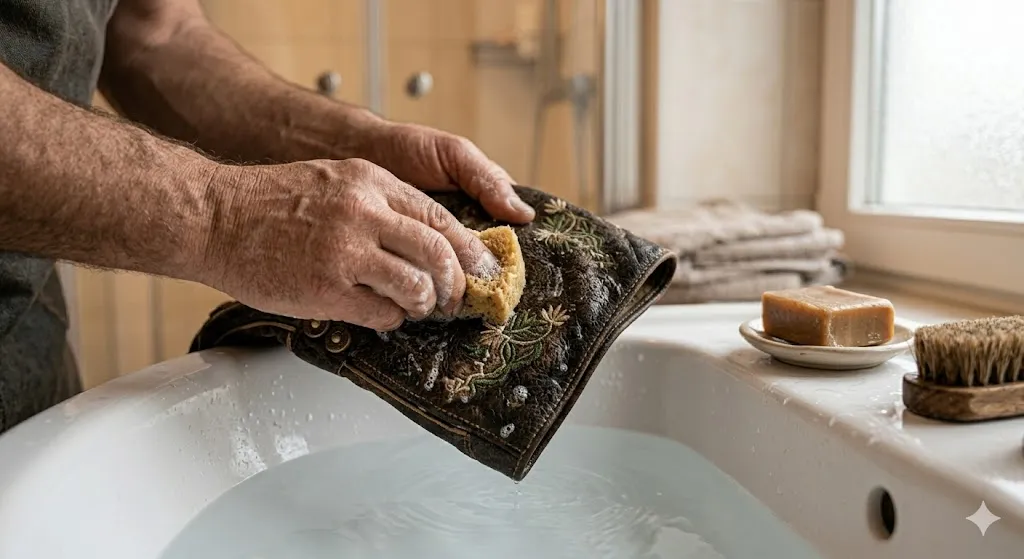
If you have worked through airing, brushing, and spot cleaning and the Lederhosen still need more attention, a careful hand wash is possible. But be clear-eyed about the tradeoff: even a gentle hand wash removes some patina and natural oils from the leather. You are getting cleaner Lederhosen at the cost of some of the character that makes them authentic.
The Water Temperature Mistake Everyone Makes
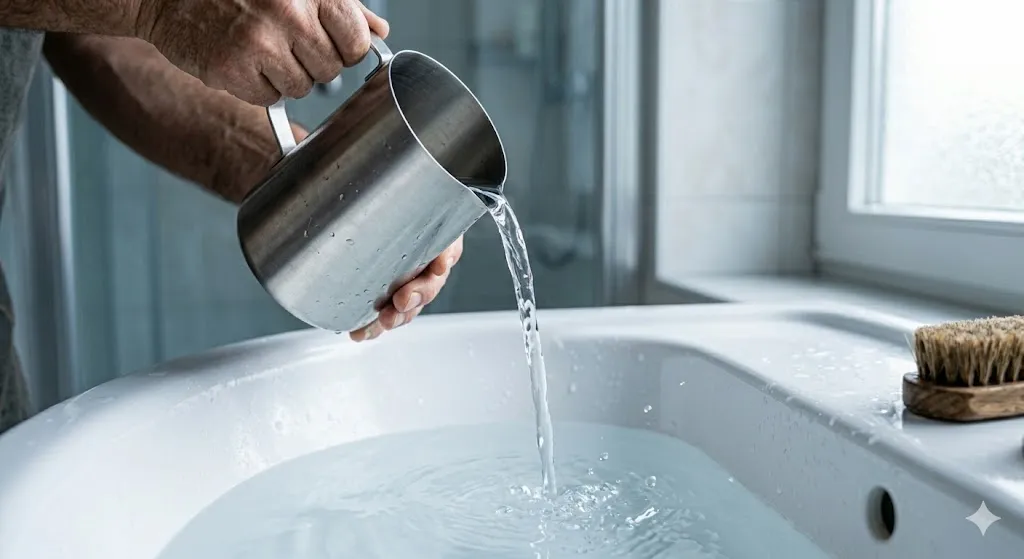
The old advice circulating on most websites recommends lukewarm water at 85°F–95°F (29°C–35°C). This is incorrect and can damage authentic leather. The correct rule, followed by every reputable European Trachten care guide, is cold water. Warm or hot water makes leather stiff and brittle. When in doubt, go colder — cold water is always the safer choice.
Leather Type Matters Significantly
Not all Lederhosen wash the same way. If you own a pair from our men’s Lederhosen collection and are not sure of the leather type, check the care label or product description before proceeding.
| Leather Type | Hand Wash? | Machine Wash? | Water Temp | Key Notes |
| Deerskin (Hirschleder) | Yes — with extreme care | Never | Cold only | Most delicate, most prized. Minimal moisture at all times |
| Goatskin (Ziegenleder) | Yes — carefully | Never | Cold only | Traditional choice for authentic Oktoberfest Lederhosen |
| Cowhide (Rindsleder) | Yes | Possible — with leather detergent + fixative + cold gentle cycle | Cold to barely lukewarm | Most forgiving leather. Machine wash still removes patina |
| Suede | Spot clean only | Never | No wet cleaning | Brush and suede eraser only — see suede section below |
Hand Washing Step by Step
- Fill a clean basin with cold water — large enough to fit the Lederhosen without forcing them
- Add a small amount of leather-specific soap, curd soap, or saddle soap. Use less than you think is necessary
- Using a soft natural sponge or microfiber cloth, wipe the surface of the Lederhosen slowly with gentle movements — do not submerge the entire garment in water and do not agitate it
- Work section by section, focusing only on areas that genuinely need cleaning
- Remove all soap residue by wiping with a separate clean cloth dampened in cold water — do not rinse under a running tap, as this over-saturates leather
- Gently squeeze — do not wring — to remove excess water. Wringing distorts the structure of the leather permanently
- Move immediately to the drying stage — wet Lederhosen left sitting will stiffen
A Honest Note on Machine Washing
The blanket rule “never machine wash Lederhosen” is slightly too simple. Budget-friendly cowhide Lederhosen can technically survive a machine wash — but only with a leather-specific detergent, a leather fixative added to prevent colour bleeding, cold water, the gentlest available cycle, and the lowest possible spin speed. Authentic deerskin and goatskin Lederhosen should never go in a machine. The mechanical agitation alone causes damage that conditioning cannot reverse.
Step 5: Drying — Where Most Damage Actually Happens
Incorrect drying destroys more Lederhosen than incorrect washing. This step deserves as much attention as everything before it.
Lay the Lederhosen flat on a clean dry towel at room temperature. Never hang wet Lederhosen — the weight of the saturated leather will stretch and distort the shape permanently. Keep them completely away from radiators, tumble dryers, direct sunlight, and hairdryers. Heat is the single biggest enemy of leather at this stage, far more damaging than the original stain was.
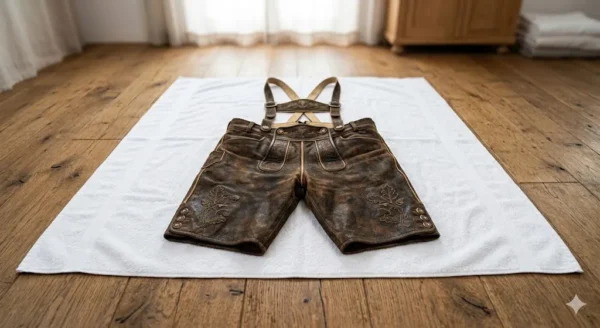
Expect the drying process to take two to three full days. Do not rush this. Change the position of the Lederhosen every few hours during drying to prevent the leather from stiffening in one position. Flip them, reposition the legs, adjust the bib. This movement keeps the leather pliable as it dries.
While the leather is still slightly damp — not wet, slightly damp — gently reshape by hand. Pull the waistband back to its original width, smooth the bib flat, and straighten the leg bottoms. Doing this while the leather still has some moisture in it means you will not have to fight the shape once it is fully dry.
To check whether the fit is still correct once dry, our guide on how Lederhosen should fit explains what the correct fit looks and feels like across different leather types.
Step 6: Conditioning After Washing
Once the Lederhosen are completely dry — and completely means two to three days, not a few hours — apply leather oil or leather conditioner across the entire surface.
Washing removes the natural oils from leather that keep it supple and flexible. Conditioning replaces them. This step is not optional — skipping it after a wash leads to gradual stiffening and, eventually, cracking.
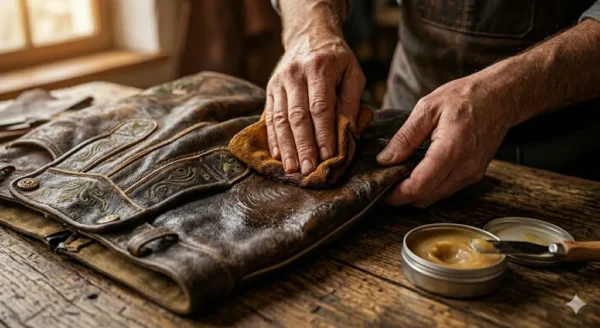
Bavarians traditionally used butter for this purpose. It still works, but modern leather oil is preferred because the smell is significantly better. Apply a small amount to a soft clean cloth and work it into the leather in slow circular motions. Pay extra attention to the seat area, the back of the knees, and any area that flexes heavily during wear — these lose oil fastest.
After conditioning, knead and stretch the leather gently with your hands, or pull it carefully over a rounded edge. This re-softens the surface and helps restore the suppleness that washing removed. When you wear the Lederhosen for the first time after washing, the leather may still feel slightly different to before. This is normal — it takes several wears for the leather to fully return to its previous comfort and flexibility.
A leather protection spray applied after the conditioner has absorbed adds an additional barrier against water and staining. This is particularly worthwhile if the Lederhosen are heading back to Oktoberfest or another festival soon.
Caring for Suede Lederhosen Specifically
Suede Lederhosen require a completely different approach from smooth leather. The most important rule: suede should never be submerged in water, and wet cleaning should be an absolute last resort.
For everyday maintenance, use a dedicated suede brush to remove surface dirt and a suede eraser for marks and light stains. Work gently in the direction of the nap — the fine fibres of the suede surface — and never brush against the grain aggressively.
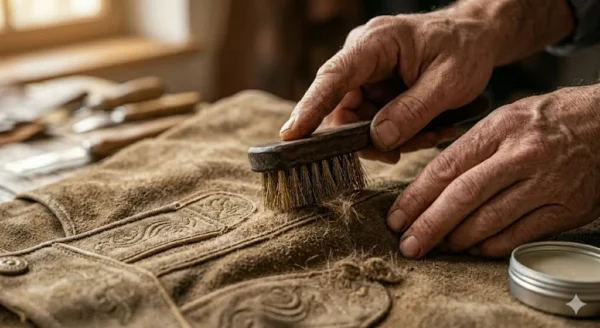
For tougher stains on suede, apply a small amount of white vinegar to a cloth and dab — do not rub — the affected area. Vinegar is gentler on suede than water-based soap solutions and evaporates more cleanly. Allow to air dry fully, then brush the suede gently to restore the texture of the nap.
If suede Lederhosen have lost their surface texture after cleaning, a suede restorer spray can help bring the nap back. This is a specialist product available at leather care shops and worth having if suede Lederhosen are part of your Trachten wardrobe.
Long-Term Storage Between Seasons
Most people wear their Lederhosen once or twice a year. How they are stored for the remaining months matters enormously for the condition they come out in.
Before storing, air the Lederhosen for at least 24 hours and apply a light coat of leather conditioner. This prevents the leather from drying out during the months it sits unused.
Store in a cool, dark, well-ventilated wardrobe — never in a damp basement, a sealed plastic bag, or any environment with humidity. Plastic traps moisture and is one of the most common causes of mould and mildew on stored Trachten leather.
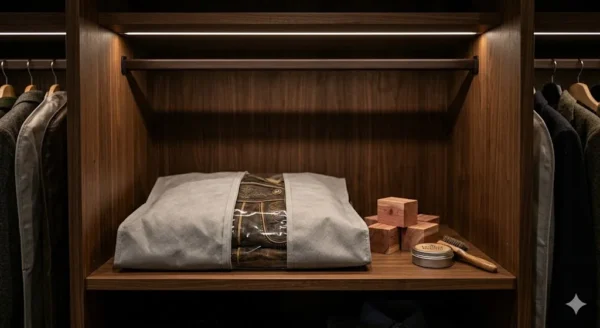
Use a breathable fabric garment bag rather than plastic. Stuff the legs loosely with acid-free tissue paper to prevent creasing. Place cedar blocks or silica gel packs inside the bag to absorb ambient moisture and prevent musty smells from developing.
Use a sturdy padded hanger — not a wire hanger that creates pressure points at the waistband. If the Lederhosen are exceptionally heavy or bulky, storing flat is better than hanging to prevent distortion over months of storage.
When you take them out for the next season, check the leather condition before wearing. If they feel at all dry or slightly stiff, apply another light coat of conditioner and allow it to absorb for a day before putting them on. For a complete picture of what should go with your refreshed Lederhosen, our what to wear with Lederhosen guide covers the full traditional outfit from Haferlschuhe to Trachten shirt. You can also browse our traditional men’s Bundhosen collection if you are looking for something new this season.
When to Go to a Professional Leather Cleaner
Some situations go beyond what home care can safely handle:
- Mould or mildew from improper storage — this needs specialist treatment to remove without damaging the leather further
- Deep-set stains from years ago that have fully penetrated the hide
- Significant colour loss or uneven fading after incorrect cleaning
- Structural stiffness that conditioning cannot soften — a sign the leather has been damaged at a fibre level
Professional Lederhosen cleaning typically costs between €30 and €50 depending on the length and level of soiling. For a quality pair of deerskin or goatskin Lederhosen that may have cost several hundred euros, this is a reasonable investment to restore them properly.
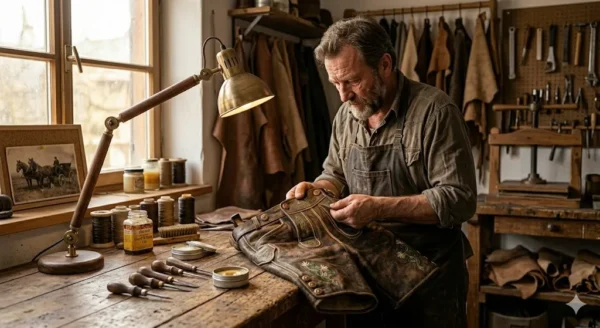
The critical point: go to a leather specialist, not a general dry cleaner. Standard dry cleaning solvents are not designed for Trachten leather and can strip colour and damage surface texture. Ask specifically whether the cleaner has experience with traditional Bavarian leather garments before leaving your Lederhosen with them. A good specialist will inspect the garment first and give you an honest assessment before touching it.
Frequently Asked Questions
Can you wash Lederhosen in a washing machine?
It depends on the leather type. Budget-friendly cowhide Lederhosen can survive a machine wash using leather detergent, a leather fixative to prevent colour bleeding, cold water, and the gentlest available cycle with low spin speed. Authentic deerskin and goatskin Lederhosen should never be machine washed — the agitation and spin permanently distort the structure of the leather. When in doubt, hand wash.
How often should you wash Lederhosen?
As rarely as possible. Most festival wear problems — odour, light surface marks, dust — are resolved by airing for 24 to 48 hours followed by brushing. A full hand wash should only happen when airing, brushing, and spot cleaning have all failed. Many Bavarians who wear Trachten regularly wash their Lederhosen once every few years at most.
What is the patina on Lederhosen and why should you keep it?
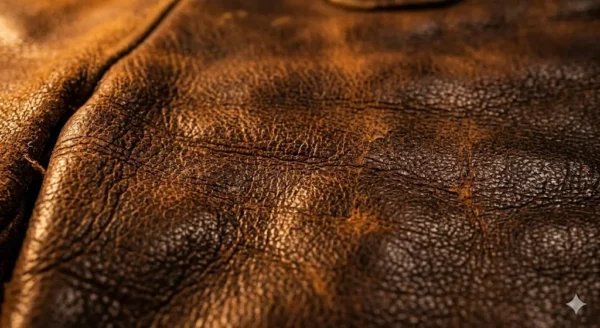
Patina is the natural fat layer that develops on Lederhosen with regular wear — a build-up of skin oils, leather grease, and the accumulated environment of every event worn in. It darkens the colour, creates a characteristic sheen, and shapes the leather to the wearer’s body. It is entirely intentional and is what distinguishes a genuinely worn authentic pair from a new one. Do not try to remove patina — washing it away means losing years of character that cannot be quickly rebuilt.
Can Lederhosen go in the dryer?
Never, under any circumstances. Even a low heat setting in a tumble dryer will dry out the leather rapidly, making it stiff, brittle, and prone to cracking. Always air dry flat at room temperature away from all heat sources. The drying process takes two to three days — there is no shortcut that does not risk permanent damage.
How do you remove the beer smell from Lederhosen after Oktoberfest?
Hang them in fresh outdoor air or a well-ventilated room for 48 hours. This resolves virtually all post-festival odour without any cleaning at all. For anything that remains after airing, sprinkle baking soda generously over the inner surface, leave it overnight, then brush it off gently the next morning. Cedar blocks stored with the Lederhosen between wearings help prevent odours from returning.
How do you wash suede Lederhosen?
Suede requires a completely different approach to smooth leather. Never submerge suede in water. Use a suede brush for surface dirt and a suede eraser for stains. For tougher marks, dab very carefully with a cloth barely moistened with white vinegar — do not rub. Allow to air dry fully, then brush to restore the nap. If suede texture is lost after cleaning, a suede restorer spray can help.
How do you know when Lederhosen actually need washing?
The leather will tell you. When the patina becomes so thick that the leather starts to feel stiff and suffocating rather than supple and worn-in, that is when a wash is needed. If airing for two full days does not resolve the smell, washing is necessary. If visible staining remains after thorough brushing and spot cleaning, washing is the next step. If the leather feels noticeably harder and less flexible than it used to, it needs cleaning and conditioning. Outside of these situations, regular airing and brushing is sufficient.
The Short Version
The complete care hierarchy for Lederhosen, in the correct order:
- Air first — 24 to 48 hours outdoors or in a ventilated room after every wear
- Brush second — rubber-bristle leather brush and leather eraser for surface dirt and light marks
- Spot clean third — cold water, leather soap, microfiber cloth on specific stains only
- Hand wash last resort — cold water, curd soap or saddle soap, no submerging, lay flat to dry for 2 to 3 days
- Condition after every wash — leather oil or conditioner to restore suppleness, follow with protection spray
- Store correctly — breathable garment bag, cool dry wardrobe, cedar blocks, padded hanger
A pair of authentic Lederhosen treated this way does not just last a season. It lasts decades, develops genuine character, and can be passed between generations — which is exactly what the best Bavarian Trachten is supposed to do.
At German Attire, we have helped customers across the US, UK, and Australia find authentic Bavarian traditional clothing for Oktoberfest and beyond. Every pair of Lederhosen in our men’s collection is sourced to authentic Trachten quality standards. If you are looking for your first pair or replacing an old one, our guide to measuring for Lederhosen ensures you get the right fit before you order.

Anna Bauer is a seasoned Bavarian fashion expert, cultural consultant, and heritage stylist with over a decade of hands-on experience in traditional German clothing. Born in Munich, the heart of Bavaria, Anna grew up surrounded by the rich traditions of Trachten fashion. Her passion for cultural attire led her to pursue a degree in Fashion and Textile Design at the prestigious University of the Arts Berlin, where she specialized in European folkwear.
Over the past 12+ years, Anna has collaborated with renowned Trachten designers, styled outfits for Oktoberfest events across Germany, and contributed articles to top fashion and culture magazines across Europe. Her work focuses on preserving the authenticity of Lederhosen and Dirndl wear while helping modern audiences style them with confidence and flair.
As the lead content contributor for German Attire, Anna combines her academic background, professional styling experience, and deep cultural roots to provide readers with valuable insights into traditional German fashion. Her blog posts cover everything from historical origins and styling guides to care tips and festival outfit planning—making her a trusted voice for anyone looking to embrace Bavarian heritage in a stylish, modern way.