

Blog
How to Wash Dirndl? Complete Care Guide for Every Fabric

How to Wash a Dirndl — Complete Fabric Care Guide
The question most people ask after Oktoberfest is not how to wash Dirndl. It is whether they can machine wash it or whether they have to take it to a dry cleaner. The answer depends almost entirely on one thing: the fabric your Dirndl is made from. A cotton Dirndl — sometimes labelled as a Waschdirndl — can go in the washing machine on a cold delicate cycle and come out perfectly fine. A silk or velvet Dirndl washed the same way will shrink, bleed colour, and lose its texture permanently.
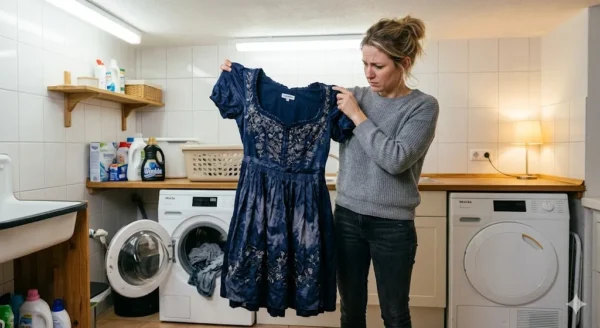
Getting this distinction right before you wash is the most important decision in Dirndl care. Everything else — water temperature, cycle selection, drying method, ironing technique — follows from the fabric type. This guide covers every fabric category, every washing method, the correct pre-wash preparation that most guides skip, specific stain removal by stain type for real festival stains, and the long-term storage approach that keeps a Dirndl in condition for the next season and the season after that.
For guidance on wearing your Dirndl correctly at the next festival, our guide on how to wear a Dirndl correctly covers every component from the bodice to the apron bow. Browse our Bavarian traditional Dirndl collection when you are ready for next season.
Step One: Identify Your Fabric Before Touching the Dirndl
Why the Care Label Is Non-Negotiable
The first step in cleaning your Dirndl is always to check the care label inside the dress. Every garment from a reputable manufacturer includes a care label that specifies the washing method, maximum water temperature, and whether professional dry cleaning is required. This label overrides any general guidance including everything in this guide — if the care label says dry clean only, dry clean it regardless of the fabric appearing to be washable. The manufacturer has tested their specific combination of fabric, dye, lining, and embellishment construction and determined the safest method.
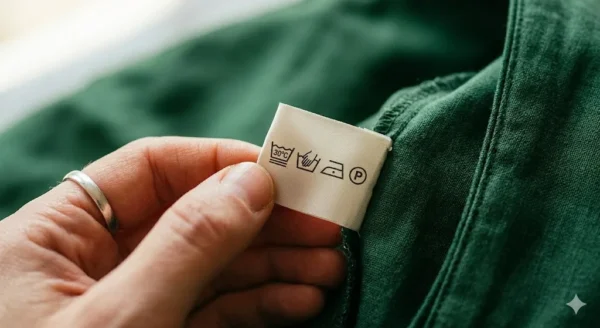
The care symbols on the label use an international standard: a tub symbol indicates washing is possible, the number inside the tub is the maximum water temperature in Celsius, a hand inside the tub means hand wash only, and a circle means dry cleaning is appropriate. An X through any symbol means that method is prohibited. Familiarise yourself with these symbols before your first wash rather than guessing based on the fabric alone.
The Fabric Decision Tree
If the care label is missing or illegible, the fabric type determines the correct method. Here is the honest decision framework:
- Cotton (plain, without heavy embellishment): Machine washable on cold delicate cycle. These are often sold as Waschdirndl — specifically designed for home washing.
- Cotton-polyester blend: Machine washable on cold delicate cycle with a mesh laundry bag.
- Linen: Hand wash in cold water or very gentle machine cycle at 30°C maximum. Linen shrinks easily in warm water.
- Silk: Hand wash in cold water only with a specialist silk detergent, or professional dry cleaning. Never machine wash.
- Velvet: Hand wash cold for cotton velvet, professional dry cleaning for silk velvet. Never machine wash any velvet — it crushes the pile permanently.
- Heavy embroidery, beadwork, or sequins: Professional dry cleaning regardless of the base fabric. Water and mechanical agitation loosen embellishments and dissolve adhesive threads.
- Wool blend: Hand wash cold with a wool-specific detergent, or dry clean. Wool felts irreversibly in warm water.
For detailed guidance on what specific fabrics are used in different quality tiers of Dirndl construction, our complete Dirndl buying guide covers fabric types and what they mean for both wearing experience and long-term care.
The Colourfast Test: Two Minutes That Prevent Disasters
Before washing any Dirndl for the first time — even a cotton one — run a colourfast test. Dampen a clean white cloth with cold water and press it firmly against a hidden section of the fabric: inside a seam allowance, the underside of the bodice hem, or the inside of the waistband. Hold for 30 seconds and examine the white cloth. If colour has transferred to the cloth, the dye is not colourfast and the Dirndl will bleed in washing — dark bodice dye into a light skirt, apron colour into the dress fabric. Professional dry cleaning is the only safe option for non-colourfast garments.
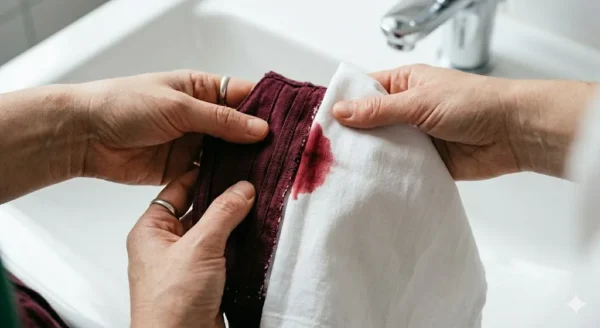
This test takes two minutes. It has prevented countless ruined Dirndls from buyers who assumed their deep navy or forest green garment was stable and discovered it was not after a full wash cycle. Do not skip it for a new garment you have not washed before.
Pre-Wash Preparation: The Steps Most Guides Skip
Air It Out First
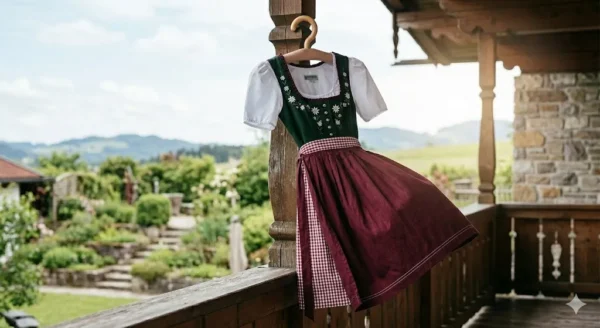
After a fun-filled night, your Dirndl might smell like smoke, beer, or perfume. Air it out for a day before washing. Hang the Dirndl on a padded hanger in a well-ventilated room — outdoors in shade is ideal — for 24 hours before any cleaning begins. This single step eliminates most festival odours without any washing at all. Beer tent smoke, body heat, and perfume dissipate naturally with airing. Washing the garment while the odour is still present does not reliably remove it — the smell can return as the garment dries. Airing first produces better odour results than washing alone.
Remove All Detachable Components Before Washing
Remove the apron, hooks, laces, and satin ribbons before washing. These components are separate garments requiring separate care. A satin ribbon washed in the machine with the cotton dress will lose its sheen and may transfer dye. Metal hooks and eyes can catch on other fabrics and cause snagging or tearing during a machine cycle. Decorative lacing through eyelets should be removed, washed separately by hand if needed, and re-laced after the dress is fully dry.
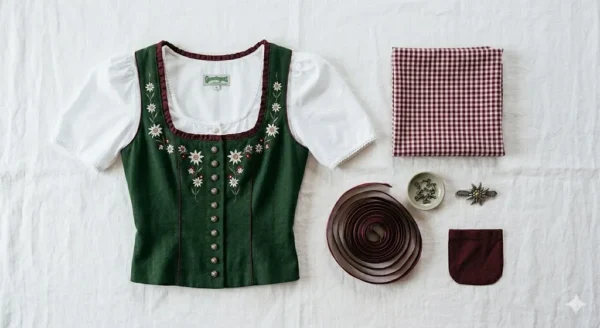
This also applies to any detachable Dirndl accessories — brooches, decorative pins, badge-style items — that should be stored separately from the garment during cleaning. Our Dirndl accessories guide covers care for each accessory type in detail.
Turn the Dirndl Inside Out
When hand washing or machine washing your Dirndl, turn it inside out to minimise wear on its delicate decorations. Turning inside out achieves two things: it protects embroidery, printed patterns, and surface details from direct friction against the basin or machine drum, and it reduces fading of the exterior fabric colour caused by agitation. The inside seams absorb the mechanical stress instead of the decorative outer surface.
Spot Treat Stains Before the Full Wash
Festival stains should be addressed before the full washing process, not during it. Treating stains while the garment is already wet and in wash solution is less effective than treating them dry or pre-dampened before submersion.
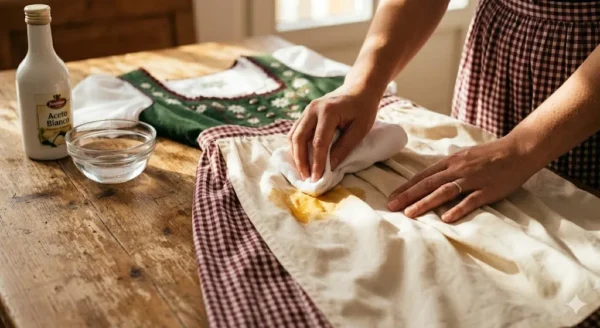
Beer and sparkling wine: Blot immediately with a clean dry cloth to absorb as much liquid as possible. Do not rub — rubbing spreads the stain and drives it deeper into the fabric fibres. Once blotted, rinse the affected area with cold water. Beer stains that have dried and set respond to a solution of equal parts cold water and white vinegar dabbed gently onto the stain before washing.
Mustard and food stains: Scrape off any solid residue with a blunt edge first. Tough mustard sauce stains require a stain remover made for coloured clothes — always test any cleaning solution on a small, hidden area to avoid discoloration or fabric damage before applying to the stain. Allow the stain remover to work for 5-10 minutes before washing.
Wine and spirits: Salt applied immediately to a fresh wine stain on the table at the festival draws the liquid out of the fabric before it sets. Once home, dab with cold water and allow to dry before the full wash rather than rubbing wet wine into the fabric.
Makeup: To remove makeup stains, treat them with a small amount of mild liquid dish soap, rub the stained area gently, then rinse thoroughly. Foundation, lipstick, and powder all respond well to mild dish soap because it is designed to break down oil-based substances — the same chemistry that creates most makeup stains.
General principle: Always test any stain remover or cleaning solution on a hidden area of the garment first. The embroidery threads, special finishes, and fabric blends in a Dirndl can react unpredictably to commercial stain removers designed for everyday clothing.
Machine Washing: When It Is Acceptable and How to Do It Correctly
The Waschdirndl: Designed for Machine Washing
The term Waschdirndl refers to a Dirndl specifically designed and constructed for machine washing — typically made from plain cotton or a durable cotton-polyester blend without delicate embellishments. If your Dirndl is 100% cotton, it is usually safe to put in the washing machine — these are known as Waschdirndl. The key word is usually — the care label still takes precedence. A 100% cotton Dirndl with heavily embroidered panels or attached beadwork is not a Waschdirndl regardless of the base fabric.
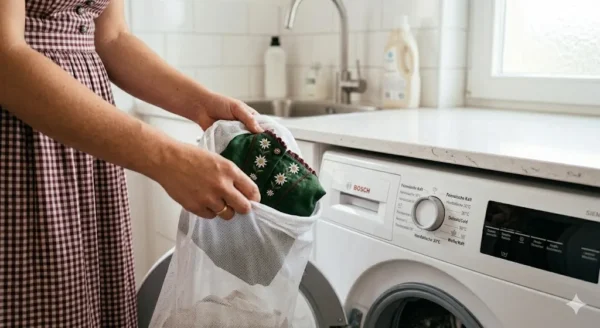
Machine washing is not a shortcut that applies broadly to modern Dirndl styles. It applies specifically to garments designed for it. Applying machine washing to any Dirndl that does not meet this criterion because it feels convenient will produce shrinkage, colour bleed, embellishment damage, or structural distortion.
Machine Washing Step by Step
When machine washing is confirmed appropriate by the care label:
- Remove all detachable components: apron, ribbons, lacing, hooks
- Turn the Dirndl inside out
- Place inside a mesh laundry bag — this protects the fabric from direct drum friction and prevents embroidery threads from snagging on the drum perforations
- Select the delicate or hand wash cycle — never a standard or cotton cycle
- Set water temperature to cold or a maximum of 30°C — warm or hot water causes cotton Dirndls to shrink even when the fabric itself is washable
- Use a mild, pH-neutral detergent designed for delicate garments — not standard laundry detergent, which contains brightening agents and enzymes that affect fabric dye
- Do not overload the machine — the Dirndl needs space to move freely without excessive mechanical stress
- Remove immediately when the cycle ends — leaving a damp Dirndl in the machine causes colour transfer, creasing, and in warm conditions can promote mildew
Hand Washing: The Correct Method for Most Dirndl Fabrics
Preparing the Washing Solution
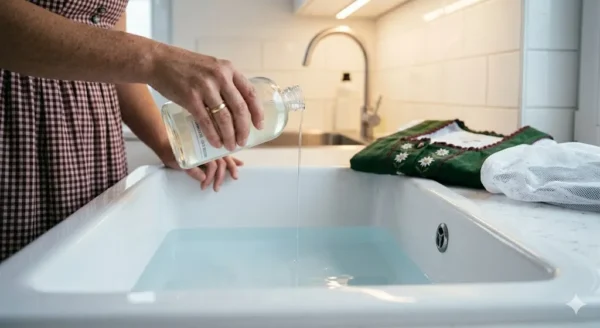
Fill a clean basin or sink with cold water. Cold is not a suggestion — it is the correct temperature for hand washing Dirndl fabrics. Cotton or linen Dirndls can be washed with cold water on a gentle cycle. Avoid using harsh and too much detergent to help maintain the fabric’s shine. Add a small amount of pH-neutral detergent designed for delicate fabrics and stir gently to distribute it evenly before submerging the garment. A detergent designed for wool and silk works well across most Dirndl fabric types including cotton — it is gentle enough for delicate materials and effective enough for festival soiling.
The Washing Process
Submerge the Dirndl fully and allow it to soak undisturbed for 10 to 15 minutes. This soak time loosens surface dirt, sweat residue, and food particles without requiring mechanical scrubbing that could damage embroidery or fabric structure. Do not agitate aggressively. Gently move the garment through the water with slow, relaxed movements — the water does the cleaning work, not the physical action.
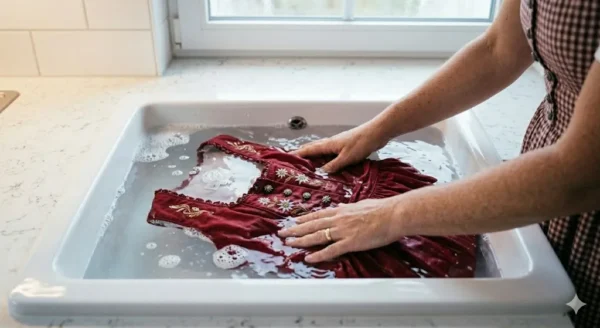
For areas of visible soiling or remaining stains after spot treatment, gently pinch and release the fabric between your fingers while submerged. If embellishments are stained, use a cotton swab dipped in mild detergent for spot cleaning instead of washing the entire piece. This targeted approach protects delicate embroidery and beadwork from unnecessary water exposure.
Rinsing Thoroughly
Drain the soapy water and refill the basin with fresh cold water. Move the Dirndl through the clean water gently to release detergent. Repeat this rinsing process two or three times until the water runs completely clear with no visible soap residue. Incomplete rinsing leaves detergent residue in the fabric that stiffens the material over time, attracts dirt more quickly than clean fabric, and can cause skin irritation when the Dirndl is worn.
Never rinse under running tap water by holding the garment under the flow — the water pressure and the weight of the wet fabric combined can stretch and distort the construction. Rinsing by immersion in still water in the basin is the correct method.
Removing Excess Water Without Damaging the Fabric
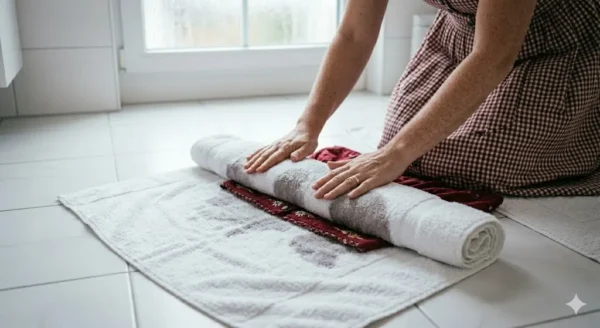
Lift the Dirndl out of the rinse water supporting its full weight with both hands. Never wring, twist, or squeeze the fabric — these actions distort the construction, stretch embroidery threads, and can permanently alter the shape of structured elements like the bodice. Instead, hold the garment over the basin and allow the water to drip freely for 30 seconds. Then lay it flat on a clean dry towel, roll the towel gently around the garment, and press firmly with your hands along the rolled length. This draws the remaining moisture into the towel without mechanical stress on the fabric.
Drying a Dirndl Correctly
Air Drying Is the Only Acceptable Method
Tumble drying a Dirndl — even on a low heat setting — will cause shrinkage, colour fading, and damage to embellishments. The combination of heat and mechanical tumbling is the worst possible environment for the fabrics and construction used in Dirndl production. Remove from the machine or basin and move directly to the air drying process.
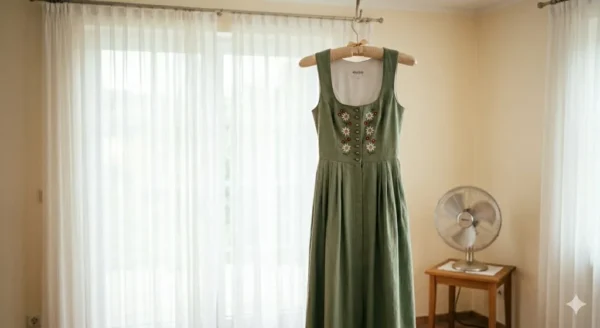
Take the garment out of the washer or basin immediately to prevent colour fading. Hang it to dry on a padded hanger in a well-ventilated area. Avoid direct sunlight — UV exposure fades fabric colour, particularly in the deep, saturated tones common in traditional Dirndl designs. A shaded outdoor spot or a well-ventilated indoor room away from direct window light is ideal.
For heavier Dirndl styles in velvet or thick cotton: if the dress is made from heavy material like wool or velvet, avoid line drying. Place it on flat drying racks or lay it on a soft cotton towel to allow drying without stretching from the weight. The weight of a wet velvet or heavy cotton Dirndl hanging from a hanger will stretch the shoulder seams and waistband permanently within a single drying session.
Reshaping While Damp
While the Dirndl is still slightly damp — not wet, but not fully dry — gently reshape any sections that have shifted during washing. Smooth the bodice flat, ensure the skirt hangs evenly, and check that any gathers or pleats in the skirt have fallen correctly. Reshaping while the fabric retains some moisture allows it to dry in the correct form rather than setting in a distorted position.
Special Care for Each Dirndl Component
The Apron
Always wash the apron separately from the Dirndl dress. Aprons are the most soiled component after a festival day — food, drinks, and festival dirt concentrate on this front panel. Washing the heavily soiled apron with the less soiled dress risks transferring staining between pieces.
Dirndl aprons are more prone to dirt and grime as the most exposed part of the outfit. Start by treating any visible spots with stain remover or detergent designed for delicates. Place the apron in a laundry bag during machine wash to protect it during the wash cycle. Air dry away from sunlight.
Embroidered or silk aprons require the same delicate care as embroidered bodices — hand wash in cold water or professional dry cleaning. A plain cotton apron can usually be machine washed on a cold delicate cycle in a mesh bag. Check the apron care label independently — it may differ from the dress label if the two components are made from different fabrics.
The Dirndl Blouse
The Trachtenbluse is usually the most washable component of the complete outfit. Most Dirndl blouses are machine washable. However, for delicate lace blouses, use a laundry bag and gentle cycle to prevent damage. Plain cotton and cotton-polyester blouses can be machine washed on the delicate cycle in a mesh bag at 30°C. Lace and organza blouses require cold hand washing or a very gentle machine cycle with a mesh bag. Silk blouses must be hand washed in cold water with silk detergent.
The blouse should always be washed separately from the Dirndl dress — it requires a different temperature and cycle to the dress in most cases, and washing them together leads to one being treated incorrectly. Explore our range of Dirndl blouses for styles with specific care instructions clearly stated on each product page.
Lacing, Ribbons, and Decorative Elements
Detach all ribbons, satin lacing, and decorative cords before washing the dress. Satin ribbons in particular lose their sheen when machine washed — the friction breaks down the weave surface that creates the characteristic lustre. Hand wash satin ribbons gently in cold water, pat dry in a towel, and allow to air dry flat rather than hanging which causes them to stretch. Re-lace through the eyelets only when both the dress and the lacing are completely dry.
Ironing and Steaming After Washing
The Iron Settings by Fabric Type
Always iron inside out with a clean pressing cloth between the iron and the fabric surface. This applies to every Dirndl fabric without exception. Ironing directly on the outer surface causes shine marks on dark fabrics, flattening of surface textures on velvet and embossed materials, and direct heat damage to embroidery threads.
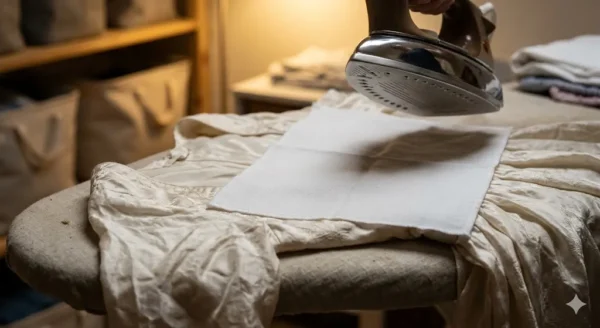
The correct temperature settings by fabric:
- Cotton: Medium heat (160-200°C). Can be ironed with steam on the inside surface with a pressing cloth.
- Linen: Medium-high heat while slightly damp. Linen irons most effectively when the fabric retains a small amount of moisture.
- Polyester and poly-cotton blend: Low heat maximum. Polyester melts at moderate iron temperatures — always stay at the lowest effective heat.
- Silk: Low heat, no steam, always inside out with a pressing cloth. Steam can leave water marks on silk that are permanent.
- Velvet: Do not iron directly under any circumstances. Use a garment steamer held 10-15 cm from the fabric surface.
Using a Garment Steamer
For steaming, hang the dress in front of you and steam from a distance of 4-6 inches. Steaming is much safer and more efficient for bodices and aprons that have embellishments and embroidery on them. A garment steamer is the single most useful tool for Dirndl care beyond basic washing — it refreshes the fabric between wears without any of the direct heat risk of an iron, removes minor wrinkles from all fabric types including those that cannot be ironed, and is particularly effective for velvet where it restores the crushed pile.
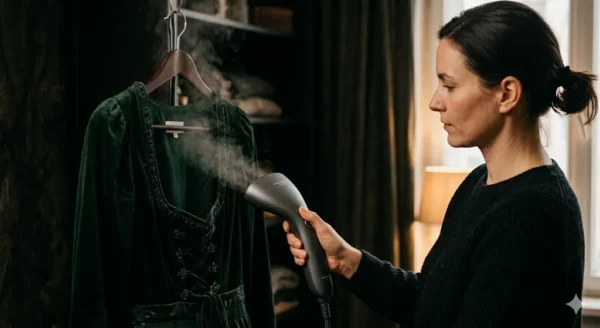
If you do not have a steamer: hanging the Dirndl in the bathroom during a hot shower produces a similar mild steaming effect that relaxes minor creases without direct heat or water contact with the fabric. This is an effective between-wears refresh method that does not require any equipment beyond a shower.
Allow Complete Cooling Before Storage
After ironing or steaming, allow every component — dress, blouse, apron — to cool completely before folding or hanging for storage. Storing while still warm from ironing causes new creasing to form as the fabric cools in its folded or hanging position. Five to ten minutes of cooling time prevents this entirely.
Long-Term Storage Between Festival Seasons
Cleaning Before Storage Is Mandatory
Never store a Dirndl without washing it first — even if it looks clean and the festival odour has dissipated. Invisible residues of sweat, beer, food particles, and body oils oxidise over months of storage, causing yellowing of light-coloured fabrics, permanent set staining, and fabric degradation. A Dirndl stored clean in September will come out of storage in April looking and smelling fresh. One stored with festival residue will have developed permanent staining that no washing will remove.
The Correct Storage System
For long-term preservation: prepare the Dirndl by cleaning it thoroughly to remove stains. To prevent yellowing, wrap it in acid-free tissue paper. Place it in a cotton or muslin garment bag. Store in a cedar chest or a cool closet away from moisture or direct heat.
Always use a padded hanger for storage — wire hangers create pressure points at the shoulder seams that distort the bodice shape over months. The blouse and dress should be stored separately on individual hangers rather than layered together, which causes fabric contact marks and prevents air circulation.
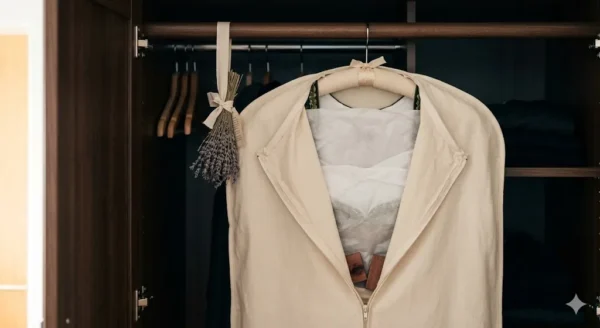
Cedar blocks or lavender sachets placed inside the garment bag serve as natural moth deterrents without the chemical residue and smell of commercial moth repellents that can transfer to the fabric. Replace cedar blocks annually — the aromatic oils that repel moths evaporate over time and an old, dry cedar block provides no protection.
Checking Hardware Between Seasons
Zippers, seams, and hooks are common things to undergo wear and tear over time. Do not leave these problems unchecked until the festival week. When taking your Dirndl out of storage before Oktoberfest, check every fastening, seam, and eyelet. A zip that sticks, a hook that has bent, or a seam that has begun to separate is much easier to address in June than on the morning of opening day in September. A Trachten tailor — or any experienced garment alterations specialist — can address minor structural issues quickly and economically if caught early.
When to Use a Professional Dry Cleaner
Some situations are beyond safe home care. Prices for professional Dirndl cleaning range from €15 to €30 depending on the material and condition. For a Dirndl that cost €200-800 or more, this professional care cost represents excellent value insurance against home washing mistakes.
Take your Dirndl to a professional dry cleaner for: any garment with a dry clean only label, silk and velvet Dirndls regardless of the label, any piece with heavy embroidery, beadwork, or sequin detailing, set stains that have not responded to home treatment, and any heirloom or high-value piece where the risk of home washing outweighs the cost of professional care.
When choosing a dry cleaner: ask specifically whether they have experience with traditional Bavarian garments or embroidered folk dress. A general dry cleaner who has not handled Trachten before may not know to treat the embroidery separately or to handle the structured bodice correctly. An experienced specialist is worth the slight additional effort of finding them.
Frequently Asked Questions
Can you machine wash a Dirndl?
Only if the care label confirms it is machine washable, and only for Dirndls made from plain cotton or cotton-polyester blends without heavy embellishment — these are called Waschdirndl. Use a cold delicate cycle with a mesh laundry bag, mild pH-neutral detergent, and remove immediately when the cycle ends. Silk, velvet, wool, and any heavily embroidered or embellished Dirndl must never go in the machine. When in doubt, hand wash in cold water or dry clean professionally.
How do you get beer stains out of a Dirndl?
Blot immediately with a dry cloth to absorb as much liquid as possible without rubbing. Once home, rinse the stained area with cold water. For dried beer stains, apply a solution of equal parts cold water and white vinegar to the stain, leave for 10 minutes, then rinse thoroughly before the full wash. Never use warm water on beer stains — heat sets protein-based stains permanently into fabric fibres.
How do you dry a Dirndl?
Air dry only — never tumble dry under any circumstances. For cotton Dirndls, hang on a padded hanger in a ventilated area away from direct sunlight. For heavy velvet or wool Dirndls, lay flat on a dry towel rather than hanging — the weight of wet heavy fabric will stretch shoulder seams permanently if hung while wet. Allow to dry completely before ironing, steaming, or storing.
How do you iron a Dirndl?
Always inside out with a pressing cloth between the iron and the fabric surface. Cotton: medium heat. Linen: medium-high while slightly damp. Polyester blend: low heat only. Silk: low heat, no steam, pressing cloth essential. Velvet: never iron directly — use a garment steamer held 10-15 cm from the surface only. Allow each piece to cool completely before folding or hanging after ironing.
How do you store a Dirndl after Oktoberfest?
Wash the Dirndl before storage — never store unwashed as festival residue causes permanent yellowing and staining over months. Once clean and completely dry, wrap in acid-free tissue paper, place in a breathable cotton garment bag, and store on a padded hanger in a cool, dry location away from direct light. Add cedar blocks or lavender sachets as natural moth deterrents. Check all fastenings and seams when removing from storage — address any issues before the festival week, not during it.
Can you dry clean a Dirndl?
Yes — and for silk, velvet, wool, and heavily embellished pieces it is the recommended method rather than an optional one. Dry cleaning costs approximately €15 to €30 depending on the garment material and condition. Choose a dry cleaner with experience handling traditional garments or folk dress specifically — they will understand the construction of the structured bodice and the care requirements of embroidered details better than a general cleaner who has not worked with Trachten before.
How often should you wash a Dirndl?
As infrequently as the garment actually requires — not after every single wear. After festival wear, airing for 24 hours eliminates most odours. Spot cleaning handles localised staining. A full wash is needed when airing and spot cleaning are insufficient, typically after one to three festival events depending on conditions. Over-washing a Dirndl — particularly hand washing and machine washing repeatedly — accelerates fabric wear, colour fading, and embellishment deterioration faster than careful occasional washing does.
GermanAttire supplies authentic Bavarian Dirndl, Trachtenbluse, and traditional German Trachten to customers across the UK, US, and Australia. Visit our store at 27 Victoria Street, London SW1H 0EX, or browse our complete ladies’ Oktoberfest dress collection online. For guidance on sizing your Dirndl correctly before purchase, our guide on how to measure for a Dirndl covers every measurement in full.

Anna Bauer is a seasoned Bavarian fashion expert, cultural consultant, and heritage stylist with over a decade of hands-on experience in traditional German clothing. Born in Munich, the heart of Bavaria, Anna grew up surrounded by the rich traditions of Trachten fashion. Her passion for cultural attire led her to pursue a degree in Fashion and Textile Design at the prestigious University of the Arts Berlin, where she specialized in European folkwear.
Over the past 12+ years, Anna has collaborated with renowned Trachten designers, styled outfits for Oktoberfest events across Germany, and contributed articles to top fashion and culture magazines across Europe. Her work focuses on preserving the authenticity of Lederhosen and Dirndl wear while helping modern audiences style them with confidence and flair.
As the lead content contributor for German Attire, Anna combines her academic background, professional styling experience, and deep cultural roots to provide readers with valuable insights into traditional German fashion. Her blog posts cover everything from historical origins and styling guides to care tips and festival outfit planning—making her a trusted voice for anyone looking to embrace Bavarian heritage in a stylish, modern way.