

Blog
Complete Guide to Dirndl Undergarments: Everything You Need to Wear Underneath Your Dirndl
The Complete Guide to Dirndl Undergarments: Everything You Need to Wear Underneath Your Dirndl
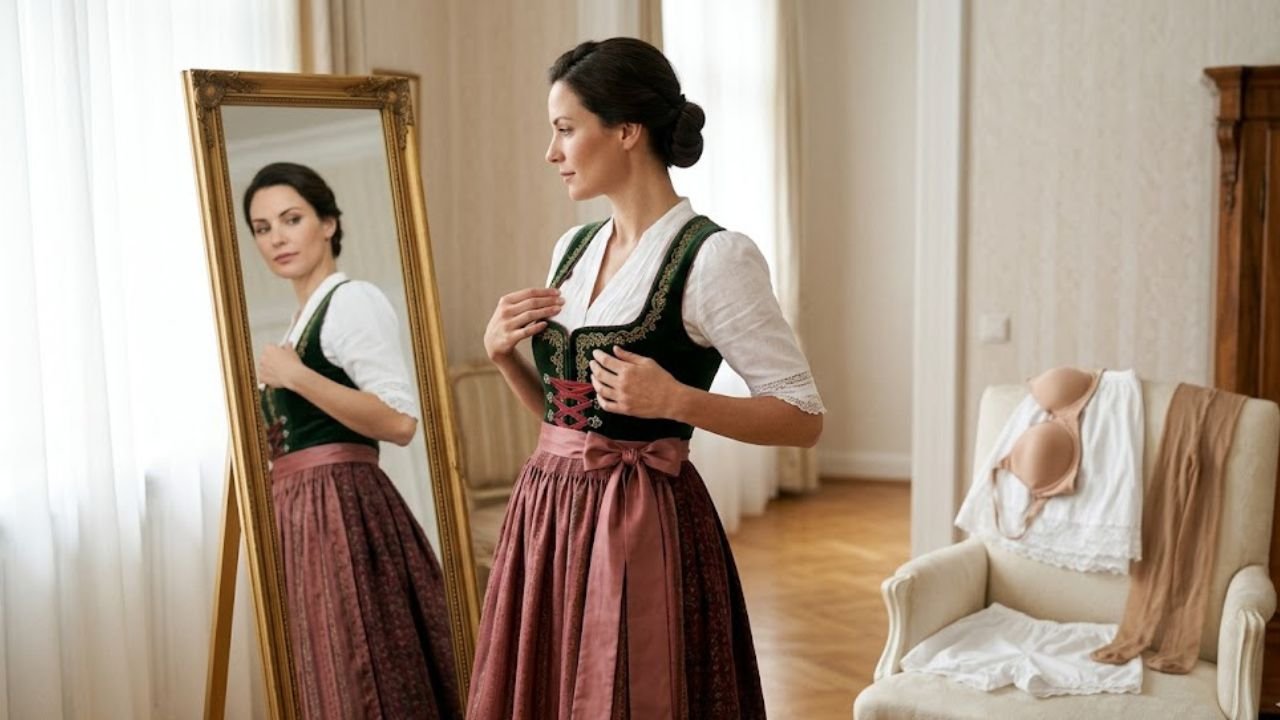
You spent real money on a beautiful dirndl. The fabric is right. The color suits you. The fit looked perfect in the product photos. But when you put it on and look in the mirror, something is off — and you cannot immediately identify what. The answer, almost every time, is what is underneath. Undergarments are the invisible architecture of every dirndl look, and they do more work than the dress itself in determining whether the final result looks polished, authentic, and flattering or simply assembled. A stunning dirndl worn over the wrong bra, the wrong underwear, or no petticoat at all loses most of what makes it beautiful. The same dress worn over a properly chosen undergarment foundation looks like a completely different — and far better — garment.
Most dirndl guides skip this subject entirely or address it with a single paragraph. This guide does the opposite. It covers every layer from skin outward, across three distinct body zones, for every body type, every season, and every occasion from Oktoberfest to Christmas markets to formal dirndl weddings. By the time you finish reading, you will have a complete undergarment strategy for your dirndl — and you will never stand in front of a mirror with that particular frustration again.
Part 1: Understanding Dirndl Construction First
Why Dirndl Undergarments Are Different From Regular Dress Undergarments
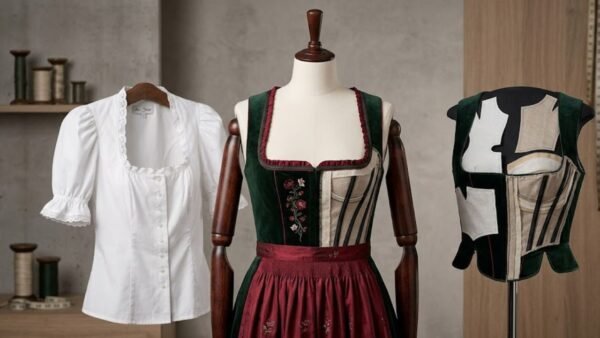
A dirndl is not a regular dress, and the undergarments that work for regular dresses do not automatically work for a dirndl. Understanding why begins with the construction of the bodice. A traditional dirndl bodice is a structured garment — it contains boning, internal stiffening, and shaping elements that give it the ability to mold and support the torso in ways that a soft-cup dress cannot. This structure means the bodice does a portion of the bra’s job already: it provides side support, creates definition at the waist, and holds the silhouette in place across the front panel. What it cannot do — and what the right bra must do — is provide the lift and shape at the bust that creates the classic dirndl décolletage. The bodice shapes; the bra lifts. Both are necessary, and they need to work together rather than against each other.
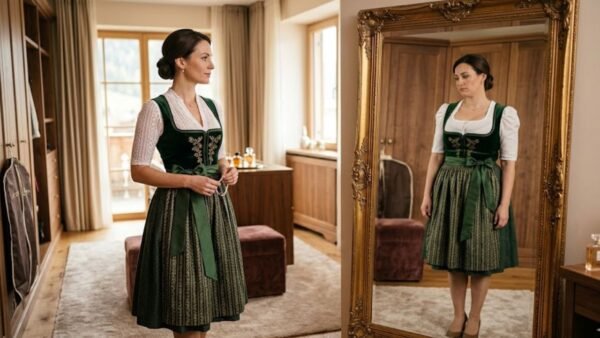
The relationship between the three separate layers of a dirndl outfit — blouse, bodice, and skirt — creates undergarment considerations that simply do not exist in a one-piece dress. The blouse sits directly against the skin and the bra beneath it, which means bra color and fit affect the blouse’s appearance directly. The bodice laces over the blouse and determines how the bust is presented, which means the bra’s lift and shape must work within whatever space the bodice’s structure creates at the neckline. The skirt hangs from the waist and falls to whatever length it was cut, which determines what petticoat or slip length is appropriate and whether legwear will be visible. Every undergarment decision cascades through all three layers. This is why getting the foundation right matters so disproportionately in a dirndl: there are more interactions between layers than in almost any other garment system.
Fabric weight and color create the second major undergarment consideration. Lightweight dirndl blouse fabrics — cotton voile, fine linen, sheer lace-trimmed cotton — transmit color from beneath them in ways that heavier fabrics do not. A white dirndl blouse in a fine cotton weave will reveal a bright-colored or patterned bra beneath it in full detail under any reasonable lighting condition. A dark-colored skirt in a lightweight fabric will reveal the outline of underwear that does not match the skirt’s color. Understanding which of your dirndl’s fabrics are sheer or semi-sheer, and planning your undergarment colors accordingly, is not optional — it is the most basic form of dirndl undergarment strategy and the one most often overlooked by first-time wearers.
The Three Undergarment Zones of a Dirndl
Thinking about dirndl undergarments in three distinct zones makes the decision-making process manageable and ensures that every layer is addressed deliberately rather than by default. Zone 1 covers the upper body: the bra and anything worn beneath or over the dirndl blouse, including camisoles, thermal layers, and bra alternatives. Zone 1’s priorities are support, shape, and invisibility — the right undergarments here create the look the dirndl is designed to produce while remaining entirely invisible beneath the blouse and bodice. Zone 2 covers the core and waist: petticoats that add volume to the skirt, slips that prevent fabric transparency and provide a smooth surface for the skirt to move over, and shapewear or control garments for those who want them. Zone 2’s priorities are silhouette, modesty, and fabric behavior. Zone 3 covers the lower body: underwear chosen for comfort, breathability, and fit with the specific activities the occasion involves, bloomers for modesty and freedom of movement, and legwear from bare legs to tights to traditional dirndl socks. Zone 3’s priority is comfort above all else — because nothing ruins a festival day faster than underwear that fails you physically, regardless of how good the rest of the outfit looks.
Part 2: Zone 1 — The Bra
How to Find Your Perfect Dirndl Bra — The Complete Framework
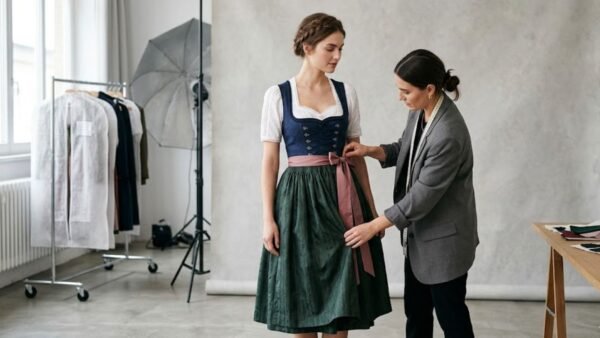
The standard bra-fitting advice — find your band size, find your cup size, match to the garment — applies to dirndl wearing with one critical modification: the structured bodice changes the equation. Because the bodice already provides lateral support and creates shaping through its boning and panel construction, the bra does not need to do all of those things independently. What it does need to do — more precisely than in a regular dress — is provide upward lift and forward shape specifically at the bust. The dirndl décolletage, that characteristic rounded, lifted presentation of the bust over the bodice’s neckline, comes from the bra’s lift working within the space the bodice creates. A bra that simply contains the bust without lifting it will produce a flat, uncharacteristic result that no amount of lacing adjustment can fully correct. Lift is the non-negotiable requirement. Everything else is secondary.

Before choosing a bra style, assess your dirndl’s neckline — it is the single most important factor in determining which bra style will work. A low square or sweetheart neckline requires a bra whose cups sit below the visible neckline, which typically means a push-up or balconette style positioned to create cleavage within the visible opening. A higher neckline or lace-edged collar allows a wider range of bra styles because more of the bra cup is concealed. A strapless or bardot-neckline dirndl style requires a strapless bra or adhesive alternative because any visible strap destroys the line the neckline is designed to create. Measure yourself accurately before purchasing — cup size and band size both shift more frequently than most people realize, and a bra that fit well two years ago may not produce the right result in a structured dirndl bodice today.

Bra Styles — Which Works for Your Dirndl
| Bra Type | Best For | Dirndl Neckline | Pros | Cons |
|---|---|---|---|---|
| Push-up | Smaller busts | Square / sweetheart | Adds cleavage and lift; creates the classic dirndl décolletage | Can overflow on larger busts; may create unnatural shape |
| Demi cup | Most bust sizes | Most necklines | Versatile; creates natural, rounded shape; widely available | May show at very deep or wide necklines |
| Balconette | Medium to large busts | Square neckline | Excellent lift; wide-set straps stay hidden; creates great shape | Straps positioned wide — can show at certain neckline angles |
| Strapless | Backless or off-shoulder styles | Bardot / off-shoulder | Clean look with no visible straps | Less support for larger busts; can slip during long wear |
| Adhesive / stick-on | Very low-back or backless dirndls | Any open-back style | No straps or bands visible at all | Limited support; not suitable for larger busts or hot weather |
| Bustier / corset | All sizes, formal occasions | Traditional styles | Most authentic undergarment historically; excellent overall shaping | Less comfortable for very long wear; takes practice to fit correctly |
| Sports bra | Casual and active wear | Casual dirndls only | Maximum comfort and movement freedom | Flattens the bust silhouette; not appropriate for festive or formal wear |
Bra Guidance by Bust Size
For smaller busts in the AA to B range, the dirndl’s construction creates an opportunity rather than a challenge. The bodice’s boning and shaping can carry more of the structural work, and a padded or push-up bra with modest padding creates the rounded, lifted presentation associated with the classic dirndl look without risk of overflow or fit problems. The goal is not to add volume for its own sake but to create the specific upward and forward projection that the décolletage requires. Some very structured dirndl bodices with built-in cups or significant boning provide enough support that a smaller-busted wearer can forgo a conventional bra altogether — particularly if the bodice fits snugly at the underbust — but this works only when the bodice fits precisely and the blouse beneath it is not sheer enough to reveal anything beneath it.
Medium busts in the C to D range represent the sweet spot for dirndl bra choice: most styles work, most necklines accommodate the cup depth comfortably, and the range of options is the widest. The primary risk at this size is overflow into the neckline — the bodice’s structure pushes the bust upward, which can cause a bra that fits correctly in a regular dress to produce visible overflow at a dirndl’s square neckline. A demi-cup or balconette style that cuts across the cup at mid-cup rather than at the rim prevents this by containing the breast more fully within the cup while still providing the lift that the dirndl shape requires. The balancing act between lift and containment — achieving the dirndl décolletage without overflow or spillage — is the central fitting challenge for medium busts, and it is entirely solvable with the right style and correct sizing.
Fuller busts in the DD and above range have a clear priority order: support first, shape second, aesthetics third. At larger cup sizes, the dirndl bodice’s boning provides less proportional assistance, and the bra must carry more structural load independently. Underwire is not optional at this size — it provides the foundational support that prevents discomfort and breast migration over the course of a long festival day. The common mistake at larger bust sizes is choosing a bra that lifts strongly but pushes the cups together, creating the “uniboob” effect where the bust reads as a single undifferentiated mass beneath the bodice rather than two distinct, well-supported forms. A full-coverage bra with wider-set underwire and substantial side panels prevents this by supporting each breast independently while controlling lateral movement. Back pain is a real risk for larger busts on long festival days — a wide, well-padded band distributes the load more evenly and reduces the strain that narrow or stretched bands create over eight or more hours of wear.
Plus-size dirndl bodices are typically constructed with wider panels, additional boning, and more generous lacing systems that accommodate a broader range of body shapes. This construction means the bodice does more proportional work at plus sizes than the same garment does at standard sizes — which is genuinely useful. The bra challenge at plus sizes is finding a style that provides sufficient support within the bodice’s panel structure without creating bulk or visible ridges beneath the blouse. Full-coverage bras with smooth cups, minimal seaming, and wide bands in a skin-tone color are the most reliable starting point. The goal at every body size is identical: comfort that enables confidence, and confidence that carries the dirndl.
The Non-Negotiable: Bra Color Rules
The color rule for dirndl bras is the simplest and most consistently ignored piece of undergarment guidance: wear a bra that matches your skin tone. Not white. Not black (unless the blouse is black or very dark and opaque). Not a pattern. Not a color. Your skin tone. The reason this rule is so absolute is fabric transparency. Most dirndl blouses are made from cotton, linen, or cotton-blend fabrics in white, ivory, or light colors — fabrics that transmit enough light to reveal the color, seaming, and pattern of whatever is worn beneath them, particularly outdoors or under festival tent lighting. A white bra beneath a white blouse does not disappear — it creates a white-on-white contrast that is visible in any photograph and in person at close range. A skin-tone bra beneath the same white blouse is optically invisible because it matches the surface it is being seen through.
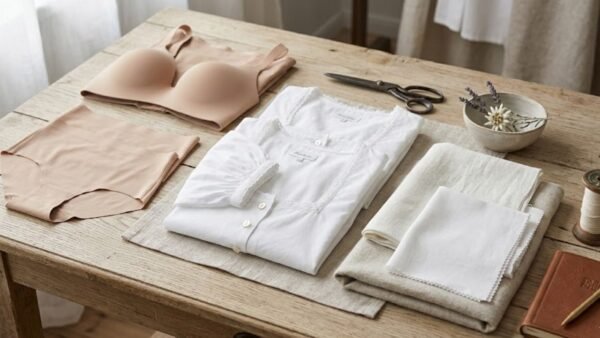
Skin tone matching requires understanding that “nude” does not mean a single beige color. The lingerie industry’s traditional “nude” is a pale peachy beige designed for light skin tones — and it works beautifully for those tones. For medium skin tones, a warm tan or caramel bra color matches the skin more accurately and disappears more completely. For deeper skin tones, brown or dark chocolate tones are the skin-matching colors that achieve the same invisibility under sheer fabric. The practical guidance is to hold a bra against your inner forearm — the inner forearm is typically lighter than the rest of the arm and represents the skin tone most likely to be visible beneath a blouse — and choose the color that most closely matches what you see. That match is your dirndl bra color, regardless of what the label says about it.
Bra Alternatives Worth Considering
The bustier or corset is the most historically authentic undergarment for a dirndl and deserves serious consideration beyond its fashion statement appeal. Traditional Bavarian women wore structured undergarments — typically boned bodices or corset-style pieces — beneath their dirndls as the foundational layer of the entire outfit. Modern versions of these garments, designed as contemporary lingerie or shapewear bustiers, provide all-in-one support that works in harmony with the dirndl’s boning rather than against it. The fit challenge of a bustier is more complex than that of a standard bra — it must work with the dirndl bodice’s structure at every point of contact — but when it fits correctly, the result is the most seamless and authentic undergarment foundation available. Bra inserts and silicone cups address a specific problem: very low-cut or plunge necklines where no conventional bra can sit without being visible. Silicone adhesive cups adhere directly to the skin beneath each breast, providing lift and shape without any band, strap, or cup edge that could appear above the neckline. Nipple covers — thin adhesive covers without any cup structure — address comfort and modesty for situations where support is provided by the bodice alone. Cleavage tape, applied carefully along the inner edges of the bust, can enhance the décolletage effect at the bodice neckline without requiring a more structured garment.
Part 3: Zone 1 Continued — The Dirndl Blouse Layer
What to Wear Under Your Dirndl Blouse
The dirndl blouse is itself the first visible layer of the outfit — and it sits directly over the bra, which means understanding the blouse’s fabric behavior is essential before deciding what additional layering it needs beneath it. Traditional dirndl blouses come in three primary fabric types with different transparency characteristics. Crisp white cotton blouses in medium to heavy weights are the most opaque and the most forgiving of bra color choices, though skin-tone matching is still the safer approach. Fine cotton or cotton voile blouses in white or ivory are semi-sheer and reveal bra color reliably — the skin-tone rule is non-negotiable here. Lace-trimmed or partial-lace blouses introduce a texture layer that obscures some color while revealing silhouette — the lace sections show the bra’s shape even when they mute its color, which means bra fit matters as much as bra color with these blouses.
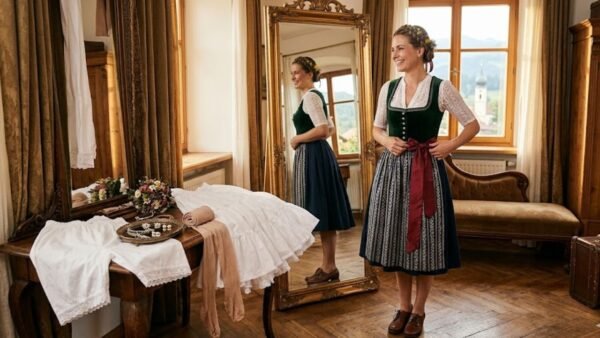
A camisole or tank worn beneath a dirndl blouse serves two possible purposes: additional opacity in sheer fabrics, and temperature management in colder seasons. When a camisole is used for opacity, it must be thinner than the blouse itself — a thick camisole creates visible bulk under the blouse’s surface and adds a layer of warmth that is unwelcome in festival environments. A thin, seamless camisole in a skin tone that matches the blouse’s color as closely as possible is the most invisible solution. The neckline of the camisole must sit below the dirndl blouse’s neckline on all sides — a camisole whose neckline, shoulder straps, or lace trim appear above the blouse neckline immediately signals an undergarment that is not coordinated with the outfit, which is the opposite of the invisible foundation the zone one layer is meant to provide.
Seasonal Blouse Layering
In summer and Oktoberfest season, the priority is breathability above all other considerations. A single, well-chosen dirndl blouse worn directly over a skin-tone bra is the ideal summer configuration — any additional camisole layer adds heat and moisture retention that becomes seriously uncomfortable over the course of a long, active festival day. Synthetic fabrics — polyester blends, microfiber — trap heat and moisture more than natural fibers and should be avoided entirely in summer festival contexts regardless of how they look. Natural cotton and linen breathe actively, wick moisture passively, and remain comfortable in the warm, crowded environments of beer tents and outdoor festival grounds.
In winter, for Christmas markets and cold-weather Tracht events, the layering challenge is adding warmth without creating visible bulk beneath the blouse or restricting the bodice’s lacing. A thin thermal undershirt in a crew-neck or scoop-neck cut that sits entirely below the dirndl blouse’s neckline on all sides provides meaningful warmth with minimal visible impact. Merino wool thermals are the best available option for this purpose — merino provides exceptional warmth-to-weight ratio, wicks moisture actively, and does not create the stiff, bulky profile that heavier thermal fabrics produce. A seamless merino crew-neck thermal in a skin tone worn beneath the dirndl blouse adds a functional invisible layer that extends the dirndl’s comfortable wearable temperature range significantly downward without compromising the outfit’s appearance.
Part 4: Zone 2 — Petticoats, Slips and Shapewear
Petticoat — The Volume Layer
A petticoat — the underskirt worn beneath a dirndl’s outer skirt — is the single undergarment that most dramatically changes the visual character of the entire outfit when present versus absent. Without a petticoat, a dirndl skirt falls flat and straight from the waist, with no particular shape or movement. With the right petticoat, the same skirt swings outward from the waist in the full, rounded, traditionally authentic silhouette that gives the dirndl its characteristic appearance. The petticoat creates volume by its own structure — layers of nylon, tulle, or cotton organized to stand away from the body — and transfers that volume to the outer skirt, which drapes over it and assumes its shape. This is not a subtle difference. A dirndl worn without a petticoat and the same dirndl worn with an appropriately sized one look like fundamentally different garments.
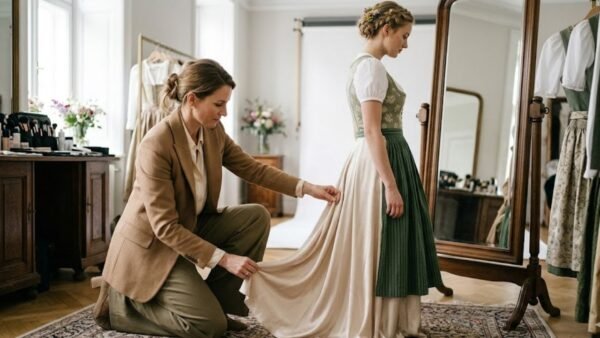
The three petticoat lengths map to three dirndl lengths with a simple rule: the petticoat must always be shorter than the outer skirt, typically by two to four inches, to ensure it remains completely invisible from every angle. A mini petticoat reaching mid-thigh works for casual mini-length dirndls worn in summer or at younger-oriented events. A midi petticoat reaching the knee is the most versatile length — it works for the most common knee-length and below-knee dirndl styles worn at Oktoberfest and most festive occasions. A maxi petticoat reaching below the calf is appropriate only for full-length formal or traditional dirndls and should not be used with shorter styles, where its hem will inevitably appear below the outer skirt. Petticoat fabric affects both the volume produced and the comfort of wearing: nylon petticoats are light, produce good volume, and are easy to care for but can feel plasticky against the skin on hot days. Tulle petticoats produce the most volume of any material but can be scratchy and require a slip beneath them to be comfortable for all-day wear. Cotton petticoats are the most comfortable in direct contact with skin and the most historically authentic but produce less volume than synthetic alternatives.
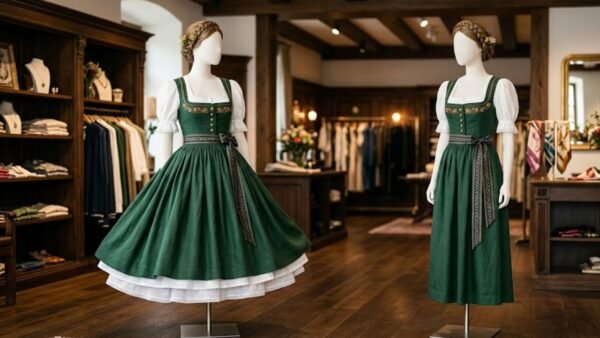
The volume question requires direct honesty: more petticoat is not always better. A very full, multi-layered petticoat on a casual everyday dirndl creates a costume-adjacent effect that is out of proportion with the garment’s register. The appropriate volume matches the formality and style of the dirndl — a single-layer midi petticoat for an Oktoberfest dirndl, a fuller multi-layer version for a formal or wedding dirndl, and no petticoat at all for the most casual cotton everyday styles where a clean, flat skirt fall is more appropriate than theatrical volume.
Slip — The Modesty and Transparency Layer
A slip serves an entirely different function from a petticoat and is not interchangeable with it, though both are underskirts. Where a petticoat adds volume and shape, a slip’s purpose is fabric management — preventing the dirndl skirt from clinging to the legs, providing an additional opacity layer over any sheer or lightweight skirt fabric, and giving the skirt a smooth, frictionless surface to move over rather than fighting against the wearer’s legs or the petticoat beneath it. A slip is thin, flat, and close-fitting rather than structured and voluminous. It typically takes the form of a short satin, nylon, or lightweight cotton skirt with a simple elastic or drawstring waist, worn directly over the underwear and beneath any petticoat if one is used.
The transparency problem is the most common reason a slip is necessary: dirndl skirt fabrics in lighter colors — white, pale blue, light green — transmit enough light to reveal the outline and color of the underwear beneath them in outdoor or well-lit environments. A slip in a color that matches either the skirt fabric or the wearer’s skin tone eliminates this problem by providing an opaque intermediate layer. The slip length should match the skirt length minus three to four inches — the same rule that governs petticoat length. Half slips, which cover only from the waist to the hem, are the most practical and widely used form for dirndl wearing. Full slips, which cover both the bust and the lower body in a single garment, are less practical under a dirndl because the dirndl blouse and bodice together already cover the upper body and a full slip adds an unnecessary layer of bulk beneath them.
Shapewear and Control Garments
The honest answer to whether shapewear is appropriate under a dirndl is yes — with one significant qualification. Any shapewear worn under a dirndl for an all-day festival event must be genuinely comfortable for the duration of that event, and most shapewear that creates meaningful compression is not. The dirndl bodice, with its boning and lacing structure, already functions as a form of external shapewear — it defines and compresses the waist, creates shape through the bodice front, and provides structural support through the torso in a way that makes significant additional compression beneath it both redundant and potentially uncomfortable. For wearers who want additional smoothing at the hips or thighs, a light-control brief or smoothing short in a breathable fabric adds a functional layer without the heat and discomfort associated with heavy compression garments.
The beer tent environment creates a specific shapewear warning that applies to every Oktoberfest attendee: the combination of significant body heat generated by dense crowds, alcohol consumption, and physical activity produces a thermal environment in which heavy shapewear becomes rapidly and severely uncomfortable. Garments that feel reasonable in a cool fitting room can become genuinely punishing after two hours in a crowded, warm festival tent. If shapewear is part of your dirndl undergarment plan for a festival day, choose the lightest-compression version that meets your needs, prioritize breathable fabrics over synthetic ones, and accept that the bodice’s existing structure is doing more shaping work than it may appear to be. Comfort is not a concession — it is the precondition for the confidence that makes a dirndl look its best.
Part 5: Zone 3 — Underwear and Bloomers
Choosing the Right Underwear for Dirndl Wearing
Underwear choice for a dirndl occasion follows a priority order that differs from everyday underwear selection: breathability first, comfort second, fit with the specific activities of the day third, and aesthetics last. This sequence reflects the reality of festival wearing — an event that typically involves six to twelve hours of standing, walking, dancing, climbing onto beer benches, and sitting on outdoor seating in a warm, active environment. Underwear that prioritizes appearance over function fails its wearer reliably and memorably in this context. The underwear that works best at Oktoberfest is the underwear that you stop thinking about by ten in the morning and never think about again for the rest of the day.
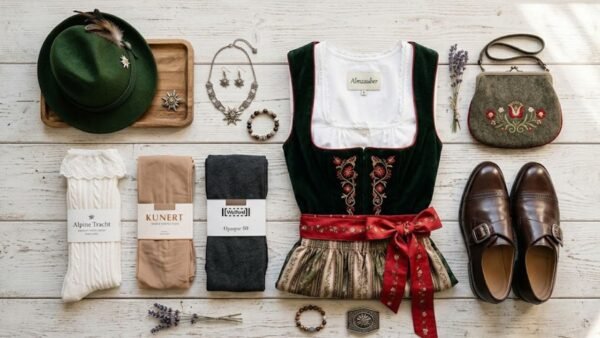
Fabric is the most consequential underwear choice for festival days. Cotton remains the gold standard for dirndl wearing for consistent reasons: it breathes actively, absorbs moisture without holding it against the skin, does not trap heat, and is the most comfortable of all underwear fabrics against skin that will be warm and active for hours. Bamboo fabric is an excellent contemporary alternative — it is even softer than cotton, has natural moisture-wicking properties, and is slightly more resistant to odor than conventional cotton over long wear periods. Synthetic fabrics — polyester, nylon, and microfiber — retain heat, trap moisture, and become increasingly uncomfortable over the course of a long, active day. They are the appropriate choice for brief, low-activity occasions and the wrong choice for any festival environment. The cut question is simpler than the fabric question: briefs or bikini-cut underwear provide the most coverage and the most comfort for the widest range of body types in festival environments. Thongs prevent visible underwear lines under fitted skirts but provide no coverage and become uncomfortable during active movement. Boyshorts are comfortable but can bunch or ride under bloomers if both layers are being worn together.
Bloomers — The Most Underrated Dirndl Essential
Bloomers are the single most underrated item in the entire dirndl undergarment system, and the dirndl wearers who discover them inevitably describe their first festival day with bloomers as a significant quality-of-life improvement over their previous festivals without them. Bloomers — also called pettipants in their fuller, more traditional lace-trimmed form — are lightweight shorts or loose-fitting brief-style garments worn over or instead of regular underwear, designed to provide coverage, freedom of movement, and comfort during the physical activities that Oktoberfest and similar festivals naturally involve. Their origin is in traditional Bavarian Tracht, where women wearing full-skirted dirndls in outdoor working and festival environments required modesty coverage that a skirt alone could not guarantee. The practical need has not changed in any meaningful way between the nineteenth century and the modern beer tent.
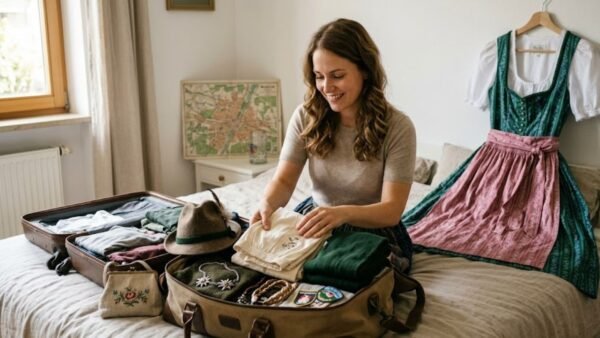
The occasions that make bloomers not merely useful but essentially mandatory cover the majority of activities at any outdoor festival. Dancing — polka, folk dancing, any dancing in a dirndl — involves the skirt rising unpredictably, and bloomers ensure that whatever is revealed is covered appropriately. Climbing onto beer benches to stand for toasting — a universal Oktoberfest activity — raises the skirt to thigh level from the perspective of anyone seated nearby. Any outdoor festival with variable weather creates wind that acts on dirndl skirts in ways that cannot be predicted or controlled. Beer garden seating — outdoor wooden benches and chairs — is at an angle and height that places the seated wearer’s skirt at eye level of passing pedestrians. In each of these situations, bloomers transform a moment of potential embarrassment into a non-event. The checklist for deciding whether to wear bloomers is short: if you will dance, climb, sit outdoors, or encounter any wind, wear bloomers.
Bloomer styles range from a fitted short that resembles bicycle shorts in silhouette — the most practical and comfortable for active wear — to the fuller pettipant style with lace trim at the leg openings, which is more traditionally authentic and more decorative but less practical for high-movement activities. Satin pettipants are beautiful for formal and photographic occasions and inappropriate for warm, active festivals where satin’s non-breathable quality becomes a liability. Cotton bloomers are the correct choice for any outdoor festival lasting more than two hours. Length should ensure the bloomer hem remains above the dirndl skirt hem by at least two inches from every angle — bloomers that are visible beneath the skirt hem are not functioning as undergarments and undermine the entire point of wearing them. The fit should be comfortable across the hips and thighs without elastic that creates visible compression lines beneath the skirt’s outer fabric.
Part 6: Zone 3 Continued — Legwear
The Complete Dirndl Legwear Guide
Legwear is the dirndl undergarment decision with the most direct impact on the overall outfit’s visual character — because unlike most of the other undergarment layers, legwear is often visible. Whether you go bare-legged, wear traditional knit socks, sheer tights, patterned stockings, or opaque winter tights makes a statement about the register, formality, and cultural authenticity of the dirndl look as a whole. Each choice has a context in which it is correct and a context in which it undermines the outfit.
Bare legs are appropriate in summer and at casual outdoor events where the weather is warm and the dirndl is a mid-length or shorter style. The practical preparation for bare legs at a festival involves ensuring the legs are moisturized and comfortable for extended wear — dry, uncomfortable skin becomes more apparent over hours of activity than it does in a brief social encounter. Traditional dirndl socks — white knit knee-high stockings with or without lace trim at the cuff — are among the most authentically Bavarian elements of the full dirndl look and deserve wider use than they typically receive from non-German wearers who associate them exclusively with costume. Worn with a mid-length or below-knee dirndl, traditional knit socks in white or ivory read as genuinely traditional and charming. The single practical challenge of knit knee-highs is keeping them up over the course of a long day — the solution is silicone-banded stay-up tops, which grip the skin without a garter or additional fastening and remain reliably in place through hours of activity.

Sheer tights in a nude or skin-tone shade are the most versatile dirndl legwear option, working for festive, formal, and transitional-season occasions with equal effectiveness. They add a polished, finished quality to the look without altering its color palette, and they provide a modest layer of warmth in cool weather without the visual weight of opaque tights. Control-top sheer tights perform double duty as both legwear and Zone 2 shapewear, which makes them a particularly practical choice for wearers who want smoothing across the core without an additional separate garment. Patterned tights — subtle woven or knit patterns in a single color — can work beautifully with traditional dirndls if the pattern is fine enough to read as textural rather than graphic. Bold patterns, bright colors, and novelty prints cross from fashion choice into costume territory and should be avoided unless the occasion specifically calls for playfulness over authenticity.
Opaque tights in black, ivory, or navy are the correct legwear choice for winter dirndl wearing at Christmas markets and cold-weather Tracht events. Black opaque tights pair particularly well with dark dirndl colorways and create a streamlined, modern silhouette that suits contemporary dirndl styling. Ivory and white opaque tights are more traditional and work best with lighter, more romantically styled dirndls. Thigh-high stockings with garter bands belong to formal and private occasions where elegance is the primary consideration and where the physical activity of the day is limited enough to make garter management practical. They are not appropriate for outdoor festivals, beer tents, or any occasion involving significant physical movement — the combination of heat, movement, and the complexity of garter management makes them impractical in exactly the environments where most dirndl wearing takes place.
Leggings under a dirndl solve a specific cold-weather problem and create a different aesthetic problem if not handled carefully. For winter occasions where warmth is the absolute priority, thin thermal leggings or fleece-lined leggings beneath a long-skirted dirndl provide significant warmth while remaining invisible as long as the dirndl skirt is long enough to cover them completely. At any skirt length above the ankle, the legging hem will be visible during movement and sitting — which is acceptable only if the leggings are treated as visible legwear rather than as invisible undergarments. Thick or heavily textured leggings create bulk beneath the skirt that affects its drape and silhouette. The cleanest approach for cold-weather dirndl wearing is opaque tights over thermal underwear rather than leggings, which preserves the skirt’s intended silhouette while providing meaningful warmth through layering.
Part 7: Putting It All Together — Occasion Guide
Undergarment Checklist by Occasion
| Occasion | Must-Haves | Recommended | Avoid |
|---|---|---|---|
| Oktoberfest / Beer Festival | Skin-tone bra, cotton underwear, bloomers | Midi petticoat or slip, control-top tights if cool | Synthetic fabrics, heavy shapewear, thigh-highs, patterned bright tights |
| Christmas Market / Winter Festival | Thermal camisole or merino underlayer, opaque tights or wool socks | Slip for longer skirts, light shapewear for added warmth | Bare legs, minimal layering, synthetic thermals |
| Dirndl Wedding (Guest) | Properly fitted skin-tone bra, slip, bloomers | Midi or maxi petticoat for fuller silhouette, control-top tights | Visible bra straps, visible underwear lines, sports bra |
| Casual Tracht / Everyday Dirndl | Comfortable bra, breathable underwear | Skip petticoat; wear everyday tights or bare legs as appropriate | Over-layering for a simple occasion; heavy shapewear |
| Stage Performance / Folk Dance | Secure underwire bra, bloomers, fitted slip | Petticoat for visual volume, non-slip sock grips | Anything that shifts, slides, or reveals during active movement |
Seasonal Undergarment Guide
Summer dirndl wearing from June through September calls for the most minimal, breathable undergarment configuration: skin-tone bra, cotton underwear or bloomers, an optional single-layer midi petticoat, and either bare legs or sheer nude tights depending on the occasion’s formality. Every additional layer adds heat and moisture retention in an environment that already challenges comfort through crowd density, sun exposure, and physical activity. The fabric choices across every zone should default to natural fibers — cotton, linen, bamboo — that actively move moisture away from the skin rather than trapping it.
Autumn and Oktoberfest season — October in Munich, though American Oktoberfest events span September through October — presents a specific layering challenge: Munich in October averages temperatures between 40°F and 55°F at the start and end of the day, rising to 60°F to 65°F during peak afternoon hours, while the beer tent interior reaches significantly higher temperatures through crowd body heat. The undergarment strategy must accommodate both the outdoor cold and the indoor warmth: a thin merino camisole provides outdoor warmth that is manageable indoors; opaque tights provide leg warmth that is appropriate in both environments; and the dirndl bodice itself provides enough core insulation that heavy thermal layering beneath the blouse is rarely necessary for the tent portion of the day.

Winter dirndl wearing from November through February — Christmas markets, holiday dinners, regional Tracht events — allows the warmest and most layered undergarment configuration. A merino thermal layer beneath the blouse, opaque tights over thermal underwear bottoms, and a petticoat that adds insulating air between the legs all contribute to a genuinely warm and comfortable winter dirndl experience. The aesthetic priority in winter is ensuring that the thermal layers remain invisible above the dirndl’s neckline and below its hem — warmth is the goal, but warmth that visibly compromises the outfit’s appearance defeats its own purpose. Spring transitions both directions and benefits from the most flexible undergarment approach: bring a thin camisole for potential warmth and be prepared to remove it; choose tights over bare legs as a default and accept that they may prove unnecessary.
Part 8: Shopping and Care Guide
Where to Buy Dirndl Undergarments
Specialty Tracht shops — both in-person stores in Bavaria and Austria and the growing number of quality online Tracht retailers — carry the most authentic and correctly designed dirndl undergarments: traditional petticoats in appropriate lengths and volumes, genuine pettipants and bloomers cut to work with dirndl skirt proportions, and traditional dirndl socks in the correct knit weights and lengths. These sources are worth prioritizing for petticoats, bloomers, and socks specifically, as general lingerie stores rarely carry items designed with dirndl-specific proportions in mind. For bras, slips, and everyday underwear, mainstream lingerie retailers are appropriate sources — the dirndl-specific requirement for these items is primarily color and fit rather than any specialized design element.
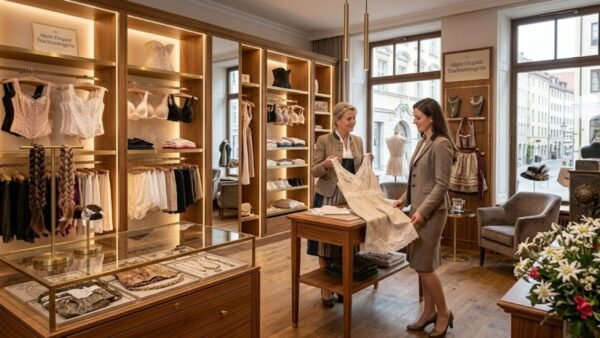
When shopping online for dirndl undergarments, European sizing differences require careful attention. German and Austrian sizing for undergarments follows the European standard, which differs from US sizing at every measurement point. Bra sizing in particular uses a different band measurement system: a US size 34C corresponds approximately to a European 75C, and the cup increments differ as well. Always check the sizing conversion chart provided by the specific retailer rather than assuming equivalence, and when in doubt, size up for comfort in festival conditions where heat causes the body to retain more fluid than in cooler environments. The complete guide to choosing a bra for a dirndl covers the full selection criteria in detail, and understanding how to measure for a dirndl ensures your sizing reference point is accurate before any undergarment purchase.
How to Care for Your Dirndl Undergarments
Petticoats are the most care-intensive dirndl undergarment and the one most often damaged by incorrect laundering. Nylon and tulle petticoats should be hand-washed in cool water with a gentle detergent or machine-washed in a lingerie bag on the most delicate cycle available, then hung or laid flat to dry completely before storage. Never machine-dry a petticoat — the heat collapses the volume structure permanently and cannot be reversed. Storage is as important as laundering: a petticoat stored compressed in a drawer or stuffed into a bag loses its volume structure over weeks and months. The correct storage method is hanging the petticoat from its waistband in a wardrobe or hanging it over a padded hanger, allowing the layers to hang freely and maintain their shape between uses. Bloomers and slips launder easily — follow the fabric care label, but most cotton and satin versions wash well in cool water on a gentle cycle. Traditional knit socks benefit from hand washing or a gentle machine cycle in a laundry bag and should be reshaped and laid flat to dry to maintain their ribbing and length.
For those building out their complete dirndl wardrobe, the guides on how to wash a dirndl and what to wear with a dirndl in winter provide essential care and styling guidance beyond the undergarment layer. The complete accessories guide for Oktoberfest dirndl wearing covers every visible styling decision from jewelry to hair, while the dirndl lacing guide ensures the bodice — which interacts with every undergarment decision in Zone 1 — is adjusted correctly for both appearance and comfort. For those purchasing their first dirndl, how to buy a dirndl covers the full decision framework, and the complete selection of traditional Bavarian dirndl dresses and dirndl blouses provides the authentic starting point that makes every undergarment decision in this guide relevant.
Conclusion: The Layering Philosophy That Makes Every Dirndl Work
The right way to think about dirndl undergarments is from skin outward, zone by zone, occasion by occasion. Zone 1 creates the structural and visual foundation at the bust — the right bra in the right color doing the specific job the dirndl construction requires of it. Zone 2 creates the skirt’s silhouette and manages fabric behavior — petticoat for volume, slip for transparency and movement, shapewear if and only if it is comfortable enough to forget about. Zone 3 ensures the day’s comfort from the most foundational layer outward — breathable underwear in the right fabric for the activity level, bloomers whenever movement or wind is part of the equation, legwear chosen to match both the dirndl’s register and the season’s temperature requirements.
The essential undergarment kit every dirndl wearer needs is smaller than it might appear from the length of this guide: one well-fitted skin-tone bra appropriate to your bust size and the dirndl’s neckline, one pair of cotton bloomers for festival occasions, one midi petticoat for festive styling, one slip for light-colored or semi-sheer skirts, and one pair each of sheer nude tights and opaque tights for different seasons and formality levels. These six items address ninety percent of undergarment situations that dirndl wearers encounter. Everything else in this guide is the refinement that takes you from functional to polished.
Comfort enables confidence, and confidence makes the dirndl. No amount of beautiful fabric or careful lacing produces the effect that genuine ease of wear produces — a wearer who is comfortable in every layer of what they have on moves differently, carries themselves differently, and looks entirely at ease in what is, for many people, an unfamiliar and somewhat elaborate garment. Getting the undergarment foundation right is not a detail. It is the precondition for everything the dirndl is designed to produce. Explore the full dirndl collection and the dirndl blouse range at GermanAttire, and visit the GermanAttire blog for the complete library of dirndl styling, history, and care guides.
Frequently Asked Questions
What bra do you wear with a low-cut dirndl?
For a low-cut or sweetheart neckline dirndl, the best options are a push-up bra for smaller busts or a balconette bra for medium to larger busts. Both styles sit below the neckline while providing the upward lift that creates the classic dirndl décolletage. The bra must match your skin tone — never white, black, or patterned under a light blouse. For very deep plunge necklines where no conventional bra sits invisibly, adhesive silicone cups or cleavage tape are the correct alternatives.
Can you wear a strapless bra with a dirndl?
Yes — a strapless bra works well with off-shoulder, bardot, or sleeveless dirndl styles where conventional straps would be visible. For smaller to medium busts, a well-fitted strapless bra provides adequate support through a festival day. For larger busts, a convertible bra with straps removed or a structured adhesive bra is more reliable over long periods. Always test the strapless bra with the dirndl bodice laced on before the event to confirm it holds its position under the bodice’s compression.
What size petticoat do I need for my dirndl?
The petticoat must be two to four inches shorter than the dirndl skirt at every angle — it should never be visible below the outer skirt. For a knee-length dirndl use a midi petticoat; for a mini dirndl use a mini petticoat; for a full-length formal dirndl use a maxi petticoat. Match the petticoat waist to your own waist measurement. If between sizes, size up for comfort in festival conditions where the body retains more fluid from heat and activity.
Do you wear underwear under bloomers?
This is a personal choice. Many wearers use cotton bloomers instead of regular underwear, finding the coverage adequate and the single layer more comfortable in warm conditions. Others prefer regular cotton underwear beneath bloomers for additional familiarity and coverage. If wearing both, choose a low-profile underwear style that sits below the bloomer waistband to avoid a doubled-waistband effect that creates visible bulk beneath the skirt.
What do you wear under a dirndl in winter?
For winter dirndl wearing at Christmas markets and cold-weather occasions, wear a thin merino wool or thermal camisole beneath the dirndl blouse with the camisole neckline sitting completely below the blouse neckline. Add opaque tights over thin thermal underwear bottoms for leg warmth. A petticoat adds an insulating air layer between the skirt and the legs. Avoid heavy synthetic thermal layers that create visible bulk beneath the blouse or prevent the bodice from lacing correctly.
Can you wear shapewear under a dirndl?
Yes, if it is comfortable enough to wear for the full duration of the event. The dirndl bodice itself already provides external shaping through its boning and lacing, which reduces the need for compression beneath it. If additional smoothing is desired, choose light-control briefs or shorts in a breathable fabric. Heavy compression shapewear becomes very uncomfortable in warm festival tent environments and should be avoided for long, active wearing occasions like Oktoberfest.

What color tights go with a dirndl?
Sheer nude tights matching your skin tone are the most universally correct choice and work for most dirndl colors and occasions. Opaque black tights are the best alternative for winter and formal occasions. White or ivory opaque tights suit traditional and romantic dirndl styles. Avoid bright colors, bold graphic patterns, and novelty prints, which move the look toward costume territory rather than authentic Tracht.
What are pettipants and do I need them for a dirndl?
Pettipants are a fuller, lace-trimmed version of dirndl bloomers — combining slip and underwear shorts into one garment that provides modesty coverage and a decorative lace finish at the leg openings. They suit formal, wedding, and photographed occasions where the decorative element is appropriate. For active festivals involving dancing, bench-climbing, and long all-day wear, plain cotton bloomers are more practical and comfortable than pettipants.
How do you keep dirndl socks from falling down?
Purchase traditional dirndl knee-high socks with built-in silicone grip bands at the top, which adhere lightly to the skin and hold the sock in position throughout the day. For socks without built-in grips, adhesive sock-stays applied inside the top edge create the same effect. Ensure the correct size — socks that are too large will fall regardless of grip mechanism because the excess fabric removes the tension that keeps the silicone in contact with the skin.
What underwear is best for Oktoberfest?
Cotton or bamboo briefs or bikini-cut underwear in a neutral or skin-tone color are the best choice for Oktoberfest. Both fabrics breathe actively and remain comfortable over eight to twelve hours of festival wear. Pair with cotton bloomers for movement coverage. Avoid synthetic fabrics that trap heat in warm tent environments, and avoid tight waistbands that create discomfort when the dirndl bodice is laced over them throughout the day.
Can you wear leggings under a dirndl?
Yes, in cold weather where warmth is the priority. Thin thermal leggings under a long-skirted dirndl remain invisible if the skirt length covers the legging hem during movement. For shorter dirndl styles, any legging hem will be visible and becomes visible legwear rather than an invisible undergarment. For most cold-weather occasions, opaque tights over thermal underwear bottoms achieve the same warmth while preserving the skirt’s intended silhouette more cleanly and elegantly.
Why does my dirndl look flat without a petticoat?
A dirndl skirt without a petticoat falls straight from the waist with no volume or shape — it looks flat because structurally it is flat. The dirndl’s characteristic full, rounded skirt silhouette comes entirely from the petticoat beneath it, which holds the outer skirt away from the body. Without a petticoat the dirndl looks significantly less traditional and visually incomplete. Adding the correct petticoat length for your skirt transforms the entire appearance of the outfit.
What is the difference between a petticoat and a slip for a dirndl?
A petticoat and a slip serve completely different purposes and are not interchangeable. A petticoat adds volume and shape to the dirndl skirt through its own structured layers of tulle, nylon, or cotton — it is what creates the full, rounded silhouette. A slip is flat and close-fitting; its purpose is fabric management — preventing the skirt from clinging, providing an opacity layer over sheer fabrics, and giving the skirt a smooth surface to move over. Many dirndl wearers benefit from both: a petticoat for volume and a slip worn over it to prevent the petticoat from scratching or clinging to the legs.

Anna Bauer is a seasoned Bavarian fashion expert, cultural consultant, and heritage stylist with over a decade of hands-on experience in traditional German clothing. Born in Munich, the heart of Bavaria, Anna grew up surrounded by the rich traditions of Trachten fashion. Her passion for cultural attire led her to pursue a degree in Fashion and Textile Design at the prestigious University of the Arts Berlin, where she specialized in European folkwear.
Over the past 12+ years, Anna has collaborated with renowned Trachten designers, styled outfits for Oktoberfest events across Germany, and contributed articles to top fashion and culture magazines across Europe. Her work focuses on preserving the authenticity of Lederhosen and Dirndl wear while helping modern audiences style them with confidence and flair.
As the lead content contributor for German Attire, Anna combines her academic background, professional styling experience, and deep cultural roots to provide readers with valuable insights into traditional German fashion. Her blog posts cover everything from historical origins and styling guides to care tips and festival outfit planning—making her a trusted voice for anyone looking to embrace Bavarian heritage in a stylish, modern way.