

Blog
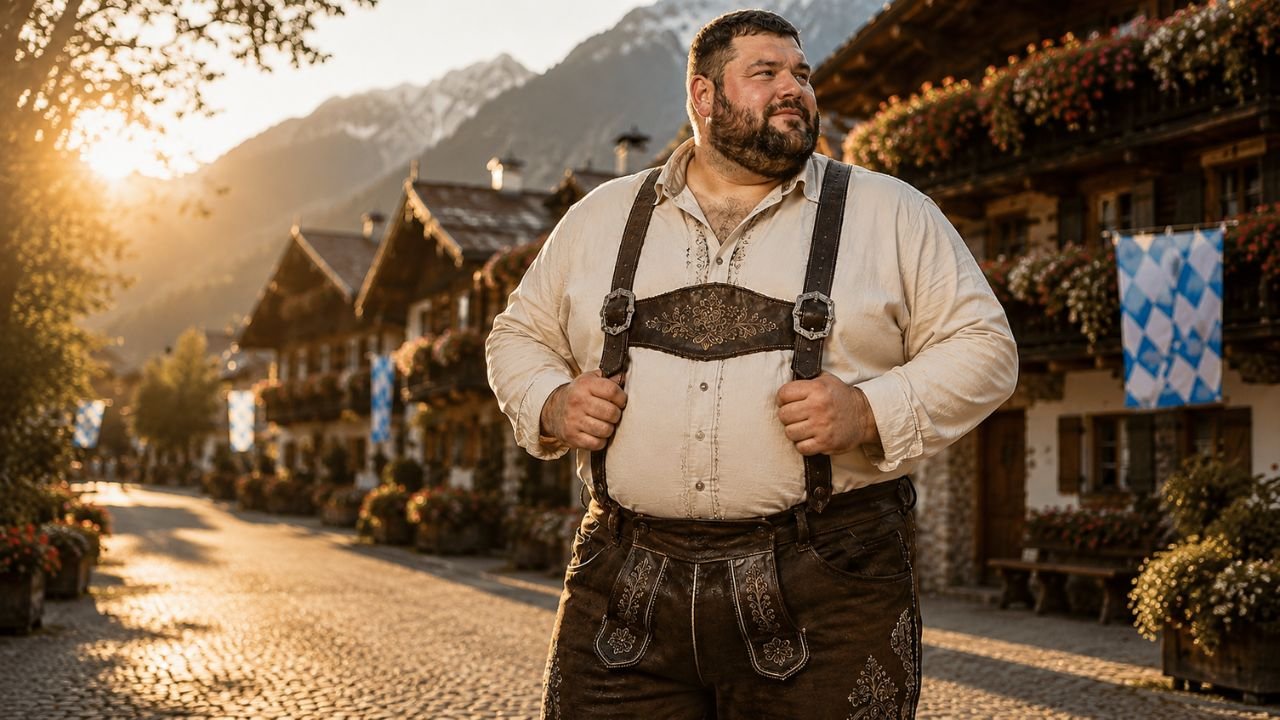
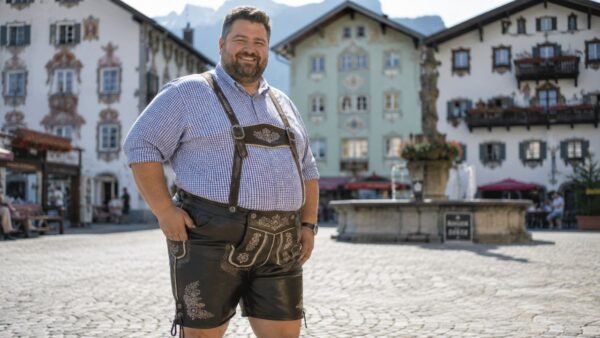
Where to Buy Big and Tall Lederhosen: Complete Size Guide 2026
Where to Buy Big and Tall Lederhosen: Complete Size Guide 2026
Finding lederhosen in standard sizes is straightforward enough. Finding lederhosen in extended sizes — sizes that fit a 44-inch waist, a broader seat, longer legs, or a frame that simply does not conform to the narrow range most Tracht retailers consider their core market — is a genuinely different problem. Most online retailers stock lederhosen up to size 56 or 58 in their standard range and then quietly stop. Tourist market costume versions rarely go beyond a vague “XL” that translates to nothing reliable in actual fit. And genuine leather lederhosen in extended sizes require both more material and more skilled pattern work than standard sizes, which means fewer manufacturers bother producing them and fewer retailers bother stocking them.
This guide exists because that gap is real and consistently underserved by the advice available online. It covers the complete sizing system so you understand exactly what size you need before you start searching. It covers every purchasing option available to big and tall buyers in 2026, from the most convenient US-based specialist to custom Bavarian workshops that make lederhosen to individual measurements. It covers the fit principles that matter specifically for larger frames — seat measurement, thigh room, suspender adjustment, and the construction details that determine whether a larger lederhosen holds up over a full festival day. And it covers the buying timeline that ensures extended-size buyers, who face the earliest sell-out risk of any Tracht category, are not left without options in August.
Why Big and Tall Lederhosen Are Harder to Find Than Standard Sizes
The scarcity of extended-size lederhosen has practical causes that are worth understanding before you start your search, because understanding them helps you evaluate your options more accurately. Traditional Bavarian lederhosen sizing in commercial production has historically focused on the range that covers the majority of the local market — roughly sizes 44 through 56 in German centimetre sizing — and extended sizes have been treated as a specialist niche rather than a standard part of the range. Most retailers who import Tracht to international markets replicate this approach, stocking what moves fastest and in the smallest warehouse footprint, which means extended sizes are the first to be excluded from the selection and the first to sell out when they are stocked.
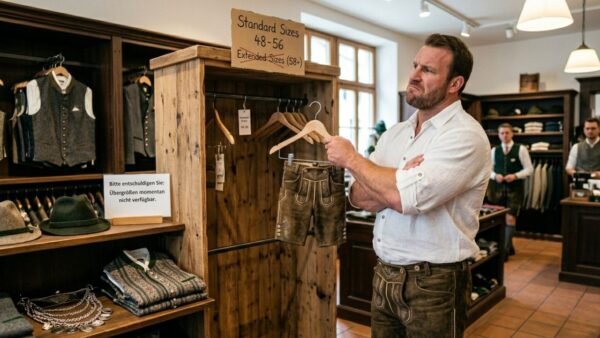
Genuine leather is the second practical barrier. Producing lederhosen in larger sizes requires more high-quality hide material per pair, more precise pattern work to ensure the leather holds its shape and structure at stress points that are under more load at larger sizes, and stronger construction at seams and closures where the physical demands are greater. This increases both material cost and production complexity in ways that make it economically less attractive for manufacturers focused on high-volume production. The result is that extended-size lederhosen in authentic leather — as opposed to synthetic costume versions — exist in a genuinely smaller supply relative to demand, and that supply tightens considerably in the months before Oktoberfest when demand peaks across all sizes simultaneously.
Synthetic costume lederhosen — the category sold at tourist market price points — compound the problem by rarely extending into true plus sizes either, leaving big and tall buyers caught between a costume market that does not serve them and a quality Tracht market where extended sizes require deliberate searching to find. The practical consequence of all this is that extended-size buyers need to start their search earlier, identify the right sources more precisely, and act on availability faster than standard-size buyers — which is exactly what this guide helps you do.
Understanding Big and Tall Lederhosen Sizing
The German Centimetre Sizing System for Larger Men
German lederhosen sizing uses the waist measurement in centimetres as its primary size designation, which creates an immediate translation problem for US and UK buyers accustomed to inch-based sizing or general labels like XL and XXL. The German size number is the waist measurement — a size 50 lederhosen is designed for a 50-centimetre waist, a size 60 for a 60-centimetre waist, and so on. This system sounds straightforward but requires careful application because the German size refers to a specific body measurement rather than a standardized range, and the relationship between German sizes and US/UK clothing labels is inconsistent enough that relying on your shirt or trouser label to estimate lederhosen size produces unreliable results. The size chart below, based on the official GermanAttire size system, provides the complete conversion from German size through international sizing labels to body measurements across every relevant dimension.
| German Size | Inter Size | Inch | US Size | Waist (cm) | Hip (cm) | Thigh (cm) | Knee Cuff (cm) | Back Length (cm) |
|---|---|---|---|---|---|---|---|---|
| 42 | XXXS | 28 | 28 | 70–73 | 86–89 | 48–49 | 36 | 50 |
| 44 | XXS | 30 | 29 | 74–77 | 90–93 | 49.5–50.5 | 37 | 50.2 |
| 46 | XS | 31 | 30 | 78–81 | 94–97 | 51–52 | 38 | 51 |
| 48 | S | 32 | 32 | 82–85 | 98–101 | 52.5–53.5 | 39 | 51.7 |
| 50 | M | 34 | 34 | 86–89 | 102–105 | 54–55 | 40 | 52.5 |
| 52 | L | 36 | 36 | 90–94 | 106–109 | 55.5–56.5 | 41 | 53.7 |
| 54 | XL | 38 | 38 | 95–99 | 110–113 | 57–58 | 42 | 54.7 |
| 56 | 2XL | 40 | 40 | 100–104 | 114–117 | 58.5–59.5 | 43 | 55.7 |
| 58 | 3XL | 42 | 42 | 105–109 | 118–121 | 60–61 | 44 | 56.7 |
| 60 | 4XL | 44 | 44 | 110–114 | 122–125 | 61.5–62.5 | 45 | 57.7 |
| 62 | 5XL | 46 | 46 | 115–119 | 126–129 | 63–64 | 46 | 58.7 |
| 64 | 6XL | 48 | 48 | 120–124 | 130–133 | 65.5–66.5 | 47 | 59.7 |
| 66 | 7XL | 50 | 50 | 125–129 | 134–137 | 67–68 | 48 | 60.7 |
The key practical insight from this chart for big and tall buyers is that the extended size range — from size 58 (3XL) through size 66 (7XL) — covers waist measurements from 105 centimetres to 129 centimetres, or roughly US size 42 through US size 50. A buyer wearing a US 44-inch waist trouser needs a German size 60 lederhosen. A buyer wearing a US 46-inch waist needs a German size 62. This translation is not obvious from the size labels, and getting it wrong is the most common and most avoidable purchasing mistake that extended-size buyers make. Always measure your actual waist in centimetres before ordering, and cross-reference against this chart rather than estimating from your US clothing label.
Waist vs Seat — The Critical Measurement for Larger Frames
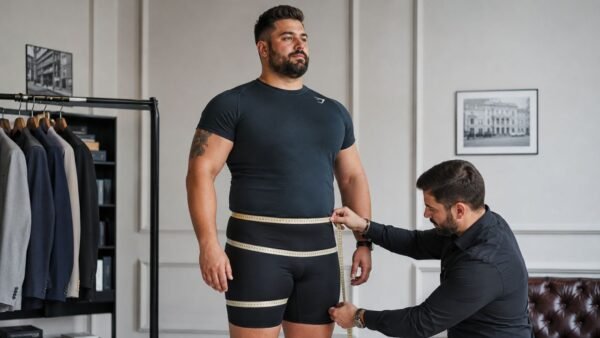
Waist measurement alone is insufficient for big and tall lederhosen buyers, and this is the sizing principle that creates the most problems for men with broader builds. The size chart above shows that for a German size 60, the expected waist range is 110–114 cm and the expected hip measurement is 122–125 cm — a difference of approximately 11–12 cm. For men with a seat measurement that is proportionally larger relative to their waist than this ratio — a common build pattern for taller men and for men who carry weight through the hips and thighs rather than evenly — ordering by waist measurement alone will produce a lederhosen that fits the waist but is too tight through the seat and thigh to be comfortable or safe under the physical demands of a festival day.
The back lacing system that runs up the rear of the waistband on traditional lederhosen provides some accommodation for seat-to-waist variation — it can typically adjust the fit by 4–6 centimetres at the waist — but it has limits, and it does not affect the fit through the thigh or seat panel, which are cut to fixed dimensions at the manufacturing stage. A buyer whose seat measurement is significantly larger than the chart ratio for their waist size should order to the seat measurement and use the back lacing to bring in the waist, rather than ordering to the waist and finding the seat panel too tight to allow comfortable movement. The complete lederhosen measurement guide walks through every measurement point in the correct sequence.
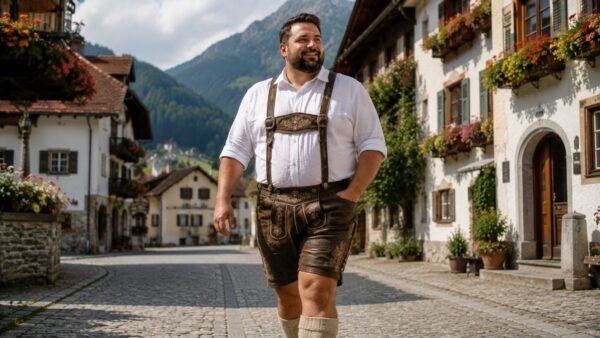
Thigh Room and Inseam for Taller Buyers
The thigh measurement in the size chart — ranging from 48 cm at size 42 to 68 cm at size 66 — represents the circumference of the thigh opening at the lederhosen’s widest point. For taller buyers with proportionally larger thighs, or for any buyer who carries significant muscle mass through the upper leg, this measurement requires separate verification against their actual thigh circumference. A lederhosen that fits correctly at the waist and seat but is tight through the thigh will restrict movement and become genuinely uncomfortable during the bending, sitting, and step-climbing that festival attendance involves. Taller buyers — particularly men over 185 cm (approximately 6 feet 1 inch) — should also note that the back length measurement in the chart (ranging from 50 cm at size 42 to 60.7 cm at size 66) affects how high the lederhosen sits at the waist and whether the rise is sufficient for a taller torso. Men with longer torsos relative to their waist circumference may find that standard back length produces a rise that sits lower than comfortable on the body, which is one of the situations where custom construction provides a practical advantage over off-the-shelf sizing.
How to Measure Yourself Correctly at Home
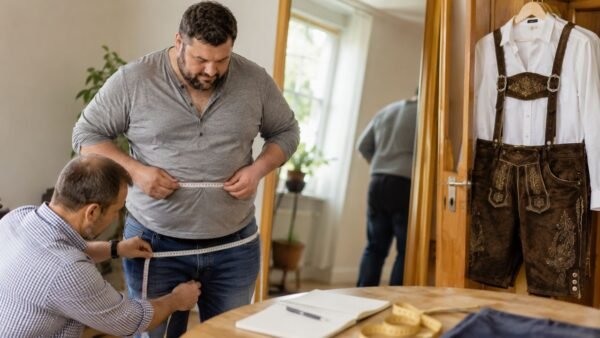
Taking accurate measurements before ordering extended-size lederhosen requires a flexible tape measure and, ideally, a second person to hold the tape correctly while you maintain a natural standing posture. Measure your waist at the point where you would wear the lederhosen waistband — typically at or just below the natural waist, not at the narrowest point of the torso. Measure your seat at the widest point of the hips and buttocks while standing with feet together. Measure your thigh circumference at the fullest point of the upper thigh on either leg. Measure your inseam from the crotch to where you want the lederhosen hem to fall — this determines whether short lederhosen will sit correctly above the knee or whether the hem will need adjustment. Record all four measurements in centimetres and cross-reference against the full size chart above before making any purchasing decision. When your measurements fall between two sizes on the chart, size up rather than down — lederhosen that are slightly large can be adjusted with the back lacing and suspender tension, while lederhosen that are too small cannot be made to fit regardless of how they are worn.
Option 1 — German Attire: Best Choice for US Buyers
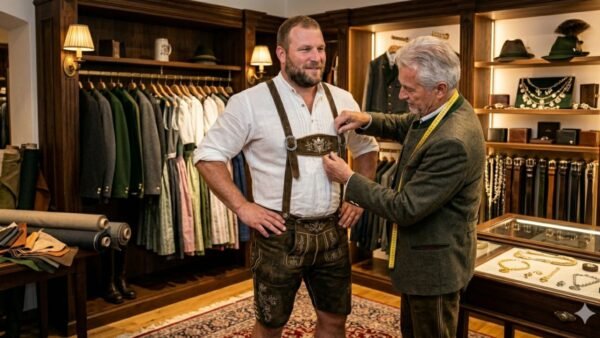
For big and tall buyers based in the United States, German Attire is the most practical starting point for several reasons that matter specifically to extended-size purchases. The physical retail location at 127 6th St S, La Crosse, Wisconsin 54601, offers something that online purchasing cannot: the ability to try lederhosen on your actual body before committing to a purchase. For extended-size buyers whose measurements may not map precisely to standard size chart ranges — men with proportionally larger seats relative to their waist, taller buyers who need to verify back length and rise, or anyone uncertain which of two adjacent sizes will actually fit — this in-person fitting advantage is significant. A knowledgeable staff member who understands how Tracht sizing works for broader and taller builds can assess the fit across all the dimensions that matter — waist, seat, thigh, and length — and guide the size decision based on what they see rather than what the customer estimates from a measurement chart.
The online store at germanattire.com’s lederhosen collection ships across the United States without the import complications, customs delays, or duty costs that European online retailers create for US buyers. Extended sizes in the collection — including sizes reaching into the 4XL, 5XL, 6XL, and 7XL range that correspond to German sizes 60 through 66 — are stocked as part of the regular product range rather than as a special-order niche, which means availability is more reliable than at general Tracht importers who treat extended sizes as an afterthought. The return and exchange policy matters specifically for large-size online orders, where size uncertainty is higher than for standard sizes — being able to exchange for a different size without international shipping costs or long wait times is a practical advantage that European retailers cannot offer US-based customers. The Oktoberfest lederhosen range and the full men’s lederhosen collection are the correct starting points for extended-size browsing.
Option 2 — Specialist Online Trachten Retailers
What to Look For in an Online Retailer for Extended Sizes
Not every online Trachten retailer that claims to carry “large sizes” actually delivers extended sizing in a meaningful way. Before placing an order, several specific checks are necessary to avoid the most common large-size online purchasing failures. The retailer’s size chart must explicitly list sizes above 58 — not simply label their largest size “XXL” and leave the actual measurements unstated. The product description must specify the leather type with enough precision to be meaningful: “genuine leather” without further specification has become a marketing phrase that can cover material quality ranging from full-grain cowhide to low-grade split leather, and neither you nor the retailer benefits from that ambiguity at the price point that extended-size lederhosen command. The product listing should offer seat measurement information as well as waist measurement, because extended-size buyers cannot rely on waist measurement alone for a confident fit decision. And the return policy must be clearly stated and practically manageable — ordering an extended-size lederhosen online and discovering on arrival that the seat panel is too tight should result in a straightforward exchange process, not a dispute about who pays international return shipping.
European Trachten Specialists With Extended Sizing
European Trachten specialists — primarily German and Austrian retailers based in Bavaria — do carry extended sizes and represent a legitimate sourcing option for US buyers who cannot find the specific size or style they need from US-based retailers. The practical considerations for US buyers ordering from EU retailers are worth understanding before committing to this route. Import duties on clothing entering the United States from the European Union apply above certain value thresholds, and a quality pair of extended-size lederhosen will typically exceed those thresholds, meaning the landed cost of a European purchase is meaningfully higher than the listed price. Shipping timelines from German and Austrian retailers to US addresses typically run two to three weeks under standard shipping, and exchanges — necessary when extended sizes need adjustment — add another two to three weeks in each direction, making the total timeline for a correctly fitting pair of European-sourced lederhosen potentially six to eight weeks from initial order. For Oktoberfest 2026 preparation, this timeline requires European orders to be placed no later than early August to allow buffer for a potential exchange cycle.
Option 3 — Custom and Bespoke Lederhosen for Big and Tall Men
When Custom Is the Right Answer
Custom lederhosen — made to individual measurements by a skilled Tracht workshop — become the right answer for big and tall buyers in three specific situations. The first is waist size above 66–68 in German sizing, where off-the-shelf availability drops sharply even among specialist retailers. The second is unusual body proportions that off-the-shelf sizing cannot accommodate: a seat measurement significantly larger than the chart ratio for the corresponding waist size, a thigh circumference that exceeds the standard thigh opening for the relevant size, or a back length requirement that exceeds the standard back length at the relevant size (for particularly tall buyers with longer torsos). The third is the quality level that some extended-size buyers rightly expect — custom lederhosen from a reputable Bavarian workshop are made from full-grain leather with hand embroidery and construction quality at stress points that is superior to most production-line extended-size stock, and for buyers who want lederhosen that will last decades rather than years, custom is often the best investment regardless of whether off-the-shelf sizing would technically fit.
What Custom Lederhosen Costs and How Long It Takes
Realistic custom lederhosen pricing for big and tall sizes from reputable Bavarian workshops starts at approximately €400–600 for entry-level custom work in cowhide and extends to €800–1,500 or more for premium deerskin or hand-embroidered pieces from the most established makers. Lead time from measurement submission to delivery is typically four to ten weeks depending on the workshop’s current order volume — and order volumes increase significantly from May onward as Oktoberfest preparation accelerates. Big and tall buyers pursuing custom lederhosen for Oktoberfest 2026 should submit their measurements and commission their order no later than June to ensure delivery with enough time before the festival for any minor adjustments. The information a custom maker needs from you includes waist, seat, thigh, inseam, back length, total height, and any specific fit preferences — plus the lederhosen length (short or knee-length) and any embroidery preferences for the front bib and knee bands.
Finding a Reputable Custom Tracht Maker
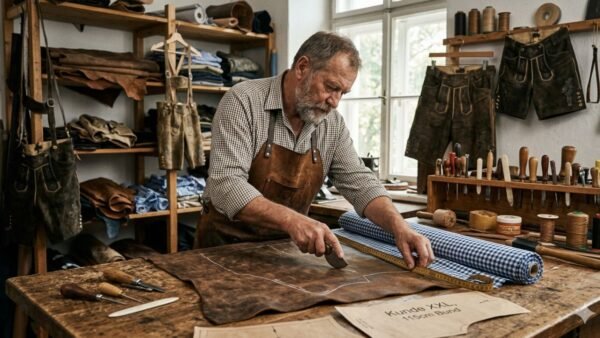
Bavaria-based workshops with established reputations for custom work include traditional cobblers and Trachten tailors operating in Munich, Rosenheim, and other Upper Bavarian towns who take international measurements by correspondence and ship internationally. Before commissioning, ask the maker specifically about their experience with extended sizes — a workshop that regularly makes lederhosen in sizes 60 and above has developed pattern knowledge specific to larger frames that a workshop primarily focused on standard sizes may not have. Ask for references or examples of previous extended-size work. Confirm that the quoted price and lead time are fixed rather than provisional, and clarify the process for minor fit adjustments if the finished piece requires them.
Option 4 — Buying Big and Tall Lederhosen in Munich
Munich’s established Trachten retailers — including Angermaier and Lodenfrey, both of which have operated for generations and carry among the most comprehensive Tracht selections in Bavaria — do stock extended sizes as part of their regular inventory. The practical advantage of buying in Munich is identical to the advantage of the German Attire La Crosse store: the ability to try lederhosen on the actual body before committing. For a larger-framed buyer who is already travelling to Munich for Oktoberfest, arriving a few days early specifically to visit Trachten shops and be properly fitted is both practical and worthwhile — the investment of an afternoon of fitting time protects a significantly larger investment in the lederhosen themselves and eliminates the size uncertainty that online purchasing for extended sizes inherently involves.
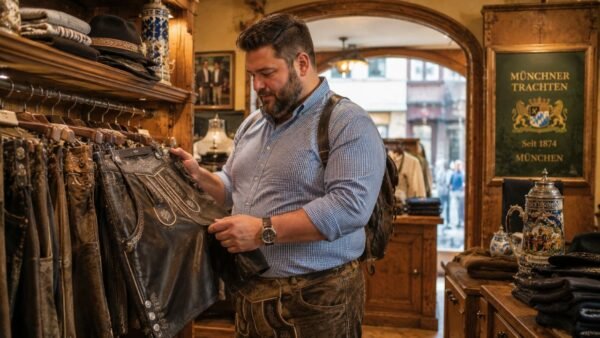
The timing of Munich Trachten shopping matters significantly for extended-size buyers. Stock across all sizes is at its most complete in late July and early August, before the Oktoberfest rush depletes the most popular sizes and styles. Extended sizes are the first to sell out as Oktoberfest approaches — the combination of lower base stock and concentrated demand in the weeks before the festival means that buyers who arrive in Munich in the final two weeks of September expecting to find their size in a range of options will frequently be disappointed. Shopping in Munich by late August provides the best combination of full stock and adequate time before the festival. For those planning to attend the festival itself, the Munich Oktoberfest complete guide and the guide on where Oktoberfest is held in Munich provide the logistical context for planning around the shopping trip.
Option 5 — Second-Hand Lederhosen in Large Sizes
Second-hand lederhosen in extended sizes represent a genuinely viable sourcing option that most guides for big and tall buyers never mention. The logic is straightforward: quality leather lederhosen are made to last decades, and a previous owner who wore their size 60 or 62 lederhosen for a few festival seasons before life circumstances changed — weight change, changed residence, no longer attending festivals — may have left behind a pair in excellent condition that no longer fits them but would fit a new buyer perfectly. The primary platforms for finding extended-size second-hand lederhosen are eBay.de, the German-language platform with the largest selection of second-hand Tracht, Kleiderkreisel (now Vinted in German-speaking markets), and to a lesser extent US-based vintage clothing markets and eBay.com with German seller listings.
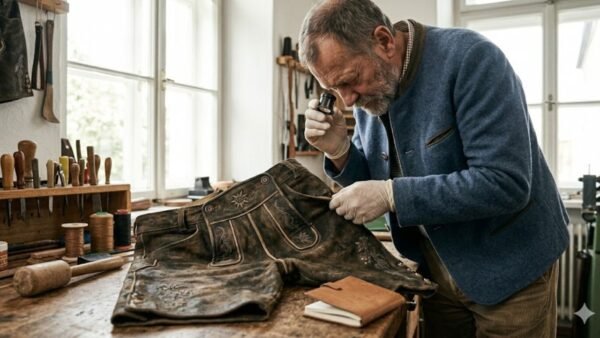
Condition checks matter more with second-hand lederhosen than with new purchases, and extended-size buyers should ask sellers for specific information before bidding or purchasing. Examine the interior of the waistband for wear and stretch — a waistband that has been consistently worn at its maximum adjustment will show stress at the lacing eyelets and leather fibre compression that indicates it has been used at the limit of its capacity. Check the seat seam — the highest-stress seam in any lederhosen — for any evidence of repair, reinforcement, or stress cracking in the leather along the seam line. Ask about the condition of the knee buckles and their leather straps on knee-length pieces, as these are both wear points and adjustment mechanisms that affect fit. A second-hand pair in genuinely good condition, purchased at meaningfully below new price, is a legitimate value option — but condition verification is non-negotiable before committing to a purchase that cannot easily be returned. Before wearing any second-hand leather lederhosen, condition the leather thoroughly with a quality leather conditioner to restore suppleness and moisture that storage and previous wear will have reduced.
The Fit Checklist — How Big and Tall Lederhosen Should Feel
The Waistband Test
A correctly fitting lederhosen waistband for a larger frame should sit flat and comfortable against the waist without digging, rolling, or creating visible bulge above or below it. The back lacing should have adjustment remaining in both directions — a waistband that is already at its maximum lacing extension has no room for adjustment after a large meal or after the natural expansion that happens during a long, active festival day, and this is both uncomfortable and a stress risk for the lacing hardware. With the waistband correctly adjusted, you should be able to insert two fingers comfortably between the waistband and your body — any tighter indicates the size is too small; any looser indicates the back lacing needs tightening or the size is too large. The waistband should not shift position during movement — a lederhosen that rotates or slides during walking indicates that the fit is either too large or that the suspenders are not adjusted to hold it correctly in place.
The Seat and Thigh Test
The seat panel should provide enough room to sit down fully on a bench or stool without the leather pulling tight across the seat or creating visible horizontal stress lines across the fabric. If you feel the leather pulling under your full body weight when seated, the seat panel is too small for your dimensions — this is the critical fit failure point for larger-framed buyers and the one most commonly missed when trying on lederhosen in a standing-only fitting. The thigh opening should allow the full thigh circumference without compression or restriction — grip your own thigh through the leather and confirm that there is material to spare rather than the leather being pressed against the thigh surface under tension. Thigh tightness that is tolerable standing becomes painful after several hours of walking and creates a real risk of seam stress or leather damage under sustained physical activity.
The Movement Test
The movement test is the single most important fit verification for big and tall buyers and the one that is most frequently skipped in a conventional fitting room context. With the lederhosen fitted and the suspenders adjusted, perform a full squat — bending the knees fully and lowering the body until the thighs are parallel to the floor. This tests the maximum strain point of the seat seam and the thigh panels simultaneously. A correctly sized pair of lederhosen accommodates a full squat without the seat seam pulling or the thigh panels compressing the legs. Next, take a full stride — a longer step than normal walking pace — to test the crotch seam and inner thigh panels. Step onto a raised surface, such as a bench or step, lifting the knee to at least waist height to simulate beer bench climbing. These three movements together reveal any fit problems that standing in a normal posture conceals. If any of them produces pulling, compression, or restriction in the leather, the size needs adjustment before purchase.

The Suspender Adjustment for Taller Frames
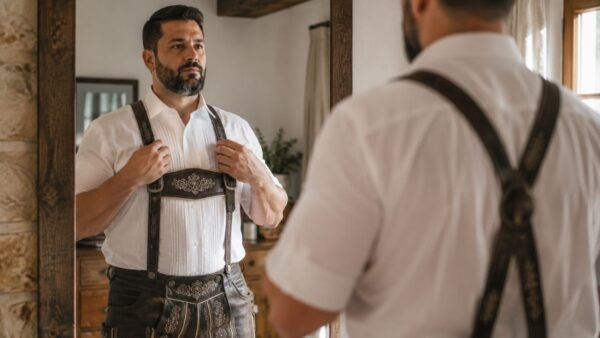
Suspenders — the braces that hold lederhosen at the correct waist height — are a more critical fit element for taller buyers than for average-height wearers because standard suspender length is calibrated for average torso lengths and may be insufficient for men with longer torsos relative to their leg length. Correctly adjusted suspenders should create light, consistent upward tension on the waistband without pulling the front bib uncomfortably tight against the chest or stretching the suspender straps to their maximum adjustment. For taller buyers, suspenders that are close to their maximum length extension indicate that a longer suspension option may be needed — most quality lederhosen suspenders are available in extended lengths from specialist suppliers. The complete lederhosen suspenders range includes options appropriate for taller builds. The front bib of the lederhosen — the decorative panel that sits against the chest — should sit flat against the chest without being pulled upward or downward by incorrect suspender tension, and the back attachment points should sit at the upper back rather than being pulled down toward the lower back by suspenders that are too short for the wearer’s torso.
Leather Types Best Suited for Extended Sizes
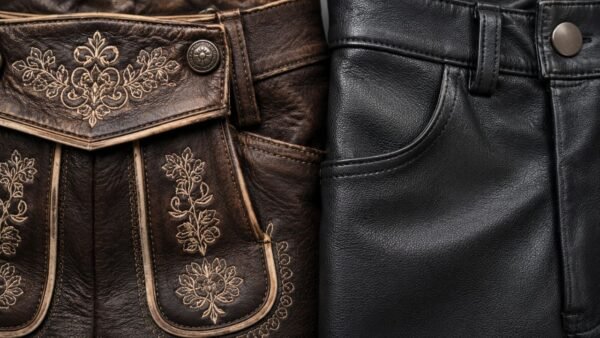
Cowhide is the most appropriate and most recommended leather for big and tall lederhosen across every quality level. It is the most durable of the traditional lederhosen leathers, it holds its shape reliably under the greater physical demands that larger sizes place on the material, and it is available in sufficient hide size to produce the larger pattern pieces required for extended-size construction without the material compromises that smaller hides introduce. Cowhide also develops one of the most satisfying patinas of any lederhosen leather — it deepens and richens in color with use and conditioning in a way that rewards the investment in quality. For big and tall buyers, the additional weight and structure of cowhide at the seat seam and thigh panels provides the stress resistance that genuinely heavy use requires.
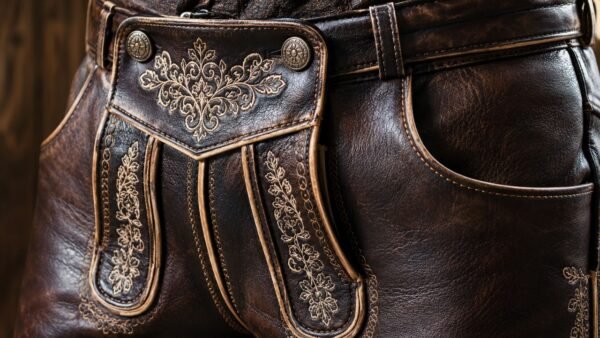
Goatskin — softer and more supple than cowhide — is a legitimate lederhosen material in standard sizes where the lower physical demands allow its lighter construction to perform adequately. In extended sizes, goatskin requires reinforced construction at stress points — the seat seam, the waistband attachment points, and the thigh panels — that not all manufacturers provide, and buyers considering goatskin in extended sizes should verify that the specific pair they are considering has been constructed with this reinforcement rather than simply assuming it. Genuine deerskin — the most traditional and most expensive lederhosen leather — is rarely available in extended sizes off the shelf, because the hide size of individual deer limits the pattern pieces available for larger cuts. Deerskin extended-size lederhosen exist almost exclusively in the custom market, where multiple hides can be sourced specifically for a large commission. The guide on what lederhosen are made from covers the complete leather type comparison in detail.
Common Mistakes Big and Tall Buyers Make
Ordering by US clothing size label rather than German centimetre measurement is the most common and most consequential mistake that extended-size lederhosen buyers make. A US 2XL shirt does not translate reliably to any specific lederhosen size — the size chart provided in this guide exists precisely because US labels and German centimetre sizing have no consistent relationship. Every extended-size buyer should measure their waist in centimetres, measure their seat in centimetres, and cross-reference both against the size chart before placing any order. This takes five minutes and eliminates the most common reason for size exchanges and returns.
Ignoring the seat measurement and ordering by waist alone is the second most damaging mistake and the one that produces the most uncomfortable fit failures. The size chart shows that the expected seat-to-waist ratio narrows as sizes increase — a size 66 lederhosen has a 125–129 cm waist range and a 134–137 cm hip range, a difference of approximately 8 cm. Many larger-framed men have seat measurements that exceed this ratio, and ordering by waist alone in these cases produces a lederhosen that fits the waist correctly while being uncomfortably tight through the seat. Ordering synthetic costume lederhosen because extended sizes in leather seem scarce is the third major mistake — costume lederhosen in any size are poor value, but in extended sizes they are additionally likely to be poorly constructed at exactly the stress points where quality construction matters most. The scarcity of extended-size quality lederhosen is a real market problem, but it has real solutions — this guide has covered five of them — and costume lederhosen is not one of those solutions. Leaving extended-size purchasing too late is the fourth mistake. Sizes 60, 62, 64, and 66 sell out first and fastest in every pre-Oktoberfest selling period. Buyers in these sizes who wait until August to start searching will find selection significantly reduced.
Buying Timeline for Big and Tall Lederhosen — Oktoberfest 2026
| Purchase Route | Order By | Why This Deadline |
|---|---|---|
| German Attire La Crosse (in-store) | Up to early September | Immediate purchase with in-person fitting — no shipping lead time required |
| German Attire online (US shipping) | By end of August | Allows delivery time plus exchange window if size adjustment needed |
| European online retailer to US | By early August | EU shipping plus US customs plus exchange buffer if required |
| Custom or bespoke order | By June | Four to ten weeks production time plus shipping and adjustment buffer |
| Munich shops (travelling) | Arrive by late August | Extended sizes sell out first — late August provides best remaining selection |
The timeline above represents the recommended deadlines for a stress-free process that includes buffer for size adjustments. Earlier is always better for extended sizes — the risk of a specific size selling out before your deadline increases with every week of delay, and the pre-Oktoberfest rush that begins in June accelerates extended-size depletion faster than standard sizes. Buyers who have already identified their German centimetre size from the chart, measured both waist and seat accurately, and know which purchasing route suits their circumstances should act on that information as soon as it is complete rather than treating any of the dates above as a target rather than a deadline. For the complete picture of what to wear with lederhosen beyond the garment itself, the guides on what to wear with lederhosen and where to buy lederhosen cover the broader purchasing and styling context. The Oktoberfest tickets guide ensures the lederhosen investment has the festival access to justify it.

Summary — Choosing the Right Source for Big and Tall Buyers
For US-based big and tall buyers, German Attire at 127 6th St S, La Crosse, WI or at germanattire.com is the most practical first choice — no import complexity, knowledgeable staff familiar with extended-size fitting, a genuine extended-size range, and exchange logistics that work for US addresses. For buyers who need sizes above 66 or who have body proportions that off-the-shelf sizing cannot accommodate, custom commissioning from a Bavarian Trachten workshop is the correct solution — expensive and slow, but the only route to a lederhosen that fits a non-standard frame with genuine quality. For buyers who are already travelling to Munich, shopping in person at Angermaier or Lodenfrey by late August provides the fitting advantage of trying before buying with the Munich selection depth. Second-hand in good condition is a legitimate value option for buyers willing to do the condition verification work.
The single most important action any big and tall buyer can take before choosing a purchasing route is completing the full measurement set — waist, seat, thigh, and back length in centimetres — and locating that measurement set in the size chart in this guide. That information answers every subsequent sizing question and makes every purchasing route more reliable and more likely to produce a lederhosen that fits correctly on the first attempt. Start with the measurements, match to the chart, choose your route based on timeline and budget, and order earlier than you think you need to. Extended sizes reward preparation and punish delay more than any other part of the lederhosen market.
Frequently Asked Questions (FAQs)
Can lederhosen be altered for a better fit after purchase?
Lederhosen can be altered to a limited degree by a skilled leather worker or Trachten tailor. Waist adjustment via the back lacing is the most straightforward change. Seat and thigh alterations are more complex and expensive, requiring skilled leather work to maintain seam and embroidery integrity. Major structural alterations — significantly enlarging a seat panel or restructuring the crotch area — are expensive enough that purchasing the correct size initially is almost always the better economic decision.
What size lederhosen do I need if I wear a US 40-inch waist?
A US 40-inch waist corresponds to approximately 100–104 cm, mapping to German size 56 (2XL) in the official size chart. Measure your actual waist in centimetres rather than converting from US trouser sizing, as the two often differ. Also measure your seat — at size 56, the expected hip is 114–117 cm — and if your seat measurement exceeds this, order size 58 and use the back lacing to adjust the waist inward.
Are there lederhosen for tall men with a standard waist?
Yes, but this is one of the more challenging fit scenarios for off-the-shelf lederhosen, because back length and inseam in standard sizes are calibrated to average height proportions. Taller buyers with standard waists may find the correct waist size produces a lederhosen with insufficient rise for their torso length. This is one of the clearest cases where custom construction provides a meaningful practical advantage over off-the-shelf sizing.
Where can I buy big and tall lederhosen in the United States?
German Attire is the leading US-based source for big and tall lederhosen, with a physical retail location at 127 6th St S, La Crosse, WI 54601 and an online store at germanattire.com shipping across the United States. Extended sizes including 4XL through 7XL — German sizes 60 through 66 — are carried in genuine leather lederhosen with staff knowledgeable on fit for broader and taller builds.
How long does custom lederhosen take to make?
Custom lederhosen from a reputable Bavarian workshop typically take four to ten weeks from measurement submission to delivery. Order volumes increase significantly from May onward as Oktoberfest preparation accelerates, extending lead times during peak season. Big and tall buyers commissioning custom lederhosen for Oktoberfest 2026 should place their order no later than June to ensure delivery with adequate time before the festival.
How do I convert my US waist size to German lederhosen size?
Measure your actual waist in centimetres and locate it in the waist column of the official size chart in this guide. As an approximate guide: US 40 inches maps to German size 56, US 42 to size 58, US 44 to size 60, US 46 to size 62, US 48 to size 64, and US 50 to size 66. Always verify against your actual measured waist in centimetres for accurate ordering — US clothing labels and German centimetre sizing have no consistent relationship.
What is the back lacing on lederhosen and what does it do?
The back lacing is an adjustable lacing system on the rear waistband that allows the waist circumference to be adjusted by approximately 4–6 centimetres in either direction from the base size. It accommodates variation between the measured waist and actual comfortable wearing conditions — including post-meal expansion and natural weight fluctuation. The back lacing adjusts waist only — it does not change seat or thigh dimensions, which are fixed at manufacturing stage.

Anna Bauer is a seasoned Bavarian fashion expert, cultural consultant, and heritage stylist with over a decade of hands-on experience in traditional German clothing. Born in Munich, the heart of Bavaria, Anna grew up surrounded by the rich traditions of Trachten fashion. Her passion for cultural attire led her to pursue a degree in Fashion and Textile Design at the prestigious University of the Arts Berlin, where she specialized in European folkwear.
Over the past 12+ years, Anna has collaborated with renowned Trachten designers, styled outfits for Oktoberfest events across Germany, and contributed articles to top fashion and culture magazines across Europe. Her work focuses on preserving the authenticity of Lederhosen and Dirndl wear while helping modern audiences style them with confidence and flair.
As the lead content contributor for German Attire, Anna combines her academic background, professional styling experience, and deep cultural roots to provide readers with valuable insights into traditional German fashion. Her blog posts cover everything from historical origins and styling guides to care tips and festival outfit planning—making her a trusted voice for anyone looking to embrace Bavarian heritage in a stylish, modern way.