

Blog
What Shoes to Wear With Lederhosen: The Complete Expert Style Guide
What Shoes to Wear With Lederhosen: The Complete Expert Style Guide
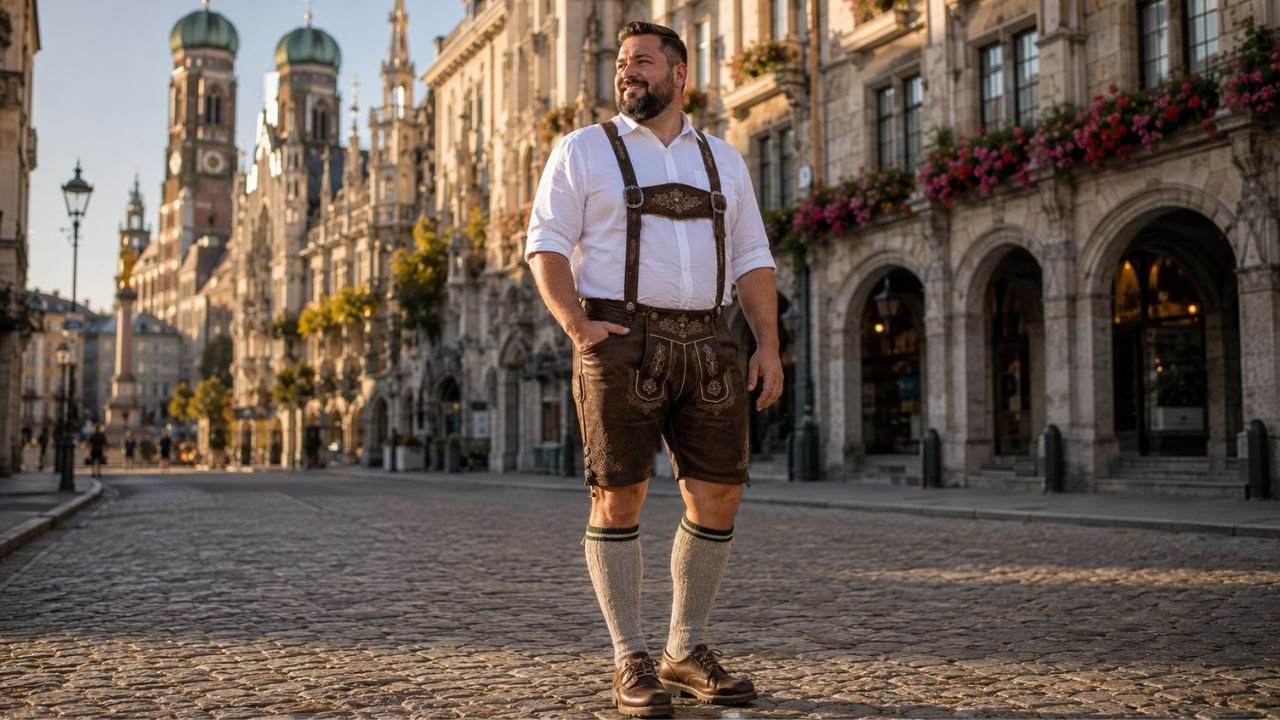
The traditional shoes to wear with lederhosen are Haferlschuhe — authentic Bavarian leather shoes with a distinctive side-lacing system, low heel, and durable sole designed for the Alpine terrain of Bavaria and Munich’s Oktoberfest grounds. For men, dark brown or black Haferlschuhe are the correct choice with both Kurze (short) and Kniebund (knee-length) lederhosen. Women pair lederhosen with Haferlschuhe or Mary Jane-style Trachtenschuhe with a modest heel. Beyond the traditional option, leather ankle boots and brown brogues work well for modern settings. Flip-flops, sneakers, and open-toe sandals are never appropriate with lederhosen — they break the cultural integrity of the Tracht ensemble.
This matters more than most people expect. Footwear is the single most visible signal of whether someone understands Bavarian Tracht culture or is simply wearing its surface. At Munich’s Wiesn, at a Trachtenfest in the Allgäu, at a Schuhplattler performance — the shoes communicate fluency before a word is spoken. The right pair says you have done this before. The wrong pair says the opposite, immediately, to everyone in the room who grew up in this tradition.
This guide covers every legitimate shoe option — traditional Haferlschuhe with full sourcing and sizing guidance, modern alternatives that hold up culturally, the complete sock situation that most guides skip entirely, footwear matched to every lederhosen length from Kurze to Bundhosen, occasion-specific guidance for Oktoberfest Munich, Bavarian weddings, Christmas markets, and everyday wear, plus a full women’s lederhosen footwear guide. Everything is covered.
Part 1: The Cultural Foundation — Why Shoes Matter in Bavarian Tracht
The History of Tracht Footwear
The footwear tradition that accompanies lederhosen did not develop in a fashion studio or through the deliberate decisions of designers. It developed in the Alpine countryside of Bavaria over centuries of practical necessity, where the terrain, the climate, and the physical demands of mountain farming and village life produced specific footwear solutions that were then refined by generations of Bavarian cobblers into the culturally codified forms that still define authentic Tracht today. The shoe was not chosen to complement the lederhosen aesthetically — the shoe and the lederhosen evolved together as a complete practical system for dressing a specific body in a specific landscape doing specific work. Understanding this origin is the foundation of understanding why certain footwear choices feel instinctively right with lederhosen and others feel immediately wrong.
The Haferlschuh — which takes its name from the Bavarian dialect word Haferl, meaning a small pot or cup, describing the shoe’s distinctive rounded toe shape — became the defining Tracht shoe through a combination of practical excellence and cultural adoption. It was originally the working shoe of Bavarian farmers and tradesmen: side-laced for security on uneven ground, low-heeled for stability, full-grain leather for durability in wet Alpine conditions, and wide enough in the toe box to accommodate the foot after a long day of physical labor. The side-lacing design — which distinguishes Haferlschuhe from all other leather shoes at a glance — exists because it allowed the boot to be laced tightly around the ankle without the lace crossing the top of the foot, which would have created pressure points during the extensive walking and climbing of agricultural work. The cobbler tradition that produced Haferlschuhe was regional and highly skilled — different Bavarian valleys had their own cobbler houses with their own construction details — and the social prestige of a well-made pair of Haferlschuhe in a Bavarian village was considerable.
Regional variations within the broader Tracht footwear tradition reflect the geographic and cultural diversity of the Alpine world. Tyrolean footwear from Austria developed alongside Bavarian traditions but with enough distinct characteristics — particular stitching patterns, specific sole constructions, slightly different heel heights — that an experienced eye can distinguish the two. Upper Bavarian traditions centered on the Haferlschuh, while other Alpine regions developed their own distinct cobbler traditions. This regional specificity is itself a marker of authenticity: genuine Tracht footwear has a provenance, a geography, a story that cheap synthetic imitations sold at tourist markets entirely lack. When you wear authentic Haferlschuhe with your lederhosen, you are not simply choosing a shoe that looks right — you are participating in a material tradition that connects contemporary Bavarian identity to its historical roots in the Alpine countryside.
Understanding Lederhosen Before Choosing Shoes
The single most important factor in lederhosen footwear selection — and the factor that most guides ignore entirely — is the length of the lederhosen itself. The three traditional lederhosen lengths create three fundamentally different visual systems with three different sets of footwear requirements, and treating them as interchangeable is the most consequential mistake a lederhosen wearer can make before selecting shoes. Kurze Lederhosen — short lederhosen ending above the knee — are the most common style worn at contemporary Oktoberfest events and casual festival settings. They expose the most leg above the shoe and create a visual gap between the hem and the footwear that gives the shoe considerable visual independence from the garment above it. This length is the most forgiving in terms of footwear flexibility, though traditional options remain the most culturally correct choices even here.
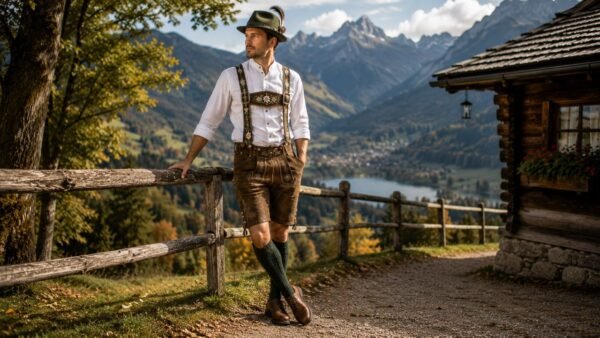
Kniebundlederhosen — knee-length lederhosen that buckle at the knee — are the most traditional length and the one with the most specific footwear requirements. The buckled knee creates a visual anchor point that organizes the entire lower leg, and the footwear choice must work in harmony with that organizing element. The visual logic of knee-length lederhosen demands shoes that read as extensions of the same traditional system — primarily Haferlschuhe — with knee-high socks bridging the gap between shoe and hem in a way that completes the traditional silhouette rather than interrupting it. Lange Lederhosen — full-length lederhosen reaching to or near the ankle — are the rarest traditional form, worn in formal and hunting contexts, and they demand footwear that matches their elevated formality: Tracht boots or the finest Haferlschuhe in their most formal colorways.
The color and quality of the lederhosen also set the baseline for shoe selection. Mid-brown lederhosen in natural deer or cowhide — the most common colorway — work best with light to mid-brown Haferlschuhe that read as tonally related to the leather above them. Dark brown or aged lederhosen in richer tones pair best with darker cognac or dark brown shoes that match the leather’s depth. The quality principle is equally important: a pair of hand-stitched, full-grain leather lederhosen deserves shoes of comparable quality. Pairing exceptional lederhosen with synthetic or poorly constructed footwear creates a visible quality mismatch that undermines the entire outfit — the same principle that governs every other high-quality dress context. For those still selecting their lederhosen, the guides on what lederhosen are made from and how lederhosen should fit establish the quality baseline that footwear selection must match.
Part 2: Traditional Shoe Options — The Authentic Choices
Haferlschuhe — The King of Lederhosen Footwear
If this guide had to reduce its entire footwear guidance to a single sentence, that sentence would be: wear Haferlschuhe. Everything else in this guide represents refinement, contextualization, occasion-specific adjustment, and legitimate modern variation — but the Haferlschuh remains the single correct answer to the question of what shoes to wear with lederhosen across the widest range of circumstances, occasions, and lederhosen lengths. It is the shoe that was designed for this exact purpose, refined over centuries for this exact purpose, and recognized by every Bavarian as the correct answer to this exact question without any further explanation required. Starting with Haferlschuhe and deviating only when there is a specific, defensible reason to do so is the soundest possible approach to Tracht footwear for both beginners and experienced Tracht wearers.
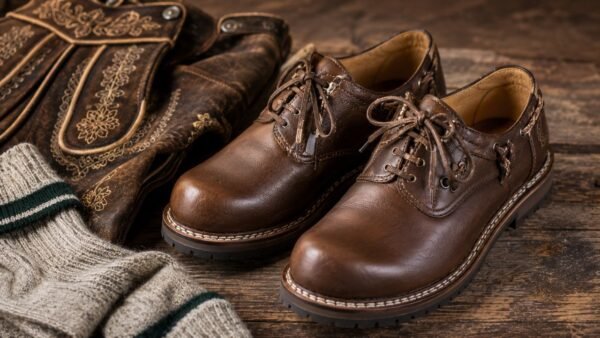
The construction details that distinguish authentic Haferlschuhe from imitations are visible to the trained eye and learnable by anyone willing to pay attention. Full-grain leather — the highest quality leather grade, cut from the outermost layer of the hide and retaining the natural grain pattern — has a surface texture and depth of color that is immediately distinguishable from split leather, bonded leather, or synthetic materials. Full-grain leather develops a patina over time, responding to conditioning and use by deepening and enriching in color and texture in a way that no lesser material replicates. The sole of authentic Haferlschuhe is traditionally leather — which provides the period-appropriate aesthetic, good grip on natural surfaces, and a break-in quality that rubber soles lack — though quality rubber and combination soles are accepted modern alternatives that provide better waterproofing and durability on contemporary festival surfaces. Stitching on authentic Haferlschuhe is tight, even, and typically visible as a design element along the welt and upper — uneven, skipped, or glued-only construction is an immediate quality signal.
The color variants of Haferlschuhe create a formality hierarchy that maps to the occasion hierarchy of lederhosen events. Classic mid-brown in natural leather is the most versatile and most widely appropriate color — it works for every occasion from casual beer garden to festive Oktoberfest to semi-formal regional celebration. Dark brown and cognac Haferlschuhe read as dressier and are appropriate choices for formal Tracht events, Bavarian weddings, and occasions where the elevated formality of the footwear reinforces the overall outfit’s register. Black Haferlschuhe are the most formal option and are seen most often at formal Tracht weddings and highly ceremonial occasions — they are less common in traditional casual settings where brown remains the dominant and culturally preferred choice. The break-in period for genuine leather Haferlschuhe is real and requires honest acknowledgment: a new pair of quality Haferlschuhe will create discomfort during the first several wearings as the leather softens and molds to the foot. The correct approach is to begin wearing them at home, then for shorter outings, before committing them to a twelve-hour Oktoberfest day. The result after proper break-in is a shoe that fits the individual foot with a precision that factory footwear cannot achieve.
Bundschuhe — The Traditional Low Boot
Bundschuhe are the older sibling of Haferlschuhe in the Bavarian footwear tradition — a lower boot form with origins in the medieval peasant footwear of German-speaking Central Europe that predates the more refined Haferlschuh by centuries. Where Haferlschuhe are sleek and clearly refined by the cobbler tradition, Bundschuhe retain a slightly more robust, working character that suits particular lederhosen styles and occasions with great authenticity. The construction is typically sturdier than Haferlschuhe, with a more substantial sole and a higher ankle reach that provides more lower-leg support — qualities that made them ideal for the physical labor of agricultural life and that continue to make them excellent choices for outdoor festival environments where terrain and weather are variables.
Bundschuhe are most appropriate with knee-length and full-length lederhosen, where their slightly higher profile complements the longer lederhosen hem’s visual weight more naturally than the lower Haferlschuh profile. With short lederhosen, Bundschuhe can read as visually heavy relative to the amount of exposed leg, though this depends on specific proportions and the overall outfit’s styling. Genuine Bundschuhe in quality leather are increasingly difficult to find outside specialty Tracht shops and Bavarian cobblers, which makes them both more expensive and more unambiguously authentic when correctly sourced — a pair of real Bundschuhe in good leather signals a level of Tracht knowledge that commands immediate respect in traditional circles.
Trachtenstiefel — Traditional Tracht Boots
Tracht boots — ankle and calf-height boots designed specifically for the Tracht tradition — represent the footwear choice for full-length lederhosen, cold-weather festival events, and the hunting and alpine styling contexts that produced some of Bavaria’s most dramatically beautiful traditional dress. The hunting heritage behind Tracht boots is visible in their construction: robust soles designed for uneven terrain, ankle support suitable for mountain walking, and a leather quality that can withstand genuine outdoor conditions rather than merely resembling outdoor footwear in a festival tent. Worn with Loferl — the traditional knitted calf warmers described in detail in the sock section — Tracht boots create the complete alpine traditional look that is the most visually powerful and most historically rooted of all lederhosen footwear combinations.
The distinction between authentic Tracht boots and fashion boots that resemble them is primarily a matter of construction quality, sole profile, and leather grade — the same distinguishing factors that separate genuine Haferlschuhe from imitations. A genuine Tracht boot is made to work in the environments its tradition emerged from. A fashion boot is made to look like it might. The difference is visible in the way both shoes respond to a full day of festival wear: the genuine article maintains its structure and develops character; the imitation shows stress in its construction and loses its shape.
Trachtenloafer and Monk Strap Tracht Shoes
The Trachtenloafer occupies the middle ground between fully traditional footwear and contemporary styling — traditional enough in its aesthetic vocabulary to work at most festival and casual Tracht occasions, contemporary enough in its silhouette to serve as everyday footwear outside specifically traditional contexts. It is not simply a regular loafer worn with lederhosen — a Trachtenloafer has specific design details that mark it as part of the Tracht tradition: quality leather construction, a rounded or slightly squared toe profile, minimal decorative detailing consistent with Alpine footwear aesthetics, and color choices that align with the Tracht color palette. The monk strap Tracht shoe — featuring a single or double strap across the instep rather than lacing — is a related option that works well with shorter lederhosen and modern-cut lederhosen in semi-casual contexts where the traditional Haferlschuh would feel slightly more formal than the occasion requires.
Part 3: Modern and Acceptable Alternatives
Clean Leather Derby and Oxford Shoes
A clean, quality leather Derby or Oxford in dark brown or cognac can work with lederhosen in specific contexts — primarily shorter lederhosen at semi-casual events where the wearer is combining Tracht with contemporary wardrobe elements in a way that is self-aware and intentional rather than simply uninformed. The non-negotiable conditions for this to succeed are strict: the leather must be full-grain quality with no athletic detailing, no bold branding, no textured or embossed patterns beyond natural grain, and no styling elements that read as business dress rather than as considered contemporary Tracht interpretation. A brogue pattern — the decorative perforations found on some Oxford styles — typically crosses the line from acceptable into costume-adjacent territory when paired with lederhosen, creating a hybrid look that reads as confused rather than creative. When a leather Oxford genuinely works with lederhosen, it succeeds because it has been chosen with enough care that it complements the tradition it is paired with rather than simply ignoring it.
Chelsea Boots With Lederhosen
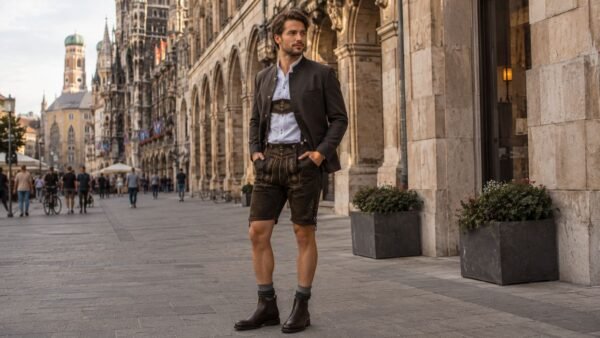
Chelsea boots represent the most legitimate modern Tracht styling trend that departs from traditional footwear, and they are worn by younger Bavarians in Munich’s fashion-conscious Tracht scene with enough frequency and success that they deserve genuine consideration rather than categorical dismissal. The Chelsea boot’s clean, uncluttered silhouette — no visible lacing, no heavy branding, a simple elastic-sided profile — means it does not visually compete with the lederhosen above it in the way that more conspicuously styled footwear would. Dark brown and cognac Chelsea boots in smooth leather work best with modern-cut shorter lederhosen, particularly in urban or semi-casual festival contexts. Black Chelsea boots pair well with darker lederhosen in more contemporary styling contexts. The line between contemporary Tracht styling and outfit confusion runs through the quality and color choice of the specific boot — a cheap, synthetic-looking Chelsea in a jarring color creates confusion; a quality leather Chelsea in a tone that harmonizes with the lederhosen creates a contemporary look that respects the tradition it references.
Desert Boots and Chukkas
Desert boots and chukka boots in suede or smooth leather represent the most casual modern alternative, and their suitability with lederhosen is correspondingly limited to the most casual short lederhosen styling in genuinely informal, non-traditional event contexts. A natural suede chukka in tan or sand — a color that relates tonally to natural leather lederhosen — can work at an informal summer outdoor event where the dress code is relaxed and the lederhosen themselves are being worn in a casual, fashion-forward way rather than as traditional Tracht. This combination breaks down immediately in any context with genuine Tracht expectations — a regional festival, an Oktoberfest tent, a Bavarian celebration with traditional character — where even casual footwear should remain within the traditional aesthetic vocabulary rather than departing from it entirely.
Part 4: What Absolutely Does Not Work
The Complete Never-Wear List
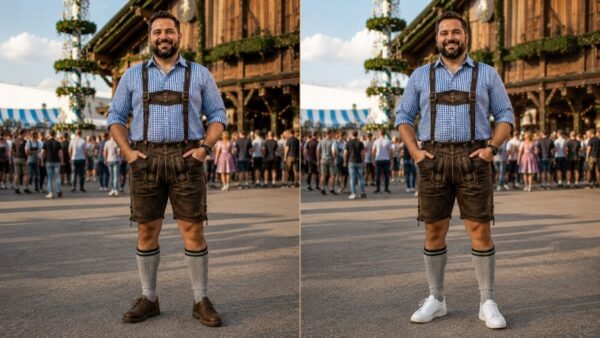
Sneakers and athletic shoes fail with lederhosen on two levels simultaneously — cultural and aesthetic — and no amount of styling context makes them a reasonable choice. Culturally, wearing athletic footwear with Tracht communicates to every Bavarian in the vicinity that you either do not know the tradition or do not consider it worth the effort of appropriate footwear. This is not a judgment that Bavarians make subtly — it is a visible and immediate signal that functions the way turning up to a formal wedding in activewear would function in any other dress context with established standards. Aesthetically, athletic shoes create a proportion problem with lederhosen that styling cannot solve: the thick, cushioned, visually busy profile of a sneaker creates a visual anchor at the foot that is completely inconsistent with the clean leather lines of traditional lederhosen, and the two elements fight each other rather than creating a coherent look. Some style guides suggest that white sneakers with lederhosen are a “playful yet polished” contemporary option. This guidance is incorrect. White sneakers with lederhosen are a mistake regardless of how expensive the sneakers are or how clean the lederhosen look above them.
Flip flops and sandals represent the most flagrantly inappropriate lederhosen footwear choice and the one most commonly seen on tourists who have purchased lederhosen as a costume without any understanding of the tradition they are superficially participating in. The combination is disrespectful to the cultural tradition in a way that even sneakers are not — at least sneakers represent a misunderstanding of what is appropriate; sandals signal that the wearer has not thought about the question at all. Heavily branded dress shoes — shoes with conspicuous designer logos, brand names across the toe box, or marketing elements built into the design — destroy the traditional look by importing a conspicuous commercialism that is antithetical to Tracht’s craft and material tradition. Rubber-soled fashion boots with track-style soles, platform shoes of any description, white shoes in any form, and heavily pointed dress shoes that create a visual mismatch with the rounded toe traditional in Tracht footwear all fail for specific and explainable aesthetic and cultural reasons that the “what to avoid” principle covers comprehensively: if the shoe has any visual element that prioritizes fashion brand identity over craft material quality, it does not work with lederhosen.
The one honest exception to the sneaker prohibition is a very narrow one. If you are attending a casual outdoor event in summer where lederhosen are being worn in a genuinely fashion-forward, non-traditional way — where no Bavarians are present and the cultural stakes of footwear authenticity are genuinely low — and you have absolutely no other footwear available, a simple white leather low-top sneaker with minimal branding causes the least damage of any athletic option. This is damage minimization, not a genuine style recommendation. The moment any element of traditional Tracht authenticity is present in the event — a Bavarian host, traditional music, any ceremonial element — the exception disappears and the traditional footwear requirement returns.
Part 5: The Sock Situation — As Important as the Shoes
Why Socks Are Non-Negotiable in Traditional Tracht
Socks are the most consistently ignored element of lederhosen footwear guidance and simultaneously one of the most visible and culturally significant elements of the complete Tracht look. The wrong socks — most damagingly, white athletic tube socks, which appear on thousands of Oktoberfest feet every year — undermine a shoe choice that would otherwise be entirely appropriate, creating a visual mismatch at the ankle that signals inexperience with the tradition as clearly as any wrong shoe choice would. The right socks, by contrast, complete the footwear look in a way that elevates even modest shoe choices — a pair of correctly chosen traditional knee-high socks with well-maintained mid-range Haferlschuhe looks more authentically Tracht than expensive Haferlschuhe worn with athletic socks. Socks are not optional detail. They are a core element of the lederhosen footwear system.
Loferl — The Most Authentic Option
Loferl — also called Wadenwärmer, meaning calf warmers — are the traditional knitted leg coverings worn with Haferlschuhe as the foundational sock option in the most authentically Bavarian lederhosen look. They are not knee socks — they do not extend from the shoe upward to the knee in a continuous tube. They are two separate pieces: a foot portion worn inside the shoe, and a knitted calf portion worn separately on the upper calf, leaving a band of bare skin at the ankle between the top of the shoe and the bottom edge of the calf warmer. This bare ankle gap is the defining visual characteristic of the Loferl look and the element that most surprises first-time observers — it appears to be an accident but is in fact the intentional and traditional aesthetic. The gap communicates that the wearer knows how Loferl are supposed to be worn, which is itself a signal of Tracht literacy.
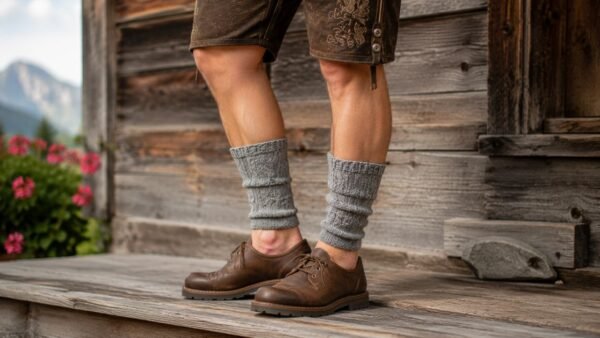
Loferl are worn with the calf portion positioned on the upper calf — roughly at the widest part of the calf muscle — and folded at the top edge to create a clean horizontal line. Traditional Loferl are knitted in cable or pattern stitches that reflect regional Bavarian textile traditions, and the difference between hand-knitted Loferl from a Bavarian Trachten shop and machine-produced Loferl from a tourist market is visible in the texture and regularity of the stitch pattern. The Loferl plus Haferlschuhe combination is the most traditionally correct lederhosen footwear combination possible — it is the look that any Bavarian who grew up with Tracht will recognize as fully correct without any qualification or hesitation.
Kniestrümpfe — Knee-High Socks
Knee-high socks — Kniestrümpfe — are the most common sock choice with knee-length lederhosen and one of the most widely recognized elements of traditional Tracht appearance outside Bavaria. They bridge the gap between shoe and lederhosen hem in the visual system created by knee-length lederhosen, creating a continuous covered-leg aesthetic that reads as complete and intentional. The traditional colors — grey, beige, forest green, and cream — form a hierarchy from the most casual and versatile (grey, cream) to the most specific and formally traditional (forest green with mid-brown lederhosen in a hiking or alpine context). Embroidered knee socks, featuring traditional Bavarian motifs woven or embroidered along the cuff, are the elevated formal option appropriate for Bavarian weddings, important regional festivals, and any occasion where the overall Tracht look is being assembled at its highest quality level.
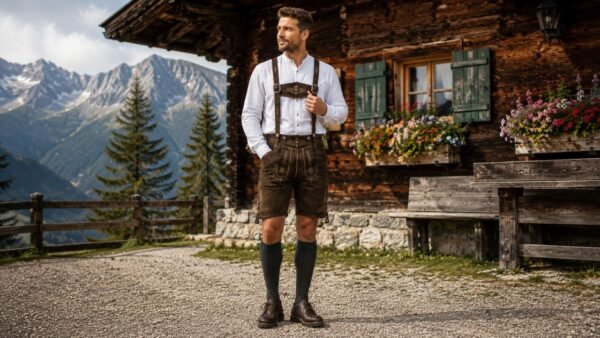
The positioning of knee-high socks requires attention: they should reach to the knee — not fold down below it, and not extend above it toward the thigh. Socks that droop below the knee during the course of a long festival day undermine the look significantly, which is why the quality of the sock’s elastic and the fit to the calf are important purchasing considerations. Wearing the socks on trial before a major event reveals whether they will hold their position through hours of standing and dancing or whether they require intervention — sock garters worn above the knee are the traditional solution to socks that will not stay up on their own and are themselves a historically authentic accessory.
Wadlstrümpfe — Calf-High Socks
Calf-high socks — reaching to the mid-calf rather than the knee — are appropriate with shorter lederhosen in casual styling contexts where the knee-high sock’s more formal, complete coverage would feel heavier than the outfit’s register requires. The proportion logic is straightforward: short lederhosen expose more leg above the sock, and a calf-high sock creates a lower visual anchor point that works better with the shorter hem than a knee-high sock, which can visually dominate the exposed leg section between sock top and lederhosen hem when the lederhosen are very short. Color matching for calf-high socks follows the same logic as for knee-high socks — neutral tones that relate to the lederhosen’s leather color rather than contrasting with it.
Sock Color and Pattern Matching System
| Lederhosen Color | Recommended Sock Color | Best Occasion |
|---|---|---|
| Light tan / natural | Grey or cream | Traditional and casual events |
| Mid brown | Forest green or grey | Traditional festivals and Oktoberfest |
| Dark brown | Charcoal or dark grey | Formal occasions and weddings |
| Black | Black or dark grey | Most formal occasions |
| Grey | Cream or beige | Contemporary and casual |
Plain socks in the colors above read as traditionally correct across all formality levels. Patterned socks — featuring traditional Bavarian knit patterns such as diamond, cable, or leaf motifs in natural tones — are appropriate at all levels from casual to formal and add visual interest within the traditional aesthetic vocabulary. Boldly patterned fashion socks in non-traditional colors or motifs cross into territory that undermines the Tracht look. White athletic socks, no-show socks, and ankle socks visible above the shoe collar are categorically inappropriate with any traditional lederhosen footwear and any lederhosen length.
Part 6: Shoes by Lederhosen Length
Short Lederhosen — Complete Footwear Guide
Short lederhosen ending above the knee offer the widest range of acceptable footwear and the most creative latitude within the Tracht tradition. The exposed leg between hem and shoe top gives the shoe visual independence and means that footwear choices that would feel visually heavy or contextually wrong with longer lederhosen can work well here. The ranked hierarchy from most to least traditionally appropriate runs: Haferlschuhe in mid to dark brown first, Trachtenloafer second, Chelsea boots in quality leather third as a modern alternative, and clean leather Oxfords or Derbies fourth in appropriately casual contexts. With short lederhosen, the sock choice is also the most flexible — Loferl, calf-high socks, and knee-high socks all work, with the choice depending on the overall outfit’s register and the occasion’s formality level. The visual proportion principle is important here: because more leg is exposed, a bulky or visually heavy shoe creates a visual imbalance between the solid upper body and the lighter exposed leg. Sleeker, more streamlined footwear profiles suit short lederhosen better than heavy, chunky soles.
Knee-Length Lederhosen — Complete Footwear Guide
Knee-length lederhosen — Kniebundlederhosen — are the most traditional form and the length with the most specific footwear requirements. The knee buckle creates a formal visual anchor that organizes the entire lower leg and demands footwear that participates in the same traditional aesthetic system rather than departing from it. Haferlschuhe are essentially the required shoe for this length in any traditional setting — they are what the knee-length lederhosen’s visual system was designed to work with, and substituting other footwear requires enough justification and styling precision that departing from Haferlschuhe is a choice best made by experienced Tracht wearers rather than first-timers. Bundschuhe work well with this length as a slightly more robust alternative. Knee-high socks are very close to non-negotiable with knee-length lederhosen — the visual logic of the buckled knee creating a defined hem point requires the covered-leg continuity that knee socks provide. Without knee-high socks, the visual system of knee-length lederhosen footwear feels incomplete in a way that is immediately visible to any Bavarian observer.
Full-Length Lederhosen — Complete Footwear Guide
Full-length lederhosen in the traditional Lange form are the rarest length, worn in formal, ceremonial, and hunting-heritage contexts that establish the highest footwear quality requirements of any lederhosen occasion. Tracht boots are the primary appropriate footwear — their height complements the lederhosen’s length and their construction quality is consistent with the formal register this length demands. The finest Haferlschuhe in dark brown or cognac are the secondary option, worn with quality knee-high socks that bridge the gap between shoe and the higher lederhosen hem. Shoe quality at this lederhosen length matters more than at any other — because the full-length lederhosen itself communicates seriousness and occasion-awareness, the footwear must match that communication rather than contradicting it with inferior construction.
Part 7: Shoes by Occasion
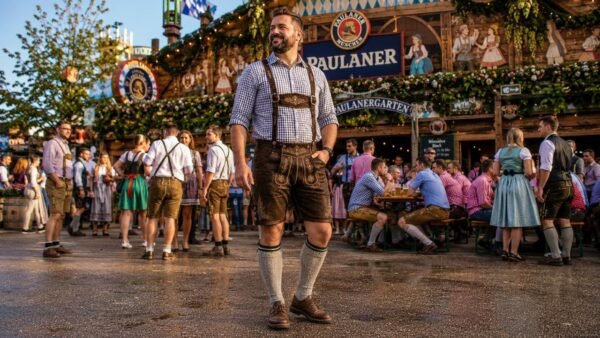
Oktoberfest Footwear — The Full Guide
Oktoberfest footwear selection operates under a dual requirement that makes it the most demanding of all lederhosen footwear occasions: the shoes must be traditional enough to honor the cultural context, and they must be durable and comfortable enough to survive twelve or more hours of standing, walking, dancing, and beer bench climbing in a crowded, warm, occasionally wet environment. These two requirements do not conflict — a properly broken-in pair of quality Haferlschuhe satisfies both simultaneously — but they do eliminate options that might work in other contexts. Comfort is not negotiable at Oktoberfest. A shoe that looks perfect but creates blisters by early afternoon fails its wearer for the entirety of the festival day.
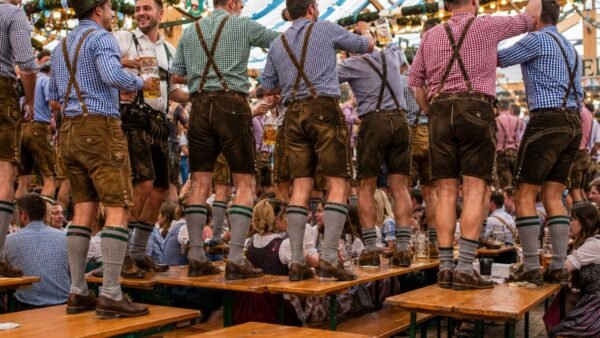
The best Oktoberfest footwear choice — consistently, across all lederhosen lengths and body types — is a broken-in pair of genuine leather Haferlschuhe with traditional socks appropriate to the lederhosen length. “Broken-in” deserves emphasis: arriving at Oktoberfest in new, unworn Haferlschuhe is a significant mistake. New leather shoes create pressure points and blisters that develop over the first several hours of continuous wear and then become impossible to ignore for the remainder of the day. The break-in investment — wearing the shoes for progressively longer periods in the weeks before the festival — produces a shoe that has conformed to the individual foot’s shape and will provide genuine comfort through the full festival day. Waterproofing is also non-negotiable: beer spills on leather shoes are a certainty at Oktoberfest, and conditioned, waterproofed leather repels moisture and cleans easily while untreated leather absorbs liquid and stains permanently. Beer tent floors are notoriously slippery, which makes sole grip a safety consideration as much as an aesthetic one — leather soles on new shoes provide minimal grip; broken-in leather soles develop texture, and combination rubber-leather soles offer the best slip resistance on wet tile and wooden planking. For comprehensive guidance on the full Oktoberfest experience and what to expect, the Munich Oktoberfest complete guide covers every element of preparation.
Bavarian Wedding Footwear
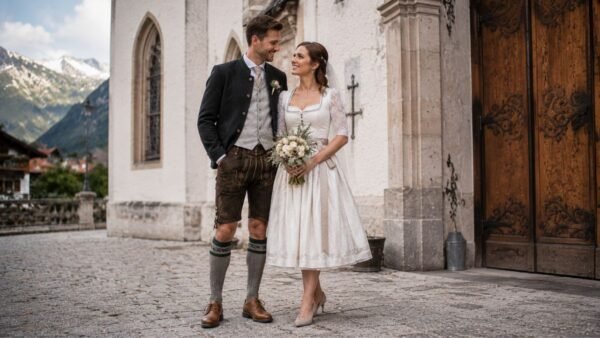
A Tracht wedding demands the highest footwear standard in the lederhosen occasion hierarchy. Quality is non-negotiable: full-grain leather, traditional construction, polished and conditioned finish, in the most formal colorway appropriate to the lederhosen being worn. Premium Haferlschuhe in dark brown or cognac are the primary choice. Formal Bundschuhe are an excellent alternative for knee-length or full-length lederhosen. A high-quality Trachtenloafer in excellent leather represents the most modern-leaning acceptable option for shorter lederhosen at less traditionally strict wedding contexts. Embroidered knee-high socks in traditional patterns are the sock choice that elevates the overall footwear look to wedding-appropriate formality — plain socks work at festival events, but a Bavarian wedding warrants the additional detail that embroidered Tracht socks provide. Shoes should be polished and conditioned before the wedding, not simply wiped clean — conditioning the leather so it is supple and richly colored and polishing it to a natural sheen appropriate to Tracht footwear (not the mirror-bright polish of military dress shoes) produces a result that communicates that the wearer has invested care in the complete outfit.
Christmas Market and Winter Festival Footwear
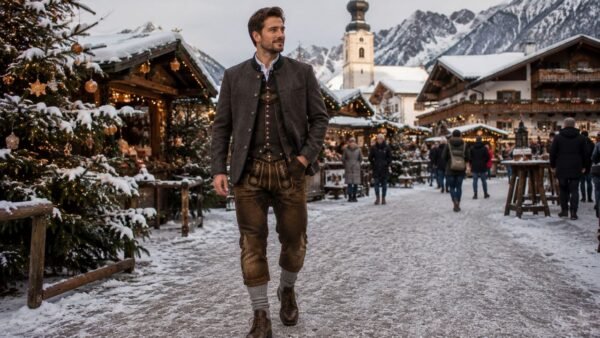
Cold weather fundamentally changes the lederhosen footwear equation in ways that summer festival guidance does not address. Tracht boots — ideally lined for warmth — become the primary recommendation for winter lederhosen events, providing ankle warmth, waterproofing, and the visual weight appropriate for winter styling. Lined Haferlschuhe in quality leather with a rubber sole for wet-surface grip are the best alternative for those committed to the Haferlschuh aesthetic in colder conditions. Wool knee-high socks rather than lighter knit versions provide the insulation that winter event conditions require — the warmth difference between standard knit socks and genuine wool socks in outdoor December temperatures is substantial and body-felt rather than merely technical. Snow and wet conditions demand waterproofed leather as a baseline requirement — untreated leather absorbs moisture that then freezes or creates cold spots, shortening the comfortable outdoor duration significantly. The complete winter Tracht layering strategy extends well beyond footwear, and the guide on winter Tracht dressing provides the full picture for cold-weather traditional occasions.
Casual and Everyday Lederhosen Footwear
Everyday lederhosen wearing in Bavaria — particularly in Munich, where it is genuinely common on weekends, at beer gardens, and at casual social occasions — operates with relaxed but still-present Tracht footwear logic. The Trachtenloafer is the workhorse of everyday lederhosen styling — easy to put on, comfortable for extended wear, smart enough for any casual to semi-casual context, and traditional enough to read as Tracht rather than costume. Clean Chelsea boots in quality leather are the second most common contemporary casual choice among younger Bavarian lederhosen wearers. Casual Haferlschuhe that have been through enough wearings to be genuinely comfortable provide the most traditionally complete casual look — the paradox of Tracht casualwear is that the most traditional option is also the most comfortable once properly broken in. The guides on what to wear with lederhosen and the complete Tracht dressing guide provide the broader outfit context within which footwear decisions sit.
Part 8: Women’s Lederhosen Footwear
Women’s Lederhosen — A Different Styling Approach
Women’s lederhosen differ from men’s in cut, proportion, and overall styling vocabulary in ways that create both greater creative flexibility and different specific footwear considerations. Women’s lederhosen tend to run shorter and are often cut with a more tailored fit through the hip and thigh than men’s versions, which means the shoe and sock choices that govern men’s footwear apply with some modification rather than wholesale translation. The same fundamental cultural principles apply — traditional footwear options are the most correct choices, and departures from tradition require the same contextual justification they require in men’s Tracht styling — but the range of traditional women’s Tracht footwear is broader and includes specifically feminine options that have no male equivalent. The crossover with dirndl footwear is real and useful: many shoes that work beautifully with a dirndl also work with women’s lederhosen, and the complete guide to women’s Oktoberfest attire covers this intersection fully.
Women’s Traditional Shoe Options for Lederhosen
Women’s Haferlschuhe exist, are genuinely beautiful, and are the most correctly traditional choice for women wearing lederhosen in formal and festival Tracht contexts. They follow the same construction principles as men’s versions — side-lacing, rounded toe, quality leather — but in lasts designed for female foot proportions and sometimes with slightly lighter sole construction that suits the typical women’s lederhosen look more gracefully. Mary Jane Tracht shoes — characterized by their single or double strap across the instep and their modest heel — are the classic feminine Tracht option with a long history in Bavarian traditional dress for women. They read as immediately feminine and traditionally correct, and they work across a wide range of women’s lederhosen lengths and styling contexts. Tracht ankle boots in quality leather are the women’s workhorse option — versatile enough for casual and semi-formal occasions, warm enough for autumn and winter events, and traditional enough to work in any Tracht context without cultural qualification. Ballet flat-style Tracht shoes in leather with traditional detailing — often featuring simple stitching or embossed floral motifs that connect them to the Tracht aesthetic — are the most casual and comfortable traditional option, appropriate for relaxed summer lederhosen events and beer garden contexts.
Heel height is a meaningful consideration in women’s lederhosen footwear. Flat shoes are the most traditionally authentic choice and the most comfortable for long festival days. A small block heel of two to four centimetres adds feminine height without visually disrupting the traditional proportion of the lederhosen look — this heel height is common in traditional Tracht shoes and does not read as fashion-forward departure from the tradition. Higher heels — stilettos, wedges, platforms — create a visual proportion mismatch with the sturdier character of lederhosen that reads as outfit confusion rather than contemporary styling, and they are genuinely impractical for the standing, walking, and dancing that festival occasions involve.
Women’s Modern Footwear Options for Lederhosen
Ankle boots and Chelsea boots in quality leather are the fashion-forward legitimate choice for women’s contemporary lederhosen styling in Munich and other Bavarian urban contexts. The same quality and color principles that govern men’s Chelsea boot choices apply here — leather must be quality, color must harmonize with the lederhosen, and the boot’s silhouette must be clean and uncluttered. Loafers and mules in leather or quality suede represent the smart casual contemporary approach, particularly with shorter women’s lederhosen in summer styling. Platform shoes work in the rarest circumstances — a contemporary fashion-forward women’s lederhosen look styled deliberately outside the traditional framework — and are inappropriate in any context with traditional Tracht character.
Women’s Sock Guide for Lederhosen
Women’s Tracht sock options follow the same cultural logic as men’s options but include some specifically feminine interpretations. Knee-high socks remain the most traditional and most visually complete option with longer women’s lederhosen. Lace-trimmed knee-high socks — featuring a lace or embroidered edge at the cuff — are the distinctively feminine Tracht sock option that has no male equivalent and that adds an elegant detail to women’s lederhosen footwear. Tights in opaque or sheer black, nude, or dark grey are a genuinely practical option for women’s lederhosen in cooler weather, providing warmth and coverage while maintaining a polished overall look. Loferl — the traditional knitted calf warmers — are worn by women as well as men in traditional Tracht contexts, paired with women’s Haferlschuhe in exactly the same way as the men’s version. The same bare ankle aesthetic applies, and the same knitting tradition produces women’s Loferl that are sometimes worked in slightly lighter yarns or finer stitch patterns than their male equivalents.
Part 9: Buying Guide — Budget, Fit, and Care
Where to Buy Authentic Tracht Shoes
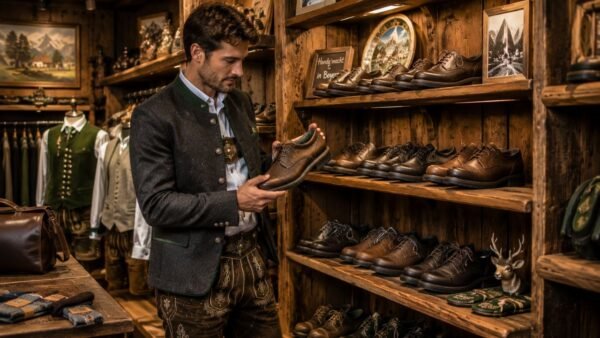
In Bavaria, the most reliable sources for authentic Tracht footwear are traditional cobblers — increasingly rare but still operating in Munich, Rosenheim, and other Upper Bavarian towns — and established Trachten shops that carry footwear from quality manufacturers. The Munich Trachten district around Tal and Sendlinger Strasse contains several shops with genuine expertise in authentic Tracht footwear. Regional Tracht markets held in Bavarian villages throughout spring and summer often feature footwear vendors whose product quality exceeds what tourist-oriented shops in the city centre carry. Online retailers based in Germany and Austria offer authentic Haferlschuhe and Tracht boots with reliable quality and accurate descriptions — product listings from reputable makers specify leather grade, sole construction, country of manufacture, and construction method, all of which legitimate authentic footwear. In the United States, specialty Tracht retailers and German import shops carry authentic footwear, and the complete selection of men’s Tracht shoes and traditional lederhosen socks at GermanAttire provides a reliable source for the complete footwear and sock system described in this guide.
Budget Framework for Tracht Shoes
| Budget Range | What to Expect | Best For |
|---|---|---|
| Under $50 | Synthetic materials, short lifespan, costume quality construction | Single-event use only, extreme budget constraint |
| $50–$100 | Basic genuine leather, functional construction, limited longevity | Occasional wear, first-time buyer testing the tradition |
| $100–$200 | Good leather, proper construction, several years of regular use | Annual festival-goer, comfortable regular Tracht wearer |
| $200–$350 | Excellent full-grain leather, traditional construction, decade-long lifespan | Serious Tracht wearer, investment mindset |
| $350 and above | Handmade authentic Bavarian quality, generational lifespan with proper care | Lifetime investment piece, the genuine article |
The cost-per-wear calculation strongly favors quality investment in Tracht footwear. A $60 pair of synthetic Haferlschuhe that lasts two festival seasons before the sole separates or the material cracks costs $30 per season. A $280 pair of quality leather Haferlschuhe that lasts fifteen to twenty years with proper care costs $14 to $18 per season — half the cost over time, with dramatically superior appearance, comfort, and cultural authenticity throughout. Quality Tracht shoes are not a luxury for dedicated traditionalists — they are the economically rational choice for anyone who expects to wear lederhosen more than once or twice.
Fit Guide — How Tracht Shoes Actually Fit
Haferlschuhe fit differently from regular shoes in ways that create predictable first-purchase confusion. The last — the foot-shaped form over which the shoe is constructed — in traditional Haferlschuhe is wider through the toe box than the narrow lasts of contemporary fashion footwear, which means wearers accustomed to pointed or very slim toe boxes will find traditional Haferlschuhe feel unfamiliar at first try-on. This width is not a flaw — it is the correct construction for a shoe designed to be worn comfortably for hours over rough terrain. Traditional German and Austrian Haferlschuhe sizing runs close to American sizing in length but often narrower in width than American standard widths — wearers with wide feet should try shoes on with the thick socks they intend to wear them with, as the sock adds meaningful width that the bare foot try-on does not reveal. The rule for sizing when in doubt: size up by half a size and account for the sock thickness. A Haferlschuh that fits perfectly in the shop with bare feet will be uncomfortably tight by mid-festival with proper Tracht socks.
Care and Maintenance for Long-Term Investment
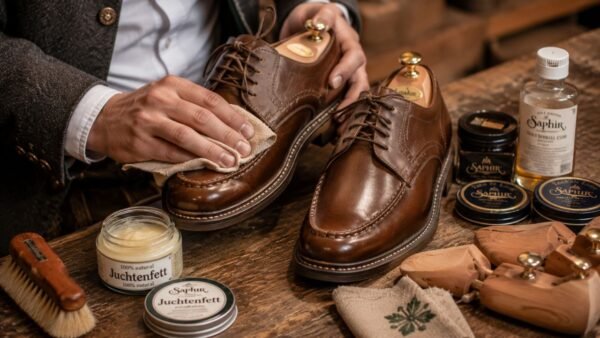
Quality leather Tracht shoes repay care investment with decades of service — a commitment that synthetic footwear categorically cannot match. Conditioning with a quality leather conditioner every four to six weeks of regular use — and before any long storage period — prevents the cracking and drying that destroys uncared-for leather. Conditioning should be applied with a soft cloth, worked into the leather in circular motions, and allowed to absorb fully before any polishing or waterproofing is applied. Waterproofing with a wax-based or spray waterproofer appropriate to the leather type is essential before any outdoor festival, particularly Oktoberfest where beer exposure is a certainty. After festival events where shoes have been exposed to beer, mud, or heavy moisture, allow them to dry at room temperature — never near a heat source, which dries and cracks leather irreversibly — then condition fully before storage. Quality leather Haferlschuhe with proper conditioning, waterproofing, and annual resoling when the sole wears through can last twenty to thirty years, developing in that time a patina and personal fit that no new shoe can replicate. The guides on how to care for lederhosen leather cover the same care principles that govern Tracht shoe maintenance.
Part 10: Complete Outfit Coordination
The Complete Color Coordination System
| Lederhosen Color | Shoe Color | Sock Color | Shirt Tone | Overall Character |
|---|---|---|---|---|
| Light tan / natural | Light brown Haferlschuhe | Grey or cream knee socks | White or light blue | Classic traditional |
| Mid brown | Dark brown Haferlschuhe | Forest green or grey | Check or white | Rich traditional |
| Dark brown | Dark brown or cognac | Charcoal or dark grey | White or cream | Formal traditional |
| Black | Black Haferlschuhe | Black or dark grey | White | Formal or modern |
| Grey | Brown Haferlschuhe | Cream or beige | Blue or white | Contemporary |
| Green | Brown Haferlschuhe | Grey or forest green | White or check | Alpine traditional |
The complete outfit works as a unified color system from shoe to hat, and understanding that system enables decisions at every level of the outfit. The shoe leather color and the lederhosen leather color should be tonally related — not necessarily identical, but clearly drawn from the same part of the brown-tan-cognac spectrum. The sock color bridges the shoe and the lederhosen hem, picking up a tone from either the lederhosen or the shirt. The Trachtenhemd — the traditional shirt worn with lederhosen — connects the upper body to the lower through its color relationship with the socks and suspenders. The complete range of Bavarian Trachten shirts provides the shirt options that complete this coordination system, and the complete what-to-wear-with-lederhosen guide covers every additional accessory element including suspenders, belts, and the Charivari decorative chain. The lederhosen belt collection and lederhosen suspenders complete the outfit from waist upward in the same coordinated quality tradition that the footwear establishes from the ground up.
Conclusion: The Right Shoes Honor the Tradition
Return to the opening scene. The person at the entrance to the beer tent who got a wince from the crowd. Now picture the same person, same lederhosen, same festival energy — but this time wearing broken-in mid-brown Haferlschuhe with traditional grey knee socks positioned correctly below the lederhosen hem. The glance down produces a different response this time: an approving nod from someone who knows what they are looking at, the implicit recognition that this person understands the tradition they are participating in rather than simply wearing its surface.
The decision framework that serves every lederhosen footwear decision is simple enough to memorize. Determine the lederhosen length first — it constrains your footwear options more than any other single factor. Identify the occasion’s formality level second — it sets the quality and style bar. Set your budget honestly third — quality matters more in Tracht footwear than in most other footwear contexts, and the cost-per-wear calculation favors investing well. Start with Haferlschuhe as your default and depart from them only when you have a specific, contextually defensible reason to do so. And never, under any circumstances, forget the socks — they are half the footwear decision and the most consistently overlooked element of the entire Tracht look. For the complete selection of authentic lederhosen, Tracht shirts, and traditional accessories to build the full outfit around your footwear foundation, explore the complete men’s lederhosen collection, the German Oktoberfest lederhosen range, and the full GermanAttire cultural blog for every element of authentic Tracht dressing.
Frequently Asked Questions
What shoes do you wear with lederhosen?
The most correct and culturally authentic shoe for lederhosen is the Haferlschuh — a traditional Bavarian leather shoe with distinctive side lacing and a rounded toe, designed specifically for Tracht wearing. For formal occasions, Bundschuhe or dark-brown Haferlschuhe are appropriate. Modern legitimate alternatives include Trachtenloafers and Chelsea boots for casual contexts. The choice depends on lederhosen length, occasion formality, and whether the event has traditional Tracht character.
What are Haferlschuhe?
Haferlschuhe are the traditional Bavarian leather shoes worn with lederhosen. The name comes from the Bavarian dialect word Haferl, meaning a small pot or cup, describing the shoe’s rounded toe. They are characterized by distinctive side lacing, full-grain leather construction, and origin in the Alpine working footwear tradition of rural Bavaria. They are the most traditionally correct lederhosen footwear choice across all occasions and all lederhosen lengths.
Can you wear sneakers with lederhosen?
No. Sneakers fail with lederhosen on both cultural and aesthetic grounds. Culturally, athletic footwear signals to Bavarian observers that the wearer is not engaging with the Tracht tradition. Aesthetically, sneakers create a proportion and style mismatch with traditional lederhosen that no amount of styling resolves. Some guides describe white sneakers as a playful modern option — this guidance is incorrect regardless of the sneaker’s quality or brand.
What socks do you wear with lederhosen?
Traditional lederhosen socks include Loferl (knitted calf warmers worn with Haferlschuhe, leaving a bare ankle gap), Kniestrümpfe (knee-high socks in grey, forest green, beige, or cream), and Wadlstrümpfe (calf-high socks for shorter lederhosen). White athletic socks, no-show socks, and ankle socks are categorically wrong with any traditional lederhosen footwear. Sock choice depends on lederhosen length, occasion formality, and the shoe style selected.
What are Loferl and how do you wear them?
Loferl are traditional knitted calf warmers — two separate pieces worn with Haferlschuhe: a foot portion inside the shoe and a knitted calf portion on the upper calf only. They intentionally leave a band of bare ankle skin visible between the shoe collar and the calf warmer bottom edge. This bare ankle gap is the defining visual characteristic of the authentic look and must not be covered. Loferl plus Haferlschuhe is the most traditionally correct lederhosen footwear combination possible.
What shoes do women wear with lederhosen?
Women’s traditional lederhosen shoe options include women’s Haferlschuhe, Mary Jane Tracht shoes with a modest strap and heel, Tracht ankle boots, and ballet flat-style Tracht shoes in leather. Modern acceptable alternatives include ankle boots, Chelsea boots, and loafers in quality leather. Flat or very low block heels are most authentic and practical for festival wear. Stilettos, wedges, and platforms create visual proportion mismatches and are impractical for all-day events.
What shoes are worn at Oktoberfest?
Broken-in Haferlschuhe in mid to dark brown with traditional socks are the best Oktoberfest shoe choice — satisfying both the cultural requirement and the practical comfort requirement for twelve or more hours of standing, walking, and dancing. They must be properly broken in before the event to avoid blisters and treated with waterproofing to handle guaranteed beer exposure. Never wear new, unworn Haferlschuhe to Oktoberfest for the first time.
How should Haferlschuhe fit?
Haferlschuhe are built on wider lasts than contemporary fashion footwear — the wider rounded toe box is correct construction, not a fit problem. Try them on with the thick Tracht socks you will wear with them, as socks add meaningful width that bare-foot try-on does not reveal. When in doubt, size up by half a size to accommodate sock thickness. New Haferlschuhe require a genuine break-in period — initial pressure points soften over several wearings as the full-grain leather conforms to the individual foot.
How do I care for leather Tracht shoes?
Condition leather Tracht shoes with quality leather conditioner every four to six weeks of regular use and before any long storage. Waterproof with wax-based or spray waterproofer before outdoor festivals. After beer or moisture exposure, dry at room temperature — never near heat — then condition fully. Store with shoe trees. Resole when the sole wears through rather than replacing the shoe. With proper care, quality leather Haferlschuhe last twenty to thirty years and develop an irreplaceable individual patina.
Can you wear Chelsea boots with lederhosen?
Yes — Chelsea boots in quality leather are a legitimate modern styling option for shorter lederhosen in casual and contemporary contexts. Dark brown and cognac Chelsea boots work best with mid to dark brown lederhosen. The boot must be quality leather with a clean silhouette and no heavy branding. Cheap synthetic Chelsea boots create outfit confusion rather than contemporary styling. This choice is appropriate in urban and casual contexts but should give way to Haferlschuhe in any event with genuine traditional Tracht character.
What should you never wear with lederhosen?
Never wear sneakers or athletic shoes, flip flops or sandals, white shoes of any kind, heavily branded dress shoes with visible logos, rubber-soled fashion boots with track soles, platform shoes, or heavily pointed dress shoes with lederhosen. White athletic socks are equally incorrect — they are the most common sock mistake at Oktoberfest and undermine otherwise appropriate footwear choices immediately and visibly. All of these fail on cultural and aesthetic grounds simultaneously.
What are Bundschuhe?
Bundschuhe are traditional German low boots with origins in medieval peasant footwear of German-speaking Central Europe. Sturdier than Haferlschuhe with a more substantial sole and higher ankle reach, they are most appropriate with knee-length and full-length lederhosen in outdoor and formal traditional contexts. Authentic Bundschuhe in quality leather are increasingly rare outside specialty Tracht shops and Bavarian cobblers — finding a genuine pair signals meaningful Tracht knowledge.
How much should I spend on Tracht shoes?
For occasional festival use, $100 to $200 provides good leather and proper construction for several years of regular wear. For serious or regular Tracht wearing, $200 to $350 delivers excellent full-grain leather and traditional construction with a decade-long lifespan. Investment-level Haferlschuhe at $350 and above offer handmade quality with generational lifespan under proper care. The cost-per-wear calculation strongly favors quality investment — cheap synthetic shoes are a false economy regardless of how they look at first purchase.
What shoes to wear with lederhosen in winter?
In cold weather, lined Tracht boots become the primary recommendation — providing ankle warmth, waterproofing, and visual weight appropriate for winter styling. Lined Haferlschuhe with rubber or combination soles for wet-surface grip are the best alternative. Wool knee-high socks rather than standard knit versions provide meaningful insulation in outdoor December temperatures. Waterproofed leather is essential — untreated leather absorbs moisture that creates cold spots and causes long-term material damage.
Do you wear socks with Haferlschuhe?
Yes — Haferlschuhe are always worn with socks in traditional Tracht contexts. The most authentic choice is Loferl — knitted calf warmers that leave the ankle bare between shoe and calf portion. Knee-high and calf-high socks in appropriate traditional colors are also correct depending on lederhosen length and occasion. Bare feet in Haferlschuhe is neither traditional nor practical — it creates hygiene problems and significant discomfort during the long festival days that Tracht footwear is designed to support.

Anna Bauer is a seasoned Bavarian fashion expert, cultural consultant, and heritage stylist with over a decade of hands-on experience in traditional German clothing. Born in Munich, the heart of Bavaria, Anna grew up surrounded by the rich traditions of Trachten fashion. Her passion for cultural attire led her to pursue a degree in Fashion and Textile Design at the prestigious University of the Arts Berlin, where she specialized in European folkwear.
Over the past 12+ years, Anna has collaborated with renowned Trachten designers, styled outfits for Oktoberfest events across Germany, and contributed articles to top fashion and culture magazines across Europe. Her work focuses on preserving the authenticity of Lederhosen and Dirndl wear while helping modern audiences style them with confidence and flair.
As the lead content contributor for German Attire, Anna combines her academic background, professional styling experience, and deep cultural roots to provide readers with valuable insights into traditional German fashion. Her blog posts cover everything from historical origins and styling guides to care tips and festival outfit planning—making her a trusted voice for anyone looking to embrace Bavarian heritage in a stylish, modern way.