

Blog
How to Wear a Dirndl? Step-by-Step Guide to Styling It Right
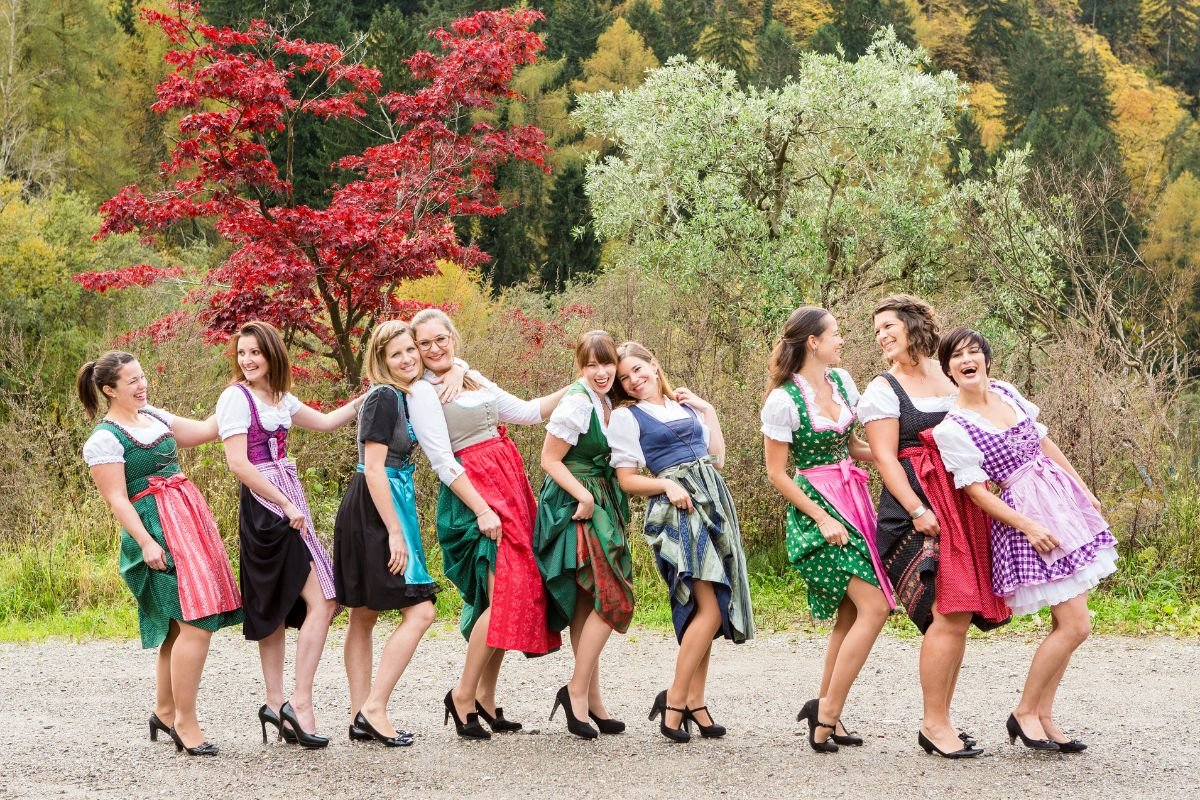
How to Wear a Dirndl — The Complete Step-by-Step Guide
A Dirndl looks straightforward from the outside — a dress, an apron, a blouse. But every component of a correctly worn Dirndl has a specific purpose, a specific fit requirement, and in the case of the apron bow, a specific cultural message that Bavarians read immediately. Getting any one element wrong changes how the complete outfit reads — and at the Wiesn, where 90% of the crowd knows exactly what every detail means, those differences are visible.
This guide covers the complete dressing sequence from the undergarments up, with specific guidance on each piece: what fit to look for, what the common mistakes are, and what each element communicates within Bavarian tradition. For everything about choosing and buying the right Dirndl before you put it on, our complete women’s Oktoberfest outfit guide covers length, colour, and style selection in full. This guide focuses on wearing the pieces you have chosen correctly.
Browse our Bavarian traditional Dirndl collection if you are still in the selection stage — every piece comes with specific fit and sizing guidance that makes the steps below easier to apply.
The Correct Dressing Sequence
Most guides present Dirndl components in isolation. The practical reality is that order matters — certain pieces must go on before others, and skipping the sequence creates fit problems that are difficult to correct once you are fully dressed.
The correct sequence is: undergarments first, then blouse, then the Dirndl dress body (bodice and skirt together), then apron, then accessories. Each stage prepares the foundation for the next. The blouse must be correctly positioned under the bodice before the bodice is fastened — adjusting it afterwards requires partially unfastening the dress. The apron is always the final main garment piece, tied after the dress is correctly positioned. Accessories — jewellery, headwear, bag — come last.
Follow this sequence and every adjustment is made at the correct stage. Reverse it and you create compounding problems that require starting over.
Step 1: Undergarments — The Foundation the Dirndl Builds On
The Dirndl Bra: The Most Important Undergarment Decision
The correct bra for a Dirndl is a balconette bra — often sold specifically as a Dirndl-BH at Trachten specialists. A balconette lifts the bust upward and positions it higher on the chest, which is exactly what the low-cut bodice of a Dirndl is designed to frame. It sits lower at the back than a standard underwire bra, which eliminates the visible strap problem that ruins the back view of many Dirndl outfits.
A standard padded push-up bra is a workable alternative — the key is upward lift rather than forward projection. What does not work under a Dirndl: a standard everyday T-shirt bra with a full back band, a sports bra that compresses the bust flat, or a strapless bra without adequate support for a bodice that relies on the bra doing structural work. The bodice fits differently depending on the bra worn beneath it — always measure for your Dirndl size wearing the bra you plan to use. If you need guidance on sizing before ordering, our guide on how to measure for a Dirndl covers the correct technique.
Petticoat and Underwear Considerations
A petticoat worn beneath the Dirndl skirt adds volume and creates the classic flared silhouette associated with traditional Alpine folk dress. It is optional — many contemporary Dirndl styles have sufficient structure without one — but for longer, more traditional cuts in lighter fabrics, a short petticoat transforms the skirt’s movement and appearance considerably.
The petticoat must end well above the Dirndl hemline — a petticoat that is visible below the skirt is a significant styling error. Choose a petticoat that ends at least 10 cm above the Dirndl hem to ensure it never appears, regardless of movement or wind. Standard full-coverage underwear is correct beneath a Dirndl. The long history of the garment as outdoor festival wear means comfort and coverage for active wear — dancing, walking on uneven ground, long hours — are the practical priorities.
Step 2: The Blouse — What Goes On Before the Dress
Why the Blouse Goes On First
The Trachtenbluse is not a visible outer layer — it is a structural component of the complete look that shows at the neckline and sleeve, frames the décolletage, and forms the foundation on which the bodice sits. Putting the dress on before the blouse and then trying to tuck the blouse under the bodice produces bunching that is visible and impossible to fully resolve without partially removing the dress.
Put the blouse on first, fasten it completely, and check that it sits correctly at the bust before touching the dress. The blouse should feel like a fitted layer, not a loose shirt — this is what prevents the bunching problem.
The Four Blouse Styles and When to Use Each
The choice of blouse style changes the complete character of the outfit more than almost any other single decision. Each style suits different Dirndl bodice types and different occasions.
Square neck (Eckausschnitt): The most versatile choice and the most widely worn. The squared neckline creates a deliberate frame for the décolletage without plunging. It pairs cleanly with most bodice styles and works for both daytime festival wear and more formal evening occasions. A classic starting point for anyone building their first Dirndl outfit.
Sweetheart and balconette neck: The most traditional festival choice for the Wiesn specifically. The curved neckline echoes the shape of the bodice front and creates the silhouette most associated with authentic Oktoberfest attire. A dirndl without a blouse is simply a really tight dress — the blouse makes the Dirndl. This style makes the strongest cultural statement in terms of traditional Bavarian dress.
High collar: The formal and cooler-weather choice. A high-collared blouse adds elegance and modesty, making it correct for Bavarian weddings, church festivals, and cultural events where conservative dress is appropriate. Less common at the Wiesn itself but entirely traditional in other Trachten contexts.
Off-shoulder and flutter sleeve: The 2026 trend direction. Contemporary blouse styles in 2026 feature lightweight tulle and organza with flutter sleeves — fabrics that move beautifully and feel light against the skin during long festival days. These styles offer a modern interpretation of the traditional silhouette while remaining entirely within the cultural context of authentic Trachten wear. They work best with simpler bodice styles where the blouse movement can be appreciated rather than hidden under heavy embroidery.
The Critical Fit Requirement: Cropped and Snug
Every Dirndl blouse must fulfil two fit criteria to work correctly. First, it must be snug at the bust — not tight to the point of discomfort, but close-fitting enough that no excess fabric bunches under the bodice. Second, it must be cropped to end just below the bustline — the standard crop length for all Dirndl blouses. A blouse that extends to the waist or hip will create visible fabric gathering under the bodice and a soft, formless appearance rather than the clean, structured silhouette the Dirndl is designed to produce.
When choosing between blouse sizes: size to the bust measurement and accept that the waist will be slightly loose. The bodice covers and controls the waist area — the blouse only needs to fit correctly at the bust and sit correctly at the cropped hemline. Browse our full range of Dirndl blouses for styles in the correct cropped cut across all four neckline types.
Step 3: The Dirndl Dress — Bodice Fit and Skirt Length
Stepping Into the Dress Correctly
Step into the Dirndl from the bottom rather than pulling it over the head — the bodice structure and fastening are not designed to stretch over the shoulders. With the blouse correctly in place, step through the skirt opening and pull the dress up to waist height. Settle the bodice against the bust before fastening — it should sit flat against the chest from the neckline down to the waist, with the lower edge of the bodice aligning with the waistband seam of the skirt.
Do not fasten the bodice until the blouse is positioned correctly beneath it. Check that the blouse neckline is visible at the top of the bodice, that the blouse sits flat across the bust without bunching, and that the blouse sleeves extend cleanly from the bodice armhole. Adjust all of this before fastening — post-fastening adjustments are difficult and risk pulling the bodice out of alignment.
Fastening the Bodice: Side Zip or Front Buttons
Contemporary Dirndl dresses fasten in two ways: a concealed side zip or front hook-and-eye or button closure. The side zip is more common in modern production — it creates a clean uninterrupted front and allows faster dressing. The front closure is more traditional, adding a decorative element to the centre front of the bodice and giving the garment a more vintage, handcrafted character.
Whichever fastening your Dirndl uses, the test for correct bodice fit is the same: the bodice should contour the waist and underbust firmly without digging into the ribs. You should be able to take a full breath comfortably — if the bodice prevents a full breath, it is too small. You should feel continuous contact between the bodice and your torso from underbust to waist — if you can fit more than two fingers between the bodice and your body at any point, it is too large. The contour fit is what creates the hourglass silhouette the Dirndl is designed to produce.
Bodice Lacing: Crisscross vs Inside-Out
Dirndl bodices that use lacing — the traditional cord or chain threaded through metal eyelets — offer two methods that produce different visual effects.
Crisscross lacing is the standard and most recognised method. The cord passes over and under in an X pattern from the top eyelet to the bottom, creating the classic corset-inspired appearance associated with authentic Trachten. It allows for fine-tuning of tightness at different points of the bodice — pulling more firmly at the waist than the underbust, for example, to emphasise the silhouette.
Inside-out lacing produces a smoother front. The cord moves from eyelet to eyelet on the inside rather than creating visible X crossings on the surface, resulting in minimal decorative lacing visible on the front. This method is appropriate when the bodice fabric or embroidery is the visual centrepiece and visible lacing would compete with it.
Lacing material matters. Satin or velvet ribbon gives a soft, feminine finish appropriate for floral or pastel Dirndl styles. A metal chain — silver or bronze — gives a bolder, more structured finish appropriate for darker or more formal bodice styles. Always match the lacing colour to the dominant tone of the bodice — a navy bodice with gold chain, a forest green with cream satin, a burgundy with dark red velvet ribbon.
Getting the Skirt Length Right
Dirndl skirts come in three traditional lengths, each with its own cultural context and appropriate occasion.
Mini (above knee): The most contemporary interpretation. Ends approximately 10-15 cm above the kneecap. Acceptable at casual festival events and themed parties, but reads as modern rather than traditional in the Wiesn context. Bavarian locals wearing Trachten at formal events or cultural gatherings would not choose a mini length.
Midi (just below knee to mid-calf): The most widely worn length at Oktoberfest and the safest choice for any first Dirndl. A midi length ending 5-10 cm below the kneecap is universally correct — traditional enough to read as authentic, practical enough for all-day festival wear including dancing. The dominant length worn by the majority of Munich locals at the Wiesn.
Maxi (mid-calf to floor): The most formal and traditional length. Correct for Bavarian weddings, cultural celebrations, and formal occasions. The 2026 trend direction is toward longer cuts — deeper, more elegant silhouettes in sophisticated silks and velvet are leading the current season’s direction. For the Wiesn, a maxi creates a striking appearance that signals genuine Trachten commitment.
Step 4: The Apron — The Most Culturally Significant Piece
Attaching the Apron Correctly
The Schürze attaches at the natural waist — the same point where the bodice ends and the skirt begins, typically just above the navel. The apron strings wrap around the waist and tie at the chosen side. Front should sit flat against the skirt, covering the central front panel without pulling or bunching at either side.
The apron should end approximately three centimetres above the hemline of the skirt — not at the same length, and not significantly shorter. An apron that ends at exactly the same length as the skirt creates an indistinct hemline. An apron that ends significantly higher leaves a large visible expanse of skirt below it, which looks unbalanced. Three centimetres above the skirt hem is the traditional and visually correct proportion.
The Apron Bow: What Every Position Communicates
The position of the bow tied from the apron strings carries specific social meaning in Bavarian culture — meaning that Bavarians at the Wiesn read automatically. This is not a modern invention or a tourist guide embellishment. The apron bow as a communication system has been part of Dirndl tradition for generations, and it is understood and acted upon by men at the festival.
- Left side: Single and available. The traditional signal for an unattached woman open to meeting someone. The Bavarian saying goes: “Bow on the left brings luck” — an invitation to approach.
- Right side: In a relationship, engaged, or married. The signal that the wearer is not available. Tied on the right as a matter of respect to a partner, not as a strict enforcement mechanism.
- Centre front: Historically associated with young girls or, in some regional traditions, as an alternative to the relationship status signals. Rarely worn by adult women at the festival today — most knowledgeable festival-goers interpret it as an indication that the wearer is unfamiliar with the convention.
- Centre back: The traditional position for widows and for women working as servers at the event. If you are neither, avoid the centre back position — it creates a specific impression you likely did not intend.
Tie your bow consciously. Choose your side deliberately based on your actual situation. The bow will be noticed and interpreted by people around you who know the system — and at the Munich festival, that is most of the crowd.
Tying a Clean, Correctly Proportioned Bow
The bow itself should be neat, symmetrical, and moderately sized. Overly large, floppy bows overwhelm the apron and distract from the overall outfit. Undersized, tight bows look hurried. The correct bow is approximately the width of your fist — looped evenly on both sides with the tails hanging cleanly below. If you tie a standard shoelace bow naturally, you already know the correct technique — the same motion, the same proportions, the same symmetry.
Secure the initial knot firmly before forming the bow loops. A loose first knot shifts the bow position during active wear, particularly dancing. The apron should be tight enough at the waist to stay in position throughout the day but not so tight that it creates discomfort or pulls the bodice fabric. Use the waistband seam of the skirt as your guide to centre the apron — the front panel should sit exactly in the middle of your body, not shifted to either side.
Step 5: Shoes and Socks — Comfort That Carries the Whole Look
Traditional Footwear Options
The festival involves hours of walking, standing, and dancing on varied surfaces — cobblestones outside, wooden slatted floors inside, occasionally wet or crowded pathways between tents. Shoe choice is as much a practical decision as a stylistic one.
Haferlschuhe — the traditional Bavarian lace-up leather shoes — are the most historically correct choice and the most durable for full-day festival wear. Their low heel, sturdy leather construction, and non-slip sole were designed specifically for Alpine terrain, and they function excellently for the physical demands of the Wiesn. Mary Jane shoes with a low block heel or flat sole are the most common contemporary choice — rounded toe, ankle strap or bar across the foot, leather in brown, black, or tan. Ankle boots with a modest heel work well with midi and maxi Dirndl lengths, particularly for evening sessions where temperatures drop.
What to avoid: stilettos and high heels that make walking on uneven ground precarious, flip flops and open sandals that are inappropriate for the environment, and fashion trainers in bright colours that clash visually with the carefully assembled traditional outfit.
Socks and Stockings by Dirndl Length
With a midi Dirndl, short ankle socks in white or cream with a decorative cuff are traditional and correct. For a maxi length, the cleaner line of opaque tights or bare legs in warm weather is more proportionate — knee-high socks with a floor-length skirt look disjointed. In cooler autumn weather — Munich in late September can reach 8-10°C in the evenings — opaque tights in a neutral tone extend the wearability of any Dirndl length without disrupting the overall aesthetic.
Step 6: The 2026 Accessory Essentials
Accessories for a Dirndl follow a principle of cultural authenticity rather than generic fashion styling. The pieces that work best are those with genuine Bavarian or Alpine cultural reference — they add to the coherence of the traditional look rather than competing with it. For the complete breakdown of every accessory option and how to combine them, our complete Dirndl accessories guide covers everything in detail. Here is the 2026 essential summary.
The Kropfbänder: The Most Traditionally Correct Necklace
The Kropfbänder — a traditional Bavarian choker necklace in multiple strands of coloured glass, crystal, or natural stone beads — is the most culturally correct jewellery choice for a Dirndl. Worn at the throat, it emphasises the neckline of the blouse and connects the wearer directly to Bavarian folk tradition. Colours: green glass beads with a green bodice, red or amber with warmer tones, crystal with white or pale Dirndl styles.
Edelweiss pendants, small deer antler charms, heart brooches, and pretzel motif pieces all reflect Bavarian cultural iconography and work correctly with the Dirndl context. Must-have accessories for 2026 include floral wreaths for the hair and choker collar chains alongside the traditional Kropfbänder — both are consistent with the current season’s direction toward layered, embellished styling.
Flower Crown or Gamsbarthut
A flower crown worn over braided or pinned hair is the most recognisable Wiesn hair accessory and entirely authentic to Alpine festival tradition. Autumnal colour palettes — deep red, burnt orange, forest green, burgundy — suit the September-October festival season and complement traditional Dirndl colour ranges. Choose silk or dried flowers for practicality across a long festival day.
The Gamsbarthut — the traditional Alpine hat with a chamois hair brush mounted on the band — is the formal alternative for more traditional occasions. Less common at the Wiesn than the flower crown but entirely correct and occasionally striking when worn well.
The Dirndl Bag
A small crossbody bag in leather or suede with Bavarian embroidery or folk motif detailing is the traditional and practical choice. It must close with a zip or secure clasp — the festival environment is crowded, and an open-top bag is an unnecessary risk. Keep it small: phone, cash or card, ID, and a few essentials. Anything larger becomes a burden during active festival wear.
Step 7: Hair and Makeup — The Finishing Layer
Traditional Bavarian Hairstyling for the Dirndl
Traditional Bavarian hairstyles for the Dirndl involve braiding or pinning — keeping hair off the face and neck for active festival wear while reflecting the Alpine folk tradition. A braided crown, side braid, or pinned chignon with the flower crown above it creates the complete authentic look. A simple half-up style with the front sections pinned back is a practical compromise between full braiding and completely loose hair when time or skill is limited.
Loose, unstyled hair with a Dirndl is acceptable — particularly for younger women and contemporary Dirndl styles — but less traditional than a braided style. The flower crown sits better and more naturally against braided hair than against loose hair, where it tends to slide and requires repositioning throughout the day.
Makeup That Complements Rather Than Competes
For daytime Dirndl wear, light and natural makeup works best — rosy cheeks and a soft pink or berry lip. For evening sessions, the atmosphere shifts and a bolder approach with defined eyes and a stronger lip colour suits the heightened energy of the tent at night. The consistent principle is that the makeup should enhance the overall look without drawing attention away from the Dirndl itself — the garment is the statement, the makeup is the frame.
2026 Dirndl Trends: What the Season’s Wearing
Understanding the current direction of Trachten fashion helps visitors who want to participate in Bavarian dress culture at its contemporary level rather than simply recreating a historical look.
The 2026 direction is toward sophisticated silks, lightweight tulle, and elegant lace, with highly embellished pieces featuring detailed apron embroidery, sequins, and beads prominent across collections. Two colour categories are emerging strongly: delicate pastel shades and strong, bright tones — both departing from the mid-range traditional colours that dominated previous seasons.
Longer skirt lengths continue to define the fashion-conscious Wiesn look — the maxi Dirndl that previously felt overly formal is now the contemporary choice for women who follow Trachten fashion rather than simply following convention. Blouse styles in organza and fine tulle with flutter or puff sleeves are the on-trend choice, replacing the heavier lace and embroidered cotton blouses of previous seasons with lighter, more movement-focused alternatives.
Regional Trachten variations are gaining renewed attention among culturally engaged festival visitors. The Miesbacher Tracht — with its deep forest green bodice, cream blouse, and dark brown embroidery — is the most traditionally correct style for the Munich festival specifically. The Werdenfelser Tracht from the Zugspitze region brings distinctive blue and white patterns. Both represent the deeper engagement with Bavarian regional identity that the Bayerische Trachtenverband actively promotes.
Common Mistakes When Wearing a Dirndl
The Mistakes That Are Immediately Visible
The most common errors in wearing a Dirndl are immediately apparent to anyone familiar with Trachten tradition — and at the Wiesn, that includes most of the crowd around you.
Blouse sitting too high: The blouse neckline should show above the bodice neckline — if the bodice covers the blouse neckline entirely, the blouse is positioned or sized incorrectly. The visible blouse at the neckline is a defining element of the Dirndl silhouette.
Apron too long: An apron that matches or exceeds the skirt hemline creates an indistinct bottom edge that looks unfinished. Three centimetres above the skirt hem is the correct proportion.
Bodice too loose: A bodice that does not contour the waist and underbust looks shapeless. If you can comfortably fit more than two fingers between the bodice and your body at the waist, the fit is too large and the Dirndl silhouette is lost.
Bow position unconsidered: Tying the bow without choosing a side consciously — and ending up with a centre-front bow that communicates an unintended message — is the most culturally awkward error and the most easily avoided. Choose left or right deliberately.
Blouse extending below the bodice: A non-cropped blouse that extends below the bodice waistline creates a soft, formless appearance below the bodice. The cropped cut is not aesthetic preference — it is structural requirement.
After the Festival: Dirndl Care
A well-cared-for Dirndl in quality fabric lasts decades and can be passed between generations — which is why traditional Bavarian families treat Trachten garments as heirlooms rather than seasonal purchases. Post-festival care matters as much as wearing it correctly. Our complete guide on how to care for your Dirndl after wearing covers every fabric type, cleaning method, and storage approach in full.
Frequently Asked Questions
How should a Dirndl fit?
The bodice should contour the waist and underbust firmly without digging into the ribs — you should feel continuous contact between the bodice and your torso with no more than two fingers fitting between them at any point. The skirt should flow from the waistband without pulling or bunching. The blouse should show at the neckline above the bodice and sit flat across the bust without gathering. The whole outfit should feel supportive and secure but never restrictive — you should be able to take a full breath comfortably, sit, stand, and move freely.
Which side do you tie the Dirndl bow?
Left means single and available. Right means in a relationship, engaged, or married. Centre front is historically associated with young girls and is not appropriate for adult women at the festival. Centre back signals a working server or widow. Choose deliberately — Bavarians at the festival know this system and respond to it. The bow position is not just a styling detail. It is a cultural communication that has been part of Dirndl tradition for generations.
What do you wear under a Dirndl?
A balconette bra — also called a Dirndl-BH — is the correct choice. It lifts the bust upward to fill the low-cut bodice correctly and sits low at the back to avoid visible straps. A petticoat beneath the skirt adds traditional volume and is optional — choose one that ends well above the Dirndl hemline. Standard full-coverage underwear completes the foundation. Measure for your Dirndl size wearing the bra you plan to use, as the bodice fit changes significantly depending on the undergarment beneath it.
How long should a Dirndl apron be?
The apron should end approximately three centimetres above the hemline of the Dirndl skirt. An apron that ends at the same length as the skirt creates an indistinct hemline. An apron significantly shorter than the skirt looks visually unbalanced. Three centimetres above the skirt hem is the traditional and proportionally correct measurement, creating a clean visual distinction between the apron and the skirt beneath it.
What shoes do you wear with a Dirndl?
Haferlschuhe — traditional Bavarian side-laced leather shoes — are the most historically correct choice. Mary Jane shoes with a low block heel or flat sole are the most common contemporary option and entirely appropriate. Ankle boots with a modest heel work well with longer Dirndl lengths. The priority is comfort and stability for active festival wear — stilettos and high heels are genuinely impractical on festival grounds, and flip flops are inappropriate for the cultural context.
What is the correct blouse for a Dirndl?
A Trachtenbluse — cropped to end just below the bustline and fitted snugly across the bust. The neckline style depends on the occasion and bodice type: sweetheart and balconette necklines for the classic Wiesn look, square neck for versatile everyday use, high collar for formal occasions. In 2026, flutter sleeve and puff sleeve styles in organza and fine cotton batiste are the on-trend choice. The blouse must never extend below the bodice — the cropped cut is structural, not decorative.
Can you wear a Dirndl to a wedding?
Yes — a well-chosen Dirndl is entirely appropriate for Bavarian and German-themed weddings and is commonly worn by guests at celebrations in Bavaria, Austria, and other Alpine regions. For a wedding, choose a midi or maxi length in a quality fabric — silk, velvet, or fine cotton — with a formal blouse style and conservative accessories. The apron bow tied on the right signals respect for the occasion and for the couple. Avoid very short lengths and novelty prints for formal occasions.
GermanAttire supplies authentic Bavarian Dirndl, Lederhosen, and traditional German Trachten to customers across the UK, US, and Australia. Visit our store at 27 Victoria Street, London SW1H 0EX, or browse our complete ladies’ Oktoberfest dress collection online — every piece comes with specific fit guidance and sizing support to make the steps in this guide straightforward to apply.

Anna Bauer is a seasoned Bavarian fashion expert, cultural consultant, and heritage stylist with over a decade of hands-on experience in traditional German clothing. Born in Munich, the heart of Bavaria, Anna grew up surrounded by the rich traditions of Trachten fashion. Her passion for cultural attire led her to pursue a degree in Fashion and Textile Design at the prestigious University of the Arts Berlin, where she specialized in European folkwear.
Over the past 12+ years, Anna has collaborated with renowned Trachten designers, styled outfits for Oktoberfest events across Germany, and contributed articles to top fashion and culture magazines across Europe. Her work focuses on preserving the authenticity of Lederhosen and Dirndl wear while helping modern audiences style them with confidence and flair.
As the lead content contributor for German Attire, Anna combines her academic background, professional styling experience, and deep cultural roots to provide readers with valuable insights into traditional German fashion. Her blog posts cover everything from historical origins and styling guides to care tips and festival outfit planning—making her a trusted voice for anyone looking to embrace Bavarian heritage in a stylish, modern way.