Get 5% Off – Use promo code German Attire


What Do Girls Wear at Oktoberfest? Full 2026 Guide
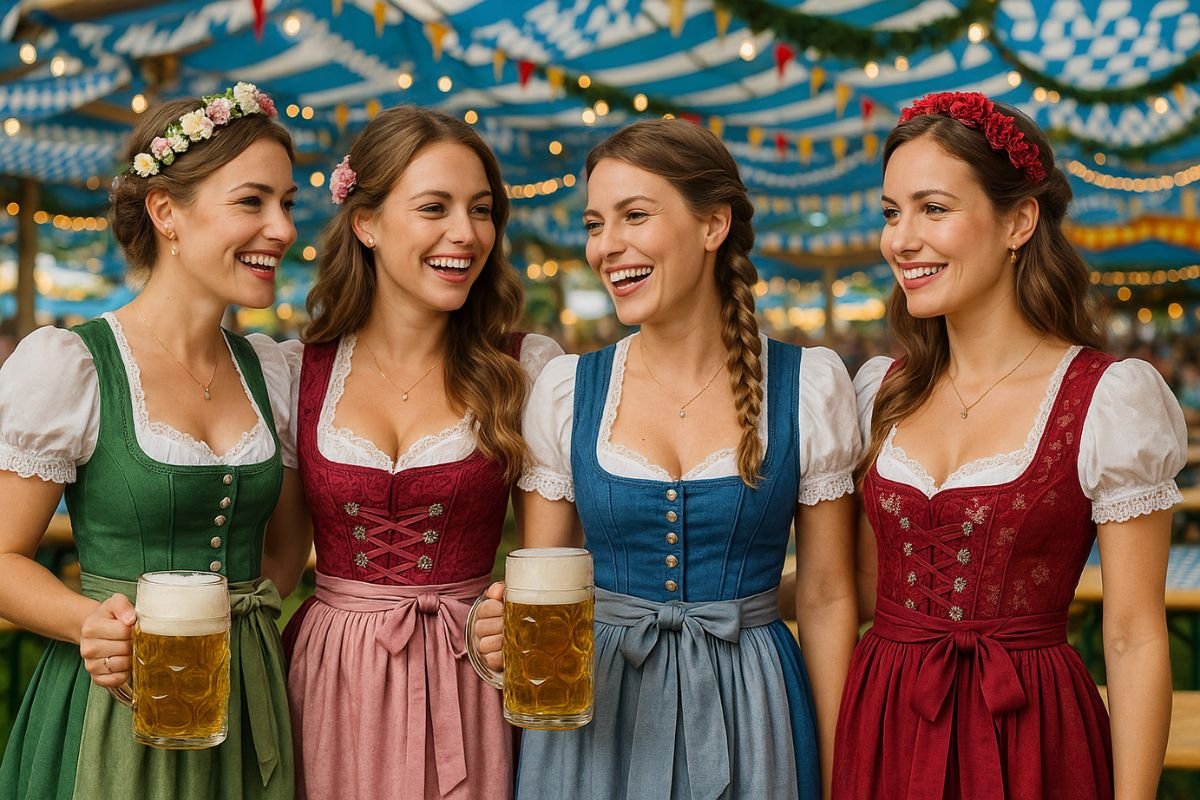
What Do Girls Wear at Oktoberfest? The Complete Women’s Outfit Guide for 2026
Walk into any beer tent on the Theresienwiese and you will immediately notice something: the women who look most at home are not the ones in the most elaborate outfits. They are the ones whose Dirndl fits correctly, whose apron bow is tied with intention, and whose shoes were chosen for dancing in rather than posing for photographs. Getting the Wiesn outfit right is less about fashion and more about understanding what each piece is, why it exists, and how the components work together as a complete traditional look.
The traditional women’s outfit for the Munich festival is the Dirndl — a Bavarian dress with centuries of Alpine history behind it. Women’s Lederhosen, known as ladyhosen, are a growing alternative. Both are genuine traditional Trachten options. Both require specific companion pieces to look correct. And both reward a little research before you buy, because the difference between a well-chosen authentic piece and a tourist costume is visible from across the room to anyone who knows what they are looking at.
This guide covers every component of the complete women’s outfit: the Dirndl and its four parts, the 2026 trends, ladyhosen as an alternative, the Dirndl bra that nobody talks about but everyone needs, shoes, socks, accessories, hairstyles, and exactly what to avoid. It is the only guide you need before dressing for the Wiesn.
The Cultural Background: Why Women Wear Dirndl at Oktoberfest
The Dirndl did not begin as festival clothing. It was the working dress of Bavarian and Austrian Alpine women — farmers, dairymaids, and domestic workers who needed something practical, durable, and modest for daily labour. The fitted bodice supported the body during physical work. The full skirt allowed freedom of movement. The apron protected the skirt. The blouse was a separate, replaceable piece that could be washed independently from the dress.
The Dirndl fell largely out of everyday use in the early 20th century as modern clothing became more accessible. What saved it was the same cultural preservation movement that saved Lederhosen — the Trachtenvereine that formed across Bavaria from the 1880s onward. By 1887, both the Dirndl and Lederhosen had been officially designated the traditional attire for the Munich festival. From that point, the connection between the Dirndl and Bavarian cultural identity became permanent.
Today, wearing a Dirndl to the Wiesn is not dressing up as something you are not. It is participating in a 200-year-old cultural tradition that Bavarians themselves maintain with genuine pride. The majority of Munich residents who attend the festival wear Trachten — not tourists in costumes, but locals in authentic dress. Understanding this context explains why a short, shiny, synthetic dress labelled an “Oktoberfest costume” reads so differently to a well-made Dirndl, and why the distinction matters to the people around you.
The Dirndl: The Four Components You Need to Understand
A complete Dirndl outfit is not a single garment. It is four separate pieces that work together — the dress itself (bodice and skirt), the blouse, the apron, and the undergarments. Getting all four right creates the authentic silhouette. Getting any one of them wrong makes the whole outfit look off. For a complete guide on putting these components together correctly, our guide on how to wear a Dirndl correctly covers every step in detail.
The Bodice: Fit Is Everything
The bodice is the fitted upper section of the Dirndl dress. It is structured — boned or lined with interfacing — specifically to support the bust, define the waist, and create the characteristic feminine silhouette that distinguishes a genuine Dirndl from an ordinary dress. The bodice should fit closely at the bust and waist without gaping, pulling, or compressing. It should feel firm but not uncomfortable.
Getting the bodice fit right is the single most important decision in choosing a Dirndl. A bodice that is too large loses its structural purpose — the silhouette collapses and the dress looks shapeless. One that is too small creates visible strain at the fastening and discomfort during long hours of wear. When sizing a Dirndl, size to the bodice measurement rather than the skirt. The skirt can be adjusted; the bodice structure cannot.
Bodices close at the front with hooks, lacing, or buttons depending on the style. The laced version allows some fit adjustment, which is useful for women whose bust and waist measurements map to different sizes. The hooked version requires the most precise fit. If buying online, check whether the bodice measurements are listed separately from the skirt measurements — the best retailers provide both. Browse our Bavarian traditional Dirndl collection for styles with detailed bodice measurement guidance.
The Skirt: Choosing the Right Length for 2026
Dirndl skirts come in three lengths, and the choice matters both aesthetically and culturally. The dominant 2026 trend is clear: long cuts are leading the season. A skirt length of approximately 83 cm or more creates a calmer, more sophisticated silhouette than the classic midi variants, and it is what fashion-conscious Bavarian women are choosing for the 2026 festival season.
The three length options in practice: Mini Dirndl skirts ending mid-thigh are seen at the festival but are generally considered inappropriate for the beer tent atmosphere — they read as costume rather than Trachten and attract negative attention from locals who take the tradition seriously. Midi length falling just below the knee remains the most common choice and the most universally accepted. Maxi or floor-length skirts are correct and traditional, particularly for more formal occasions and evening wear. In 2026, the trend is moving deliberately toward these longer, more elegant cuts.
The practical advice: if attending your first Wiesn and unsure which length to choose, midi is always correct and appropriate. If you want to reflect current Bavarian fashion rather than simply following the established norm, the longer cut is the confident choice this season.
The Apron: Symbolism You Should Know Before You Tie It
The apron is worn over the skirt and tied at the waist, but its function goes beyond decoration. The position of the bow carries traditional social meaning in Bavarian culture — meaning that locals read immediately and that has been part of Dirndl culture for generations.
The bow position and its meaning:
- Left side: Single and available
- Right side: In a relationship or married
- Centre front: Traditionally associated with young girls — not appropriate for adult women at the festival
- Centre back: Traditionally worn by widows or waitresses working at the event
This is not an obscure technicality — Bavarian men genuinely know this system and act on it. If you tie your bow casually without considering position, you may be communicating something you did not intend. The simplest guideline: tie left if single, right if taken. The choice is yours, but make it consciously.
Apron fabrics and styles in 2026 follow the overall trend toward restraint and quality. A fine satin ribbon on a simple apron, a subtle floral print, or clean velvet in an autumnal tone all work. Novelty prints, slogans, and synthetic shiny materials undermine the cultural integrity of the outfit in ways that experienced Wiesn visitors notice immediately.
The Dirndl Blouse: The Most Important Trend Element for 2026
The blouse worn under the Dirndl bodice has become the most discussed styling element of 2026 Trachten fashion. The trend this season is clear: volume and lightness. Blouses with flutter sleeves and soft puff sleeves are defining the contemporary Dirndl look, giving the outfit a modern touch while remaining entirely consistent with traditional styling. Materials in demand are organza, fine tulle, and high-quality cotton batiste — fabrics that move beautifully and feel light against the skin during long festival days.
Subtle embroidery on the blouse is replacing the heavy, over-worked lace looks of previous seasons. Less ornamentation, better fabric, more considered construction — this is what distinguishes a well-chosen 2026 blouse from one that reads as costume. Browse our full selection of Dirndl blouses for options reflecting current Bavarian fashion standards.
Neckline Choices and What They Communicate
Dirndl blouses come in a wide range of necklines, from high, closed collars to sweetheart and balconette cuts. The neckline affects both the practical fit with the bodice and the overall impression the outfit creates. Deeply plunging necklines are common and accepted — the Dirndl bodice is specifically designed to frame the décolletage — but they must be styled with a bodice that provides adequate support. A sweetheart neckline with a well-fitted structured bodice is the quintessential Wiesn look.
More conservative styles with higher necklines are equally traditional and are particularly appropriate for daytime sessions, family-oriented areas of the festival, and women who simply prefer that aesthetic. The important point: the blouse and bodice must be chosen together rather than separately. A plunging blouse under a high-necked bodice looks wrong. A lace-trimmed blouse under a plain bodice looks unmatched. Choose them as a coordinated pair.
The Dirndl Bra: The Practical Detail Nobody Warns You About
This is the piece most guides skip entirely and most first-time Dirndl wearers discover too late. A standard underwire bra worn under a Dirndl blouse and fitted bodice creates visible strap lines, uncomfortable pressure points from the underwire against the structured bodice, and does not provide the upward shaping that the Dirndl silhouette is designed around.
The correct choice is a balconette bra — also called a Dirndl bra in German Trachten context. A balconette lifts the bust upward and positions it higher on the chest, which is exactly what the low-cut Dirndl bodice is designed to frame. It sits lower at the back than a standard bra, eliminating the visible strap problem. The fit of the Dirndl bodice itself depends on wearing the right undergarment — a bodice fitted without the correct bra will feel different when you wear the correct bra under it. If buying online, wear your balconette bra when taking your measurements for the bodice.
The Ladyhosen: The Growing Alternative to the Dirndl
Women’s Lederhosen — known colloquially as ladyhosen — have moved from a minority choice to a genuinely established Wiesn option over the past decade. They are not a compromise or a joke alternative — they are authentic Trachten in their own right, made from genuine leather in cuts designed specifically for the female silhouette.
What distinguishes women’s Lederhosen from men’s versions: the cut is shaped to the hips and waist rather than cut straight across, producing a more contoured fit. The embroidery motifs often include floral elements alongside the traditional Alpine hunting and nature motifs common on men’s pieces. The colours available extend beyond the traditional brown and black — tan, grey, and darker forest tones all appear in women’s Trachten collections.
Ladyhosen are worn above the knee, typically ending mid-thigh, and pair with either a fitted white or checked shirt — the women’s Trachten shirt versions are cut with shorter sleeves and a more feminine proportion than the men’s Trachtenhemd. For the complete pairing, browse our women’s Lederhosen collection and our range of women’s Oktoberfest shirts designed to complement the ladyhosen silhouette.
Who Ladyhosen Suit Best
Ladyhosen are particularly popular with women who want freedom of movement throughout a full day at the festival — dancing, walking between tents, navigating crowded outdoor areas. The leather construction is practical for the physical reality of a long Wiesn day in a way that a full Dirndl skirt is not. They also appeal to women attending in a group where other women are wearing Dirndl and they want a distinct look while remaining within authentic Trachten tradition.
The one context where ladyhosen are less appropriate: formal evening sessions, Bavarian weddings, and cultural events where Dirndl would be the expected and respected choice. For the Wiesn specifically, both are entirely acceptable and both will be seen in large numbers across the festival grounds.
Shoes: Comfort Is Not Optional
The festival grounds cover a large area. A full day inside and between the tents involves hours of standing, walking on uneven surfaces, and dancing. Shoe choice is a practical decision as much as a stylistic one — and the two most common shoe mistakes are choosing heels for the aesthetic and choosing something without adequate support.
The Traditional Choice: Haferlschuhe and Mary Janes
Haferlschuhe — the traditional Bavarian leather shoes with side lacing that are the standard footwear for men’s Trachten — have women’s versions that offer the most authentic and most durable option. Sturdy leather construction, non-slip soles, and low heels make them genuinely practical for festival conditions while looking correct with both Dirndl and ladyhosen.
Mary Jane style shoes with a low block heel or flat sole are the most common contemporary choice for Dirndl wearers. They echo the rounded toe and strap of traditional Bavarian footwear while being more widely available and typically more comfortable for women unused to Haferlschuhe construction. Choose a style in brown, tan, or black leather rather than synthetic materials.
Contemporary Alternatives That Work
Ankle boots in leather with low heels or flat soles are an increasingly accepted choice at the Wiesn, particularly for evening sessions where slightly cooler temperatures make covered footwear practical. They work best with midi or maxi length Dirndl where the boot is only partially visible beneath the skirt. With ladyhosen, they create a strong, cohesive look that many women actively prefer.
Clean leather sneakers — not athletic trainers, but simple leather or suede sneakers — are becoming more common at the festival, particularly among younger Bavarian women who want full-day comfort without compromising on style. They are not traditional but they are no longer unusual. The key is choosing something that does not visually clash with the carefully assembled Trachten outfit around them.
What to Avoid Absolutely
High heels are impractical to the point of being a poor decision. The festival grounds have unpredictable surfaces — cobblestones outside, wooden slatted floors inside, occasionally wet or sticky patches from spilled drinks. Heels that look good in a photograph make a full day miserable. Platform heels are marginally better but still not appropriate for the conditions. Flip flops, open-toed sandals, and fashion trainers in bright colours all clash visually with traditional Trachten in ways that are immediately obvious.
Socks and Stockings: Completing the Look Below the Knee
For Dirndl wearers, the sock or stocking choice depends on the skirt length. With a midi Dirndl, short ankle socks in white or cream with a small decorative element at the cuff are traditional and correct. With a longer skirt, stockings or no hosiery at all are the more elegant choice — knee-high socks with a maxi Dirndl look disproportionate and break the clean line the longer silhouette creates.
For ladyhosen wearers, cable-knit knee socks in off-white, grey, or natural wool tones are the traditional and most common choice. These are the same sock tradition as the men’s Loferl — shorter than full knee-highs, leaving the knee visible — though women’s versions often have more decorative elements at the cuff. The sock colour should complement the overall outfit palette: neutral wool tones work with every ladyhosen colour, while coloured socks require conscious coordination with the shirt and accessories.
Outerwear: The Janker and Cardigan for Autumn Evenings
Munich in late September means warm afternoons and cool evenings — often cold after dark, particularly for anyone who has been dancing in a heated beer tent and then steps outside. Layering over the Dirndl or ladyhosen is both necessary and an opportunity to add another element of authentic Trachten character to the outfit.
The Janker — the traditional wool Bavarian jacket trimmed with decorative buttons, often in loden cloth — is the correct formal layering choice. Women’s Janker are cut to the Dirndl silhouette and can be worn over the bodice with the front left open. They add warmth without obscuring the outfit and signal genuine familiarity with Trachten tradition. For a less formal alternative, a cropped wool cardigan in a complementary colour provides the same practical warmth with a softer appearance.
The key principle for outerwear: choose natural fibres in traditional tones — loden green, grey, dark brown, cream. Synthetic fabric jackets and anything with bright or untraditional colours break the carefully assembled Trachten aesthetic regardless of how warm they are.
Accessories: The Details That Define the Outfit
Accessories for the Dirndl follow a principle of considered restraint rather than maximalism. The Dirndl itself is already a rich visual garment — the bodice embroidery, the apron fabric, the blouse texture all contribute visual interest. Accessories should add to this without competing with it. For the full breakdown of traditional accessories and how to style them, our complete accessories guide for the Dirndl covers every option in detail.
The Flower Crown
Flower crowns have become the most widely recognised Oktoberfest accessory for women — almost as synonymous with the Wiesn look as the Dirndl itself. Worn across braided or pinned hair, they add colour, romance, and a connection to Alpine nature symbolism. Autumnal colour palettes — deep red, burnt orange, burgundy, forest green — suit the September-October festival season and complement traditional Dirndl colour ranges better than the pastel tones more associated with spring festivals.
Choose silk or dried flower versions over fresh flowers for practicality — a long day at the festival is hard on fresh blooms. The flower crown should complement the colour of your apron or bodice embroidery. A crown in colours that clash with the rest of the outfit looks like an afterthought rather than an intentional choice.
Traditional Bavarian Jewelry
The Kropfbänder — a traditional Bavarian choker necklace — is the most authentically correct jewellery choice for the Dirndl. These are multiple-strand necklaces in coloured glass or crystal beads, typically green, red, or amber, worn at the throat. They have been part of Bavarian Trachten for centuries and immediately signal genuine knowledge of the tradition.
Edelweiss-inspired pendants, small antler or deer motif charms, pretzel pendants, and beer stein charms all reflect Bavarian cultural iconography and are appropriate with a Dirndl. The principle: small, meaningful, culturally connected pieces. Large statement jewellery that could belong to any evening outfit competes with rather than complements the Dirndl.
The Dirndl Bag
A full day at the Wiesn requires hands-free carrying capacity and the security of a closed bag. A crossbody bag in leather or suede with Bavarian embroidery detail or folk motif is the traditional choice. It should be small — just large enough for phone, cash, ID, and a few essentials — and should close with a zip or secure clasp. The festival is crowded and lively, and an open-top bag is an unnecessary risk.
Mini leather bags shaped like small pouches in traditional Bavarian motifs are available from Trachten specialists and add authentic detail to the outfit. Avoid large tote bags, branded fashion bags from non-Trachten brands, or anything that visually pulls the eye away from the outfit itself.
The Tyrolean Hat
The felt Alpine hat — Tirolerhut — is an optional but genuinely traditional accessory for women as well as men. Women’s versions are typically smaller and more delicately proportioned than men’s, often decorated with a single feather, a small Edelweiss pin, or a velvet band. They work particularly well with ladyhosen outfits, where the combination creates a complete Bavarian mountain look rather than just a lower-half costume.
Novelty festival hats — beer-shaped hats, oversized foam items, hats with slogans or dancing chicken designs — signal unfamiliarity with the culture and attract exactly the kind of attention most visitors would prefer to avoid. They look amusing in the souvenir stall and regrettable in every photograph taken wearing them.
Hairstyles: The Often-Forgotten Component of the Complete Look
Traditional Bavarian hairstyling for the Dirndl involves braided or pinned updos that keep hair away from the face during an active festival day while reflecting the Alpine folk tradition. The braided crown, the single plait, the milkmaid braid, and the pinned chignon with decorative elements are all appropriate and common. Many women invest in having their hair professionally styled for the festival — Munich has numerous Trachten-specialist hair salons in the weeks before the Wiesn.
The flower crown, if worn, should sit over braided or pinned hair rather than loose hair. Against loose, unstyled hair, a flower crown looks like a shop-floor display item. Against a braided updo, it looks intentional, elegant, and authentically Bavarian.
Wearing hair loose with a Dirndl is acceptable and common, particularly for younger women and for the contemporary styled versions of the dress. It is simply less traditional than a braided style. If low-effort is a priority, a simple half-up style with the front sections pinned back is a clean compromise between full braiding and completely loose hair.
Colour Coordination: Building a Coherent Dirndl Outfit
The four components of the Dirndl — bodice, skirt, blouse, and apron — can each be a different colour, and often are. The traditional Bavarian approach is to coordinate rather than match: colours that complement each other without being identical. A few practical guidelines:
| Dirndl Colour | Blouse That Works | Apron That Works | Avoid |
|---|---|---|---|
| Deep green bodice | White or ivory, light lace | Red, dark red, or cream | Another green in similar tone |
| Navy or royal blue | White or pale blue | White, silver, or pale pink | Orange or yellow tones |
| Burgundy or deep red | White or cream | Black, dark grey, or cream | Bright red in similar tone |
| Earthy brown or tan | White, cream, or warm ivory | Forest green, rust, or terracotta | Cold blues or bright colours |
| Black bodice | White or red | Any colour — maximum contrast works | Very dark apron that disappears |
The accessories should pick up one colour from the outfit — the flower crown echoing the apron, the Kropfbänder matching the bodice embroidery — creating visual coherence across the complete look rather than a collection of disconnected pieces.
Body Type Guidance: Choosing the Most Flattering Dirndl Cut
The Dirndl silhouette — fitted bodice, full skirt, defined waist — is genuinely flattering across a wide range of body types because its construction does much of the shaping work. However, specific choices within the Dirndl format suit different proportions better than others.
Petite Frames
A midi or slightly shorter Dirndl creates better visual proportion for petite women than a floor-length skirt, which can overwhelm the frame. A blouse with minimal ruffles keeps the upper portion clean and prevents the outfit from appearing too voluminous. An open or lower neckline elongates the neck and upper body visually. Avoid very wide aprons that create horizontal emphasis at the widest point of the skirt.
Taller Frames
Taller women carry the maxi Dirndl — the 2026 trend length — most naturally. The longer skirt creates an elegant, proportionate silhouette on a longer frame that shorter women can find overwhelming. Volume in the blouse works well, and the bodice can afford to be more structured and detailed without looking too heavy.
Curvier Figures
The Dirndl was designed by Alpine women of every shape and has always accommodated generous figures with more grace than most contemporary fashion. The key: a properly fitted bodice that provides structured support, a full skirt that skims the hips without clinging, and an apron with moderate width. The sweetheart neckline of many Dirndl bodices is specifically designed to flatter a fuller bust. Avoid stiff, boned bodice styles that compress rather than support.
What to Buy vs What to Avoid: The Honest Guide
The Dirndl market, particularly for international buyers, contains a large volume of items labelled as traditional that are neither authentic nor flattering. The clearest sign of a costume rather than a genuine Dirndl: synthetic shiny fabric in a bright, non-traditional colour, very short skirt length, and decoration that is printed onto the fabric rather than genuinely embroidered.
A genuine Dirndl at a quality entry-level price starts at approximately €60-80. Below this, the fabric and construction compromises are significant. The sweet spot for a genuine authentic piece suitable for regular Wiesn attendance is €120-250. Premium and heirloom quality pieces in silk, velvet, and fine cotton start at €300 and upward. Our ladies’ Oktoberfest dress collection covers quality options across price points with full material and sizing transparency.
When buying online, check that the fabric is specified — cotton, polyester, silk, velvet — and that any embroidery is described as embroidery rather than print. Sizing for Dirndl follows German EU sizing — a German size 36 corresponds approximately to a UK size 10 and a US size 6. Always check the bust and waist measurements in centimetres against the bodice specification rather than relying on the size label alone.
Frequently Asked Questions
Do you have to wear a Dirndl to Oktoberfest?
Officially, there is no dress code at the Munich festival and wearing jeans and a normal top is not prohibited. In practice, the overwhelming majority of attendees — including most Bavarian locals — wear traditional Trachten, and arriving in casual Western clothing marks you immediately as a tourist unfamiliar with the culture. Wearing a genuine Dirndl or ladyhosen is not compulsory but it is the correct and respectful approach, and it dramatically improves the experience of being there.
What length Dirndl is appropriate for Oktoberfest?
Midi length — falling just below the knee — is the most universally correct and accepted choice. Maxi or floor-length Dirndl are equally traditional and represent the dominant 2026 fashion trend, particularly for evening sessions. Mini Dirndl ending mid-thigh are seen at the festival but are generally considered costume rather than traditional attire and attract negative attention from locals. The shorter the skirt, the more it reads as costume rather than Trachten.
What does the bow position on a Dirndl apron mean?
The bow tied on the left side signals that the wearer is single and available. On the right signals she is in a relationship or married. Tied at the centre front is associated with young girls and is not appropriate for adult women at the festival. Tied at the centre back is traditionally reserved for widows and waitresses. Bavarian men at the festival know this system and respond to it — tie your bow with conscious intention, not just whatever feels comfortable.
What shoes do women wear with a Dirndl at Oktoberfest?
The most traditional choice is Haferlschuhe — the traditional Bavarian side-laced leather shoes — or Mary Jane style shoes with a low block heel in brown or black leather. Ankle boots are an increasingly common and accepted alternative, particularly for evening sessions. The most important criteria are comfort and stability — the festival involves hours of walking on unpredictable surfaces and dancing. Avoid high heels, which are genuinely impractical on festival grounds, and flip flops, which are inappropriate for the environment.
Can women wear Lederhosen to Oktoberfest?
Yes — women’s Lederhosen, known as ladyhosen, are a legitimate Trachten alternative to the Dirndl and are growing in popularity at the Wiesn. They are made in cuts designed for the female silhouette with curved fitting at the hips and waist, and are worn with women’s Trachten shirts in checked or white cotton. They are less formal than a Dirndl, which makes them slightly less appropriate for formal evening sessions, but entirely correct for general festival attendance.
What accessories do women wear with a Dirndl?
The most traditional and culturally authentic accessories are the Kropfbänder choker necklace in coloured glass beads, small Edelweiss or deer motif jewellery, a flower crown over braided hair, and a small leather crossbody bag with Bavarian embroidery. The principle is considered restraint — one or two standout traditional pieces rather than maximalist layering. The Dirndl itself is already a rich visual garment; accessories should complement rather than compete.
What is the most important thing to get right when buying a Dirndl?
The bodice fit. A well-fitted bodice creates the entire silhouette that distinguishes an authentic Dirndl from a costume. Size to your bust and waist measurements in centimetres, wear your balconette bra when measuring, and choose the size that fits the bodice correctly — the skirt can be adjusted, the bodice cannot. Everything else in the outfit can be adjusted, supplemented, or changed. A poorly fitting bodice cannot be overcome by accessories, the right shoes, or a beautiful apron.
The Complete Women’s Wiesn Outfit — Summary
The complete authentic women’s outfit for the Munich festival consists of the following, in order of importance: a properly fitting Dirndl bodice with a correctly paired blouse, a skirt in the right length for your height and style preference, an apron with its bow tied with intention, the correct supporting undergarment, comfortable traditional footwear, and one or two carefully chosen traditional accessories. Hair braided or pinned adds the final layer of authentic Bavarian character.
The women who look most at home at the Wiesn are the ones who understand what each piece is and chose it deliberately. That knowledge — more than the price of the garment or the elaborateness of the embroidery — is what creates a genuinely authentic Trachten appearance.
German Attire supplies authentic Bavarian Dirndl, ladyhosen, and Trachten accessories to customers across the UK, US, and Australia. Visit our ladies’ Oktoberfest dress collection for 2026 styles with complete sizing guidance, or browse our full women’s Trachten range to build a complete authentic outfit for the Wiesn.

Anna Bauer is a seasoned Bavarian fashion expert, cultural consultant, and heritage stylist with over a decade of hands-on experience in traditional German clothing. Born in Munich, the heart of Bavaria, Anna grew up surrounded by the rich traditions of Trachten fashion. Her passion for cultural attire led her to pursue a degree in Fashion and Textile Design at the prestigious University of the Arts Berlin, where she specialized in European folkwear.
Over the past 12+ years, Anna has collaborated with renowned Trachten designers, styled outfits for Oktoberfest events across Germany, and contributed articles to top fashion and culture magazines across Europe. Her work focuses on preserving the authenticity of Lederhosen and Dirndl wear while helping modern audiences style them with confidence and flair.
As the lead content contributor for German Attire, Anna combines her academic background, professional styling experience, and deep cultural roots to provide readers with valuable insights into traditional German fashion. Her blog posts cover everything from historical origins and styling guides to care tips and festival outfit planning—making her a trusted voice for anyone looking to embrace Bavarian heritage in a stylish, modern way.